
When homeowners arrange a professional ducted air conditioning service, they expect improved comfort, better efficiency and fewer unexpected breakdowns. However, quality servicing involves much more than checking whether the system turns on and cools correctly. A thorough service includes detailed inspections, cleaning, testing and adjustments that help identify developing issues and keep the system operating reliably.
All Coast Air Conditioning provides professional air conditioning maintenance in Central Coast to help homeowners maintain their ducted systems and protect their investment. Technicians inspect components, including indoor and outdoor units, ductwork, airflow, electrical systems, refrigeration components, thermostats and zoning controls to ensure the system is performing efficiently.
Knowing what is included in a professional service helps homeowners make decisions, understand the value of regular servicing and extend the lifespan of their ducted air conditioning system.
Why Professional Air Conditioning Maintenance Matters
Professional maintenance does more than keep a ducted system clean. Regular servicing helps maintain safe operation, improve efficiency and identify issues before they develop into major faults.
For homeowners, routine maintenance is important due to warm summers, coastal conditions and seasonal humidity. These conditions can contribute to dust build-up, corrosion and additional strain on outdoor components. Without regular servicing, airflow can become restricted, energy consumption may increase and important components can experience unnecessary wear.
Maintenance also supports healthier indoor air quality by keeping filters, coils and airflow pathways clean while allowing technicians to identify problems that may affect comfort or reliability.
With servicing carried out at suitable intervals, homeowners can improve system performance, reduce the risk of unexpected repairs and enjoy more consistent heating and cooling throughout the year.
Cleaning the Return-Air Filter and Inspecting the Indoor Unit
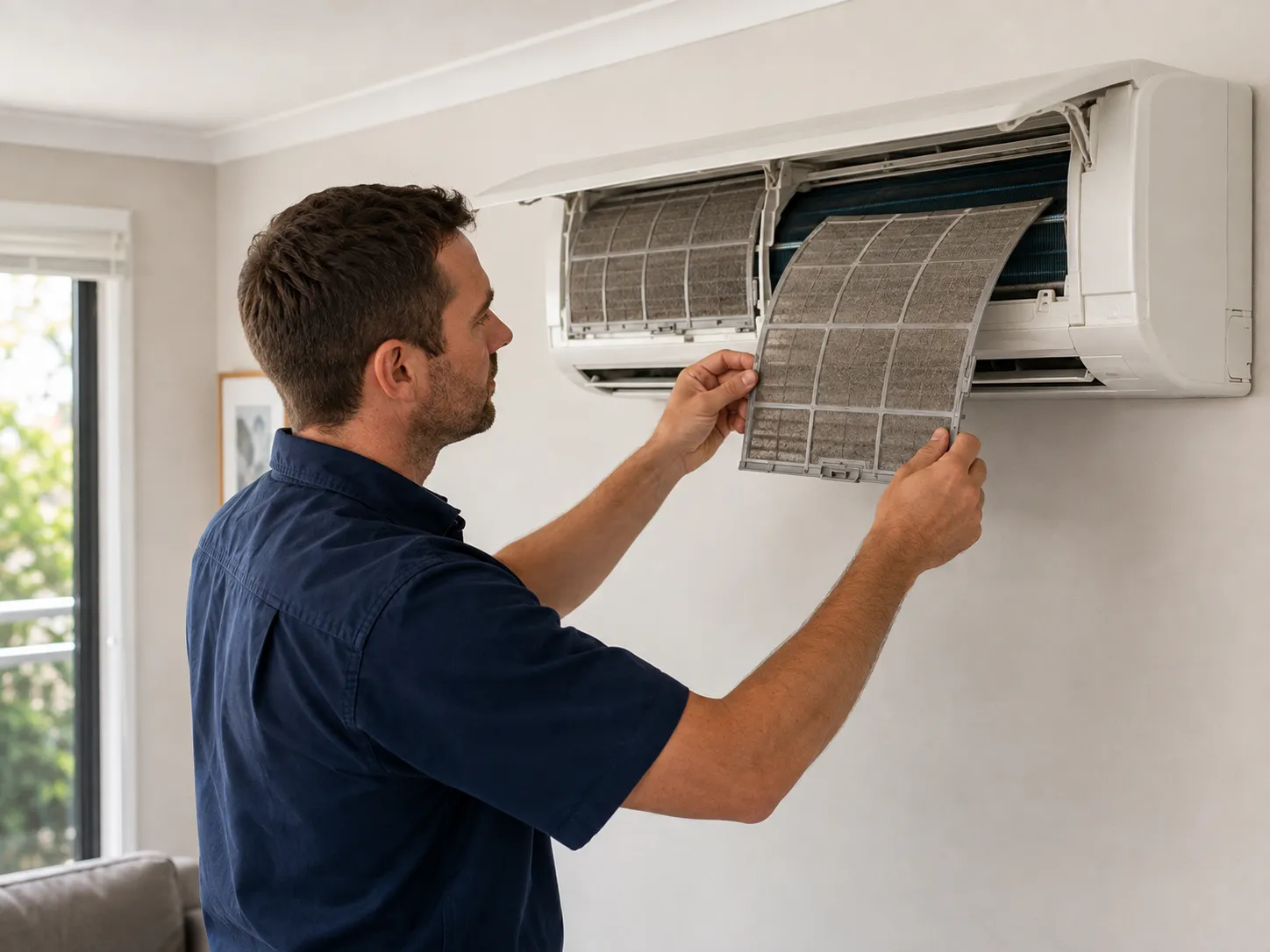
The return-air filter and indoor unit are important parts of a ducted air conditioning system because they directly affect airflow, efficiency and indoor air quality. During servicing, these components are inspected and cleaned to help the system operate effectively and reduce strain on internal parts.
Return-Air Filter Cleaning and Checks
The return-air filter is inspected, cleaned or replaced depending on its condition. Technicians remove dust build-up, check for damage and ensure the filter is fitted correctly to prevent air from bypassing it.
A clean filter improves airflow, helps capture airborne particles and reduces pressure on the indoor fan motor, allowing the system to operate more efficiently.
Australian Government energy guidance also recommends clean air conditioner filters because dirty filters can restrict airflow and reduce energy efficiency.
Regular attention to dirty filters and ductwork can also help prevent restricted airflow and unnecessary strain on the system.
Indoor Unit Inspection
The indoor unit, commonly located in the roof space or under the floor, is checked for dust, dirt, mould, corrosion and signs of wear. Components such as the evaporator coil, fan assembly and electrical connections are inspected to identify issues that could affect performance.
The condensate drainage system is also checked to ensure moisture is removed correctly and to reduce the risk of leaks, mould growth or water damage.
Airflow and Operation Testing
After cleaning and inspection, the system is tested to confirm correct operation. Technicians check airflow, fan performance, unusual noises, vibration and any visible issues around duct connections or access points.
These checks help ensure conditioned air is distributed effectively and that potential problems are identified early.
Checking the Outdoor Unit, Electrical Components and Refrigerant Performance
The outdoor unit, electrical components and refrigerant system all influence overall system performance. During a professional service, these areas are inspected to identify issues that may reduce efficiency, affect safety or lead to breakdowns.
Inspecting and Cleaning the Outdoor Unit
Because the outdoor unit is exposed to weather, dust, debris and coastal conditions, regular cleaning and inspection are essential. Technicians remove accumulated debris, check airflow clearance and inspect the condenser coil for dirt, corrosion or damage.
The fan, grille and cabinet are also checked for signs of wear or vibration. Keeping the outdoor unit clean allows it to release heat effectively and maintain efficient operation.
Checking Electrical Components
Electrical inspections help identify worn or damaged components before they affect system reliability. Technicians check wiring, terminals and electrical parts for signs of overheating, deterioration or other issues.
Testing electrical performance also helps confirm that the system is operating within safe limits and can highlight faults that may require attention.
Testing Refrigerant Performance
Refrigerant performance is assessed to ensure the system is operating correctly. Technicians check operating pressures, temperatures and compressor performance to identify possible issues such as leaks, restrictions or incorrect refrigerant levels.
If a problem is detected, further investigation is carried out to determine the cause rather than simply adding refrigerant. Maintaining correct refrigerant performance supports reliable heating and cooling while improving efficiency.
Examining Condensate Drainage and Preventing Moisture Problems

Condensate drainage impacts air conditioning performance because excess moisture can lead to leaks, mould growth and property damage. Managing excess moisture and mould is also important for maintaining a healthy indoor environment. During servicing, technicians check that water produced by the indoor unit is draining correctly and that there are no signs of blockages or moisture build-up.
Key checks include:
- Inspecting the drain tray for cracks, corrosion, dirt or debris that could restrict water flow
- Checking drain lines for blockages, poor connections or areas where water may collect
- Clearing build-up such as algae or sediment where required
- Testing condensate pumps to ensure they remove water correctly and operate with safety controls
- Looking for warning signs like water stains, wet insulation, rust or mould around the indoor unit and ductwork
If moisture issues are identified, technicians investigate the underlying cause rather than only addressing the visible problem. Causes may include blocked drains, damaged insulation, air leaks or poor system maintenance.
Resolving drainage issues early helps protect the property, maintain indoor air quality and reduce the risk of recurring water-related problems.
Inspecting Ductwork, Insulation and Airflow
A ducted air conditioning system relies on the condition of its ductwork and insulation to deliver heated or cooled air efficiently. During servicing, technicians inspect these areas to identify air leaks, insulation problems and airflow issues that may affect comfort and energy use.
Inspecting Ductwork for Damage and Leaks
Accessible duct runs are checked for damage such as tears, disconnected joins, crushed sections, sagging areas and signs of air leakage.
Assessing overall ductwork condition can also reveal problems with insulation, sizing, airflow and ageing sections that may require repair or replacement.
Damaged ductwork can allow conditioned air to escape into roof spaces or other areas, causing the system to work harder and reducing efficiency. Identifying these issues allows repairs or adjustments to be planned before performance declines further.
Checking Duct Insulation Condition
Duct insulation helps maintain air temperature as it travels through areas like roof spaces, where temperatures can become extreme.
Technicians check for insulation that is damaged, compressed or missing, as these issues can contribute to energy loss, reduced efficiency and condensation problems. Addressing insulation issues helps the system deliver more consistent temperatures while reducing unnecessary energy use.
Assessing Air Outlet Performance
Supply grilles and diffusers are inspected for dust build-up, damage and airflow restrictions. Technicians may also assess airflow distribution between rooms to identify areas that are receiving too much or too little conditioned air.
Adjustments to outlets or system settings can improve airflow balance, reduce uneven temperatures and provide more consistent comfort throughout the property.
Testing Zones, Dampers, Controls and Airflow
For zoned ducted air conditioning systems, servicing includes checking that zones, dampers and controls are operating correctly. These components determine where conditioned air is delivered, so faults can affect comfort, efficiency and overall system performance.
Testing Zone Operation
Each zone is tested to confirm it responds correctly to the controller and operates as intended. Technicians check that airflow changes when zones are activated or switched off and look for issues affecting temperature control.
Correctly operating zones allow homeowners to heat or cool only the areas being used, helping improve comfort and reduce unnecessary energy use.
Checking Dampers and Airflow Control
Dampers regulate airflow between different zones and are inspected to ensure they open and close correctly. Faulty or poorly adjusted dampers can contribute to uneven temperatures, noisy operation and wasted energy.
Maintaining correct damper operation helps balance airflow and allows the system to perform more efficiently.
Verifying Controls and System Balance
Thermostats, controllers and sensors are checked to ensure they communicate correctly with the air conditioning system. Settings such as temperature control, operating modes and schedules may also be reviewed where required.
Airflow balance is assessed across key outlets to identify uneven distribution. Adjustments to settings or controls can improve comfort and help maintain consistent performance throughout the property.
Common Issues Found During Ducted Air Conditioning Servicing
Regular servicing often identifies problems that are not immediately noticeable to homeowners. While a system may continue operating with minor faults, these issues can gradually reduce efficiency, increase running costs and contribute to larger repairs.
Identifying problems early allows homeowners to address them before they affect comfort or result in unexpected breakdowns.
Dirty Components and Restricted Airflow
Dust and debris build-up are among the most common issues found during servicing. Filters, coils, fans and air outlets can become restricted over time, reducing airflow and making the system work harder.
Here are some signs:
- Longer heating or cooling cycles
- Uneven temperatures between rooms
- Higher energy use
- Increased strain on fans and compressors
Professional cleaning helps restore airflow, improve efficiency and reduce unnecessary wear on system components.
Electrical, Refrigerant and Drainage Problems
Routine maintenance can uncover developing faults within electrical, refrigeration and drainage systems before they become major issues.
Common problems are:
- Loose connections or worn electrical components
- Refrigerant issues caused by leaks or system restrictions
- Blocked drains, damaged trays or faulty pumps
Addressing these problems early helps reduce safety risks, prevent property damage and maintain reliable operation.
Ductwork, Zoning and Control Issues
Maintenance also checks how effectively conditioned air is distributed throughout the property. Problems with ductwork, zoning or controls can reduce comfort even when the main unit appears to be operating normally.
Technicians may identify:
- Leaking or damaged ductwork
- Poor insulation or restricted outlets
- Faulty dampers or zone controls
- Thermostat or controller issues
Correcting these problems improves airflow, maintains more consistent temperatures and helps the system operate efficiently.
What Should a Professional Service Report Include?
A professional ducted air conditioning service should finish with a clear written report outlining what was inspected, tested, cleaned and recommended. This record helps homeowners and property managers track system performance, plan future maintenance and identify potential issues before they become costly repairs.
A detailed service report also provides transparency by showing the condition of the system and any work required to maintain safe, efficient and reliable operation.
System Information and Service Details
A quality service report should include key information about the air conditioning system and maintenance visit, including:
- Service date and property details
- Indoor and outdoor unit brand, model and capacity
- Areas or zones inspected
- Reason for the service or any reported concerns
Keeping this information creates a maintenance history that can be referenced during future servicing and helps technicians understand the system’s previous condition.
Checks Completed and Performance Results
The report should clearly record the inspections, tests and maintenance tasks completed during the visit. This may include:
- Filter condition and cleaning or replacement
- Indoor and outdoor unit inspections
- Coil, fan and airflow checks
- Refrigerant and electrical system testing
- Ductwork and condensate drainage checks
- Thermostat, controls and zoning operation
Where performance readings are taken, results like temperature measurements or system pressures should be recorded rather than simply marked as “checked”. Tracking these results over time can help identify gradual changes in system performance.
Issues Identified and Recommendations
Any faults, worn components or areas requiring attention should be clearly documented with recommended actions. This may contain the following:
- Parts requiring repair or replacement
- Ductwork leaks or insulation issues affecting efficiency
- Electrical, drainage or control problems
- Recommended upgrades to improve performance
Clear recommendations allow property owners to prioritise repairs, plan future expenses and avoid unexpected system failures. The report should also include guidance on the recommended timing for the next service.
How Often Should Ducted Air Conditioning Be Serviced?
The ideal servicing frequency for a ducted air conditioning system depends on usage, environmental conditions and whether the system is installed in a home, commercial property or shared building.
For most residential properties, professional servicing every 12 months is recommended. However, homes exposed to coastal conditions, heavy use, dust or humidity may benefit from more frequent inspections to maintain efficiency and prevent premature wear.
Residential Service Frequency
For a typical home, an annual service is usually suitable when the system is mainly used during summer and winter. More frequent servicing may be recommended for properties with:
- High levels of dust, pet hair or indoor pollutants
- Occupants with allergies or respiratory sensitivities
- Frequent or extended air conditioning use
Filters should also be checked and cleaned regularly during periods of heavy use. A blocked filter can restrict airflow, increase energy consumption and place additional strain on system components.
High-Use and Coastal Environments
Homes with harsher operating conditions may require servicing every six months. This includes properties where the system:
- Runs daily for extended periods
- Is located near the coast with salt exposure
- Experiences high dust levels from roads, landscaping or construction
- Has increased debris from indoor pets
More frequent maintenance helps protect components such as coils, fans, drainage systems and electrical parts from corrosion, build-up and excessive wear.
Commercial and Multi-Residential Systems
Commercial properties and shared residential buildings require more structured maintenance due to longer operating hours, higher occupancy levels and greater demands on system performance.
Depending on the environment, servicing may be required:
- Every three to six months for offices, retail spaces and other high-use buildings
- More frequently for specialised environments requiring strict temperature control or air quality management
A planned maintenance schedule helps maintain comfort, improve energy efficiency and reduce unexpected disruptions.
A professional ducted air conditioning service involves much more than a quick filter clean or a basic outdoor unit inspection. A thorough service includes detailed checks of major components, cleaning, airflow assessments, zoning and control testing, electrical inspections and recommendations to address potential issues.
Regular maintenance helps homeowners protect their investment, improve system efficiency and maintain reliable indoor comfort throughout the year. All Coast Air Conditioning provides professional servicing designed to keep ducted systems operating efficiently, quietly and reliably through every season.
We Run Our Business Like a Family
When You Need Help
Get your home the Air Conditioning work it needs from our team at All Coast Air Conditioning. We’re always ready to help.


