
As a provider of professional air conditioning maintenance on the Central Coast, All Coast Air Conditioning understands that a complete split system service involves much more than a basic filter clean. It includes cleaning, inspection, testing and performance checks across both the indoor and outdoor units to keep the system running safely, efficiently and reliably. This article explains what a thorough service should include and why regular maintenance matters.
Why Regular Split System Servicing Matters
Regular split system servicing helps prevent the gradual performance loss that can happen when dust, mould, salt, moisture and general wear build up inside the system. Even when an air conditioner still turns on and cools the room, it may be working harder than it should if the filters, coils, fans or electrical components are not in good condition.
A professional service targets the parts of the system that do the most work. Clean filters and coils help air move freely and allow the unit to transfer heat more effectively. Clear drains reduce the risk of water leaks. Electrical and performance checks help identify early faults before they become more serious.
For homes on the Central Coast, servicing is especially important because outdoor units are often exposed to salt air, humidity, storms and seasonal debris. These conditions can accelerate corrosion, restrict airflow and place extra strain on the system if maintenance is neglected.
Indoor Unit Cleaning and Airflow Checks
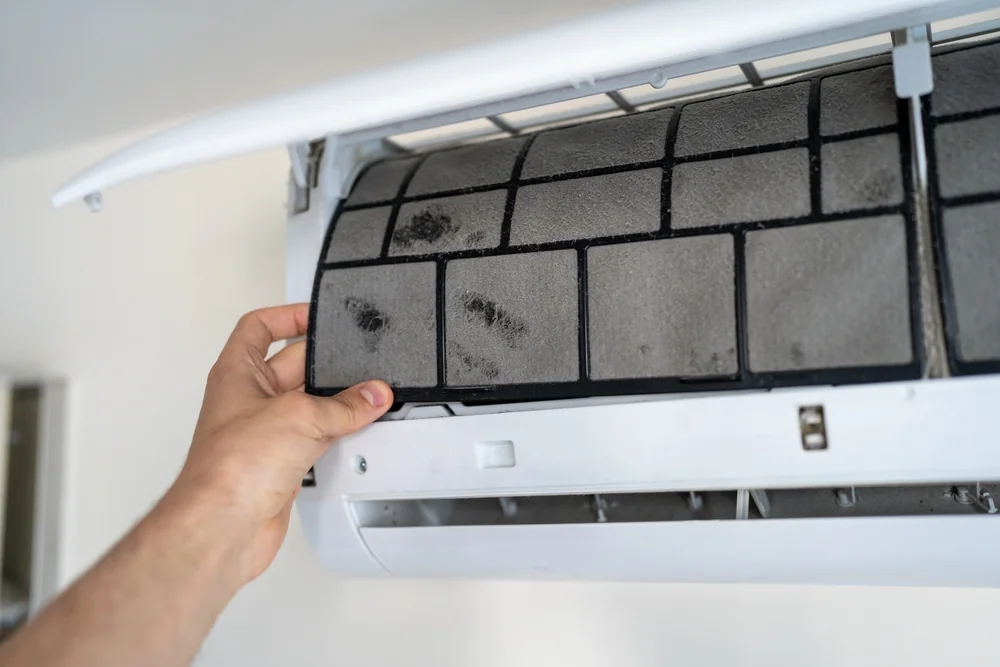
The indoor unit has a direct impact on comfort, air quality and running costs. During a professional service, the technician will usually remove and clean the return air filters to clear dust, lint, pet hair and other airborne particles. If the filters are damaged or too clogged to clean properly, replacement may be recommended.
The evaporator coil is then inspected and cleaned where needed. Over time, this coil can collect fine dust, cooking residue and moisture, which can reduce heat transfer and create musty smells. A proper clean helps the system cool or heat more efficiently and reduces strain on the unit.
The indoor fan, casing, vanes and air outlet are also checked. Dust build-up on the fan can reduce airflow, increase noise and affect how evenly air moves through the room. Cleaning these areas helps the unit operate more quietly and improves the delivery of conditioned air.
Once the indoor components have been cleaned, the technician will check airflow and temperature performance. This may include testing fan speeds, checking the direction of the louvres and measuring the temperature difference between the air entering and leaving the unit. These checks confirm whether the system is moving enough air and cooling or heating as expected.
Outdoor Unit Inspection and Cleaning
The outdoor unit plays a major role in system efficiency because it releases or absorbs heat during operation. If the outdoor coil is blocked by dirt, leaves, grass clippings, salt or other debris, the system has to work harder to achieve the same result.
A professional service includes a visual inspection of the outdoor unit, its cabinet, mounting base, brackets and surrounding clearance. The technician checks for damage, corrosion, blocked airflow, loose panels, vibration issues and anything stored too close to the unit.
The outdoor coil and fan are then cleaned carefully. This is not just a quick hose down. The technician removes debris, cleans the coil using suitable products and checks the fan blades for dirt or imbalance. In coastal areas, extra attention is often given to salt build-up and corrosion around the coil, brackets, pipework and fixings.
The technician may also inspect pipe insulation, refrigerant pipe connections and visible signs of oil staining, which can sometimes indicate a possible refrigerant leak. These checks help identify early issues that may reduce performance or lead to future repairs.
Drainage, Moisture and Mould Checks
A split system produces moisture as part of normal operation. This water should collect in the indoor drain tray and flow safely away through the condensate drain line. If the drain becomes blocked, water can leak from the indoor unit and damage walls, ceilings, flooring or nearby furniture.
During a service, the technician checks the drain tray, drain outlet and condensate line for sludge, algae, standing water or blockages. The line may be flushed or cleared if water is not draining correctly. If the system uses a condensate pump, the pump, float switch and discharge line should also be tested.
Moisture issues are also linked to mould and odours. Damp dust inside the indoor unit can create the right conditions for mould or biofilm to develop on the coil, fan barrel, drain tray and casing. Professional cleaning helps remove this build-up and reduces musty smells when the system starts.
The areas around the indoor and outdoor units are also checked for signs of moisture problems, such as water staining, damp plaster, damaged pipe insulation or pooling water around the outdoor base. These checks help prevent small drainage issues from becoming larger property damage problems.
Electrical and Performance Testing
Cleaning is only one part of a complete air conditioning service. Electrical and performance testing helps confirm whether the system is operating safely and efficiently.
The technician will inspect visible wiring, terminals, connectors, isolators and electrical components for signs of heat damage, corrosion, loose connections or wear. Components such as capacitors, fan motors, controllers and safety devices may also be tested to make sure they are working correctly.
The system is then run and assessed under normal operating conditions. The technician checks for unusual noises, vibration, weak airflow, poor temperature change or short cycling. These symptoms can point to problems with the fan, compressor, refrigerant circuit, controls or installation condition.
Refrigerant performance may also be checked where required. Rather than simply “topping up” gas, a qualified technician looks for signs that the system is operating within the expected range. If refrigerant levels appear low, this can indicate a leak that needs to be located and repaired.
These tests help identify faults early, reduce unnecessary power use and protect major components such as the compressor from avoidable strain.
How Often Should a Split System Be Serviced?
For most residential split systems, a full professional service once every 12 months is generally suitable. This is usually enough for homes with normal seasonal use, provided the filters are cleaned regularly between visits.
More frequent servicing may be needed if the system runs daily for long periods, is used for both heating and cooling throughout the year, or operates in a home with pets, smokers, heavy dust or high humidity. Homes close to the coast may also benefit from closer attention because salt air and moisture can affect the outdoor unit more quickly.
There are also signs that a service may be needed sooner than scheduled. These include weak airflow, unusual smells, higher electricity bills, water leaking from the indoor unit, uneven room temperatures, excessive noise or visible mould inside the unit.
Between professional services, owners should clean or vacuum the indoor filters every 4 to 8 weeks, depending on use. The outdoor unit should also be kept clear of leaves, vegetation and stored items so air can move freely around it.
A complete split system service should involve much more than cleaning the filters. Indoor components, outdoor coils, drainage, electrical connections, refrigerant performance and airflow all play a role in how safely and efficiently the system runs.
Regular maintenance helps reduce avoidable breakdowns, improve comfort, manage running costs and extend the working life of the unit. For homes on the Central Coast, where salt air, humidity and seasonal demand can place extra strain on air conditioning systems, a thorough professional service is an important part of keeping the system reliable year-round.
We Run Our Business Like a Family
When You Need Help
Get your home the Air Conditioning work it needs from our team at All Coast Air Conditioning. We’re always ready to help.


