
When an air conditioner no longer cools as effectively as it once did, many homeowners assume it simply needs to be "regassed". In reality, modern air conditioning systems are sealed, so refrigerant should not require routine replacement. If refrigerant levels are low, it usually indicates a leak or another fault that can reduce efficiency, increase running costs and place strain on major components, eventually leading to more extensive air conditioning repair in Central Coast properties.
All Coast Air Conditioning helps homeowners determine whether poor cooling is caused by a refrigerant leak or another fault. Knowing what air conditioner regassing involves, why refrigerant should not naturally run out and the warning signs of a leak can help prevent unnecessary regassing and more extensive repair. Also, recognise other faults that produce similar symptoms, how technicians diagnose and repair refrigerant leaks and when replacing an ageing system may be more practical.
What Does Air Conditioner Regassing Involve?
Air conditioner regassing is the process of checking, correcting and restoring the refrigerant charge in a system so it can cool efficiently and safely. It is not simply “topping up gas” like fuel in a car. Proper regassing follows a set procedure that includes leak detection, system preparation and precise recharging to the manufacturer’s specifications.
Work involving regulated refrigerants must be carried out by a technician with the appropriate Refrigerant Handling Licence and specialised equipment. Done correctly, it restores performance, protects the compressor and reduces running costs.
Inspection and Leak Testing
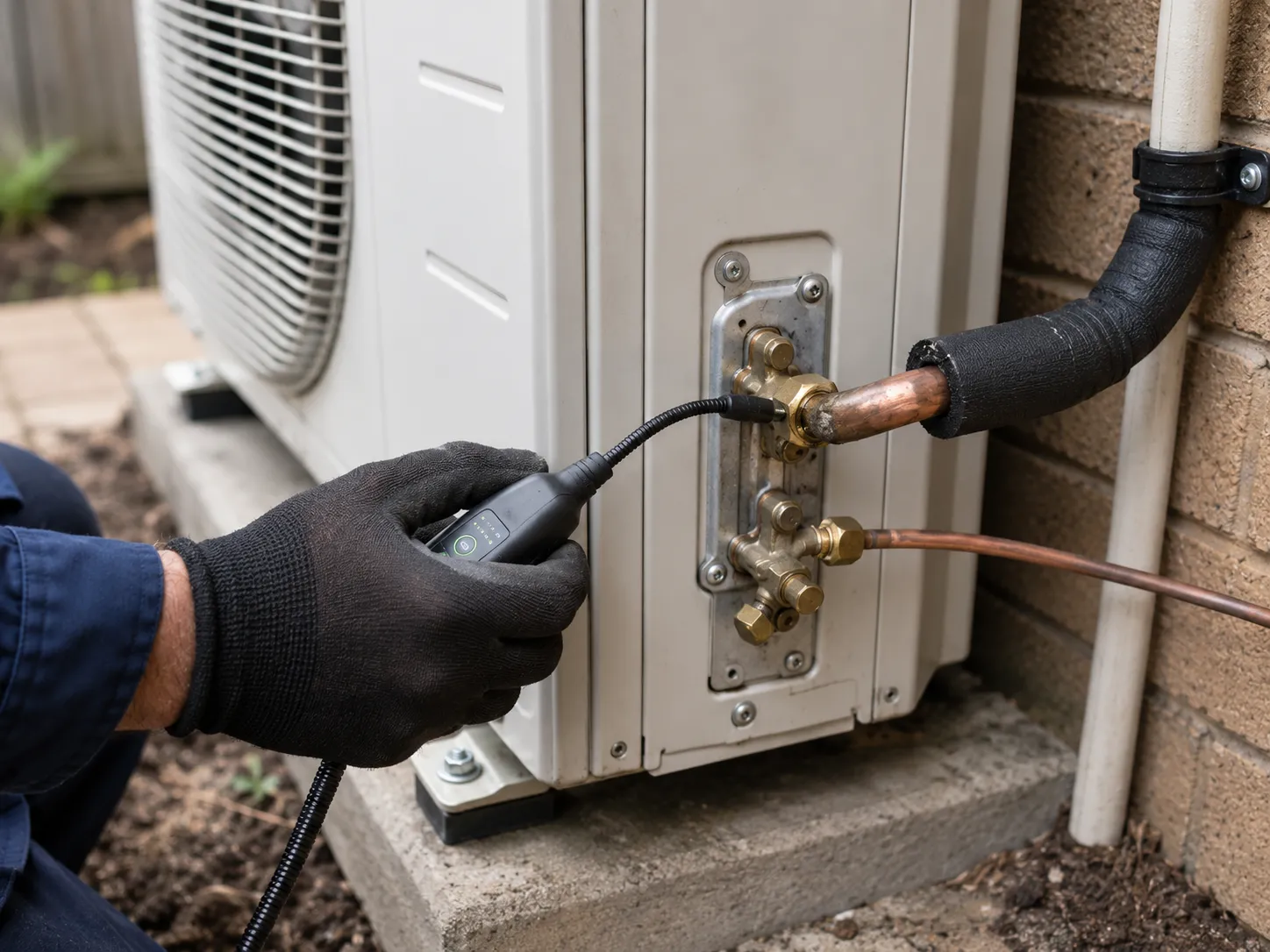
Regassing should always begin with a detailed inspection. A technician first checks obvious problem points, such as flare joints, service valves, coils and pipe insulation, for oil stains, corrosion or physical damage. Any sign of oil residue around fittings is a strong indicator of a refrigerant leak.
Electronic leak detectors, UV dye or nitrogen pressure testing may be used to confirm and locate hidden leaks. This step is critical. Simply adding more refrigerant without finding and fixing the leak is poor practice, can be illegal and will usually lead to repeat failures and potential compressor damage.
Once the leak source is identified, common corrective actions include tightening loose fittings, re-flaring joints, replacing damaged sections of copper pipe, replacing faulty Schrader valves or repairing coil leaks where practical. Only after the system is sound should regassing proceed.
Recovering Old Refrigerant and Evacuating the System
Before new refrigerant is added, any remaining gas must be safely recovered using a recovery unit and stored in an approved cylinder for recycling or disposal. Vented release of refrigerant into the atmosphere is prohibited and environmentally harmful.
After recovery, the system is connected to a vacuum pump via a manifold gauge set. The technician evacuates the system to a deep vacuum to remove air and moisture from the pipework and components. Moisture inside the system can freeze at the expansion device and also react with refrigerant and oil to form acids that attack internal parts.
The system is then left under vacuum for a period to confirm it holds pressure without rising. A stable vacuum reading indicates that leaks have been resolved and the system is ready for precise charging.
Precisely Recharging and Testing Performance
Regassing involves charging the correct refrigerant type and quantity specified on the unit’s data plate. The technician may charge by weight using electronic scales or by monitoring pressure and superheat/subcool readings in line with manufacturer guidelines.
During charging, the system is run in cooling mode while pressures, temperatures, airflow and electrical current draw are monitored. The aim is to achieve design operating conditions, not simply a particular pressure reading. Once the correct charge is achieved, supply and return air temperatures are checked to confirm an adequate temperature drop and the system is inspected again for any signs of leakage.
Service valves are capped, insulation is repaired where disturbed and a record of refrigerant type and quantity is updated. This documented process ensures the system is correctly regassed, efficient and compliant with regulations.
Why Low Refrigerant Usually Indicates a Problem
Low refrigerant in an air conditioner is almost never a normal part of operation. Unlike fuel or engine oil, refrigerant is not consumed while the system is running. Because the refrigeration circuit is sealed, low refrigerant almost always indicates that gas has escaped through a leak or another fault. Simply regassing the system without identifying the cause is only a temporary solution and often leads to recurring problems.
Refrigerant Loss Is a Symptom, Not the Cause
A split or ducted air conditioner is designed to keep the same refrigerant charge throughout its service life. If a technician finds the refrigerant level is low, the sealed system has usually been compromised. Causes could be the following:
- Corrosion affecting coils or copper pipework
- Loose or damaged flare connections
- Cracks caused by vibration or age
- Physical damage to refrigerant pipework or components
Because refrigerant should remain inside the sealed circuit, adding more without repairing the leak rarely provides a lasting fix. The refrigerant is likely to escape again, resulting in repeated callouts and unnecessary expense.
Continuing to operate an undercharged system forces the compressor to work harder, reducing efficiency and increasing the risk of overheating, icing and premature component failure. Therefore, technicians should always locate and repair the leak before restoring the refrigerant charge.
Can an Air Conditioner Lose Refrigerant Naturally Over Time?
No. A properly installed and functioning air conditioner should not lose refrigerant through normal operation because it operates as a sealed system. The refrigerant continuously circulates between the indoor and outdoor units without being consumed, so the refrigerant level should remain the same throughout the life of the system.
If refrigerant levels are low, the sealed refrigeration circuit has usually been compromised by a leak or another fault. Causes are corrosion, loose flare connections, damaged copper pipework, worn service valves and cracks caused by vibration or age. Even a small leak can gradually reduce cooling performance and increase energy consumption.
Routine refrigerant "top-ups" are therefore not considered normal maintenance. Proper routine air conditioning maintenance focuses on keeping the system clean, efficient and identifying developing faults rather than periodically topping up refrigerant. Instead, a licensed technician should identify and repair the source of the leak before recharging the system to the manufacturer's specified refrigerant level.
Signs Your Air Conditioner May Have a Refrigerant Leak
A refrigerant leak can reduce cooling performance, increase energy consumption and place extra strain on the air conditioning system. Because refrigerant should not be lost during normal operation, low refrigerant levels almost always indicate a leak or another fault within the sealed refrigeration circuit. While no single symptom confirms a leak, several warning signs appearing together may indicate that the air conditioner needs repair and warrant a professional inspection.
Common signs of a refrigerant leak include:
- Reduced cooling performance: The air conditioner runs for longer but struggles to reach the set temperature. Air from the vents may feel only slightly cool and some rooms may remain noticeably warmer than others.
- Longer run times and higher electricity bills: Low refrigerant forces the system to work harder to remove heat, causing it to run for extended periods and consume more electricity than usual.
- Ice or frost on the indoor or outdoor unit: Insufficient refrigerant can cause the evaporator coil or refrigerant lines to become excessively cold, leading to ice build-up that restricts airflow and further reduces cooling performance.
- Hissing or bubbling noises: Escaping refrigerant may produce hissing or bubbling sounds around the indoor or outdoor unit, particularly when the system starts or stops.
- Water leaking from the indoor unit: Ice that forms on the evaporator coil can eventually melt, causing excess water to overflow from the drain tray or drip from the indoor unit.
If several of these symptoms appear together, avoid running the air conditioner for extended periods until it has been inspected, as continued operation can increase the risk of compressor damage.
Other Faults That Can Produce Similar Symptoms
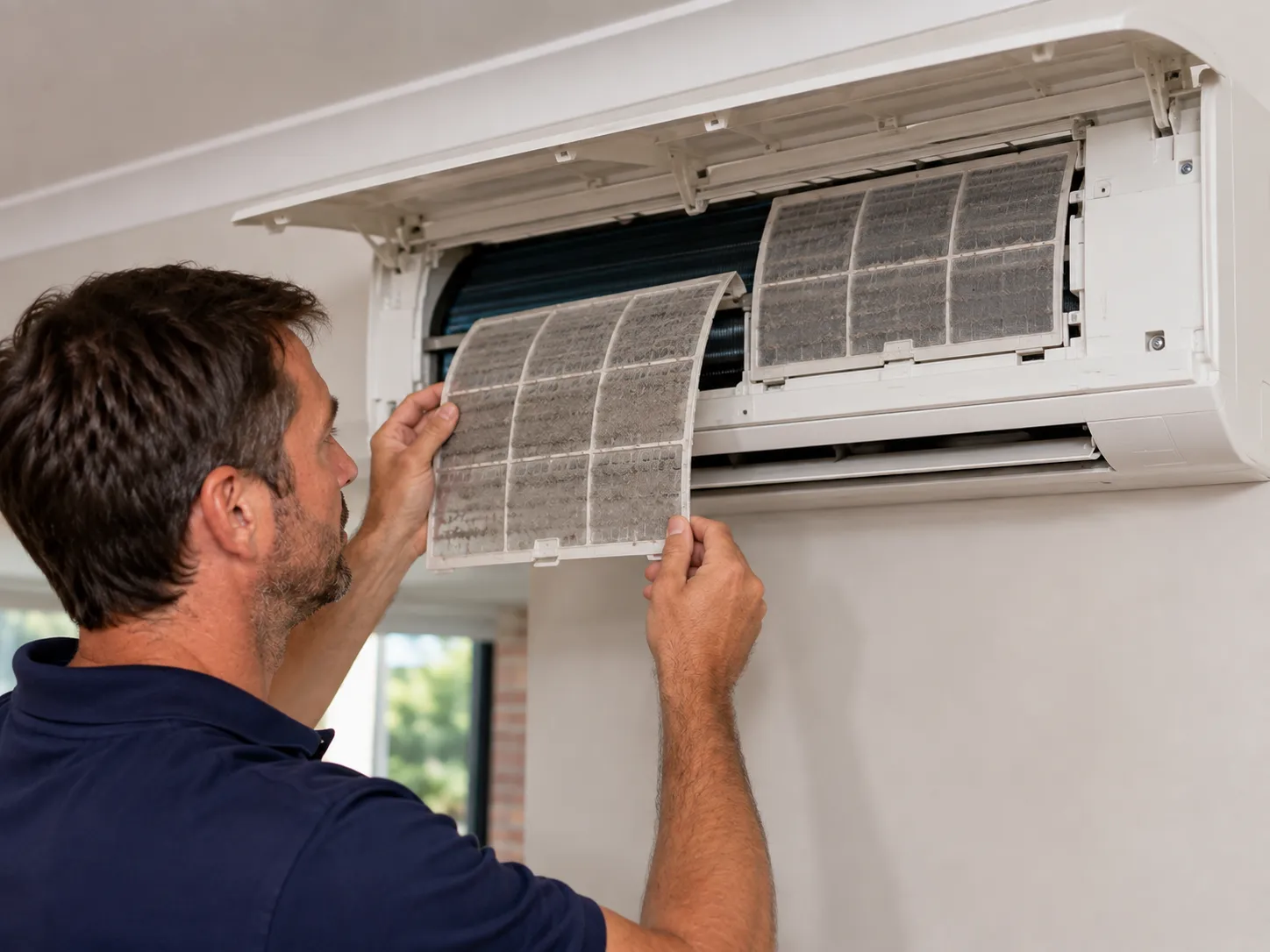
Not every cooling problem means an air conditioner has a refrigerant leak. Several other faults can produce similar symptoms, which is why professional diagnosis is essential before regassing the system. Identifying the actual cause helps avoid unnecessary regassing and ensures the correct repair is carried out.
Dirty filters and coils: Clogged filters restrict airflow across the indoor coil, while dirt on the indoor or outdoor coils reduces heat transfer. These issues can result in weak airflow, poor cooling performance, longer run times and ice forming on the indoor coil or refrigerant lines. Regular cleaning and routine maintenance often restore normal operation without the need for regassing.
Fan and airflow problems: Faulty indoor or outdoor fans, worn fan motors or damaged ductwork can all reduce airflow and cooling efficiency. These faults may cause uneven temperatures, higher energy consumption and symptoms that closely resemble low refrigerant levels.
Thermostat and electrical faults: Incorrect thermostat settings, faulty temperature sensors or failing electrical components such as capacitors, relays and control boards can prevent the air conditioner from operating correctly. These problems may cause intermittent cooling, warm air from the vents or frequent cycling, even when the refrigerant charge is normal.
Compressor problems: A worn or damaged compressor can reduce the system's ability to circulate refrigerant effectively, resulting in poor cooling, long run times, unusual noises or tripped circuit breakers. Depending on the age and condition of the unit, repairs may involve replacing major components rather than simply regassing the system.
How Technicians Repair Refrigerant Leaks Before Regassing
Before regassing an air conditioner, a technician must first locate and repair the source of the refrigerant leak. Simply adding more refrigerant without fixing the underlying problem is only a temporary solution, as the refrigerant will continue to escape. Proper leak detection and repair restore the system's efficiency, protect major components and ensure the air conditioner can be safely recharged.
Locating the Source of the Leak
The inspection usually begins with a visual assessment of the indoor and outdoor units, refrigerant pipework and connections. Technicians look for signs that may indicate where refrigerant is escaping.
If the leak is not immediately visible, specialised leak detection equipment and pressure testing are used to pinpoint the affected area. This confirms the source of the problem and ensures there are no additional leaks before repairs begin.
Repairing the System Before Regassing
Once the leak has been identified, the faulty component or connection is repaired or replaced. Depending on the cause, this may involve tightening fittings, repairing damaged pipework, replacing faulty valves or installing new components where necessary.
After the repair is completed, the system is tested to confirm it is properly sealed before being evacuated to remove air and moisture. Only then is the correct type and amount of refrigerant added according to the manufacturer's specifications. The technician then checks the system's cooling performance to ensure it is operating safely and efficiently.
What Happens If You Continue Using an Air Conditioner with Low Refrigerant?
Continuing to operate an air conditioner with low refrigerant may seem harmless while it is still producing some cool air, but it can quickly reduce efficiency and place excessive strain on major components.
Possible consequences include:
- Higher electricity bills: The air conditioner runs longer and consumes more energy to achieve the desired temperature.
- Reduced cooling performance: Rooms take longer to cool and may never reach the set temperature, resulting in uneven comfort throughout the home.
- Ice forming on the indoor coil or refrigerant lines: Low refrigerant can cause the evaporator coil to freeze, restricting airflow and further reducing performance.
- Compressor damage: The compressor works harder under low refrigerant conditions, increasing the risk of overheating, excessive wear and costly failure.
- More expensive repairs: A small refrigerant leak that is repaired early is often far less costly than replacing a damaged compressor or the entire air conditioning system.
Arranging professional repairs as soon as low refrigerant is suspected helps restore efficient operation, minimise running costs and reduce the risk of more extensive damage.
When Is Repairing the Leak No Longer Economical?
Many refrigerant leaks can be repaired successfully in newer air conditioning systems. However, there comes a point where continuing to repair and regas an ageing unit is no longer the most cost-effective option. The decision depends on factors such as the system's age, overall condition, repair costs and the likelihood of future breakdowns.
When Replacement May Be the Better Option
Replacing the air conditioner is often worth considering if the system:
- Is around 10 to 15 years old or older
- Has required frequent repairs or repeated regassing
- Needs expensive components
- Uses an older refrigerant that is difficult or costly to obtain
Investing in a newer, more energy-efficient system offers better long-term value than continuing to repair an ageing unit. Choosing energy-efficient air conditioning can also reduce the amount of electricity required to heat and cool the home.
Weighing Repair Costs Against Long-Term Value
A single refrigerant leak on a modern air conditioner is often economical to repair. However, if the system continues to develop leaks or other faults, repair costs can quickly add up while reliability continues to decline.
A licensed technician can assess the condition of the system, estimate the remaining service life and help determine whether repairing the leak or replacing the unit is the more practical and cost-effective solution.
When Should You Arrange Professional Air Conditioning Repair on the Central Coast?
While some air conditioning issues can be resolved through routine maintenance, suspected refrigerant leaks should always be assessed by a licensed technician. Because modern air conditioners operate as sealed systems, low refrigerant levels indicate an underlying fault that requires repair rather than a simple top-up. Prompt repair can restore performance, improve energy efficiency and help prevent more costly damage.
It is time to arrange a professional inspection if you notice:
- Reduced or uneven cooling throughout the property
- The system is running longer than usual without reaching the set temperature
- Ice forming on the indoor coil or refrigerant pipework
- Hissing or bubbling sounds from the indoor or outdoor unit
- Unexpected increases in electricity bills
While these warning signs often indicate a refrigerant leak, they can also point to airflow restrictions, electrical faults or compressor problems. Accurate diagnosis is essential before deciding whether regassing or another repair is required.
Many of these symptoms can also be caused by faults unrelated to refrigerant. A licensed technician can accurately diagnose the cause, recommend the most appropriate repair and ensure the system is operating safely and efficiently.
A properly functioning air conditioner should not require routine regassing, so low refrigerant levels almost always indicate a leak or another fault that requires professional attention. Signs such as reduced cooling performance, ice on the indoor or outdoor unit, hissing or bubbling noises, longer run times and higher electricity bills should not be ignored, as continuing to operate the system can lead to reduced efficiency and costly component damage.
All Coast Air Conditioning recommends having suspected refrigerant leaks diagnosed rather than simply topping up the refrigerant. Licensed technicians can locate and repair the source of the leak, recharge the system to the manufacturer's specifications and confirm that it is operating safely and efficiently. Prompt repairs help restore reliable cooling, improve energy efficiency, extend the lifespan of the system and reduce the risk of more expensive air conditioning repairs.
We Run Our Business Like a Family
When You Need Help
Get your home the Air Conditioning work it needs from our team at All Coast Air Conditioning. We’re always ready to help.


