
You press the cooling button, lower the temperature and wait. Nothing seems to happen. Before assuming the remote is broken, distinguish between two different problems: a command that never reaches the air conditioner and one that reaches the unit but does not produce an immediate change.
For Central Coast households, understanding this difference can make an unresponsive air conditioner easier to troubleshoot. All Coast Air Conditioning helps investigate problems that persist beyond basic user checks. Knowing what to look for, why replacement remotes can cause confusion and what information to provide a technician can make resolving the issue much easier.
Is My Remote Failing, or Is the Unit Delaying Its Response?
An air conditioner does not always respond to a button press by immediately blowing colder air. Sometimes the remote has successfully delivered the instruction, but the system needs time before changing its operation.
Your first useful observation is whether the indoor unit gives any indication that it received the command. Separating acknowledgement from actual operation helps you describe the problem accurately without assuming which component has failed.
Look for an Acknowledgement From the Indoor Unit
Depending on the model and its settings, the indoor unit may beep, change an indicator or update a display when it receives an instruction. Some systems allow audible feedback to be disabled, so silence alone does not establish that the remote has failed. Check the operating manual to understand how your model normally responds.
The remote's own display provides different information. If the temperature changes on the handset screen, that confirms the remote registered your button press. It does not necessarily mean the indoor unit received the instruction.
For example, if the unit acknowledges a temperature adjustment but the airflow stays the same, communication may be working correctly. The system could already be close to the selected temperature, or the requested change may not require an obvious fan response. A small temperature adjustment is not always something you can immediately feel.
Similarly, moving louvres or a changed indoor display can indicate that a command was received, where those functions are supported. Pay attention to what happens during ordinary use rather than cycling through every button to test the system.
Allow for Operating Delays Described in the Manual
Some air conditioners delay compressor operation after stopping or changing modes to protect their components. Heating operation may also include periods when airflow pauses or changes as part of normal operation.
The timing and behaviour depend on the system, so there is no universal waiting period that applies to every model. Check the manual for the mode you selected and allow the documented operating sequence to finish.
Repeatedly pressing the power button or switching between heating and cooling can make it harder to determine if the system is responding normally.
If the unit acknowledges your command but remains inactive beyond the behaviour described in its manual, note whether the fan operates, an indicator changes or the same pattern occurs each time. These observations can help a technician investigate the problem.
Simple User Checks Before Assuming a Fault
A few ordinary checks can identify an overlooked setting, weak batteries or an obstructed signal path. Keep these checks within the controls you normally use and the battery replacement procedure described in the remote's manual.
No need to remove the air conditioner's casing, inspect wiring or use electrical test equipment. If the basic checks do not explain the behaviour, further investigation should be left to a professional.
Check the Remote Display and Replace User-Accessible Batteries
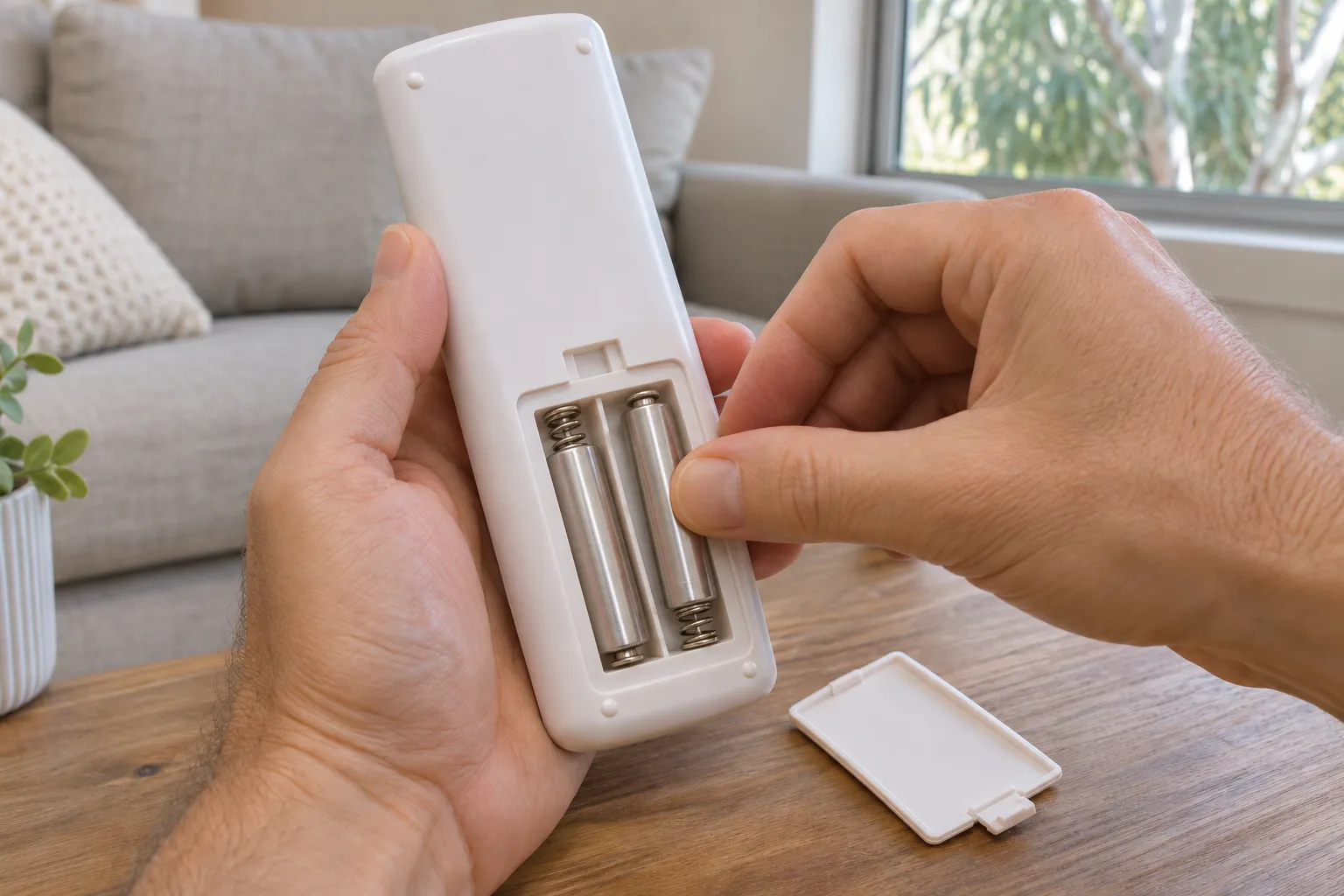
Look at whether the remote display is clear and whether it changes when you press a button. A faded display, missing segments or intermittent operation may indicate weak batteries, although these symptoms do not prove that batteries are the only problem. Some remotes also have a battery warning indicator.
If your remote has user-replaceable batteries, follow its instructions for the specified battery type and orientation. Replace the set as directed rather than mixing old and new batteries. A readable screen does not necessarily mean the batteries have enough power for reliable communication.
After replacement, check the settings shown on the remote. Depending on the model, some settings may return to their defaults. Confirm that you are requesting the operation you actually want before deciding that the new batteries made no difference.
If the battery compartment is damaged, contaminated or not readily accessible as described in the instructions, stop there and seek advice. Do not dismantle the handset to investigate its internal contacts or circuitry. The distinction between ordinary user checks and work for a professional is important once a problem extends beyond routine operation.
Confirm the Selected Mode and a Clear Signal Path
Check the operating mode as well as the temperature. Fan-only mode circulates air without actively cooling it, while automatic mode may make its own operating decisions. Timers, sleep settings and control locks can also affect how commands behave.
Use the manual to interpret unfamiliar symbols rather than guessing from their appearance. A setting that prevents cooling or changes the system's operation may make a working remote appear faulty.
For a handheld infrared remote, aim towards the indoor unit's receiving area from a normal operating distance. Furniture, curtains or other obstructions may interrupt the signal. Strong light near the receiver can also affect some systems.
Observe whether the unit responds when there is a clear line of sight, without climbing or moving equipment to reach the indoor unit. Not every remote uses the same communication method, so follow the instructions for your specific model.
If the display responds but the indoor unit still gives no acknowledgement under normal operating conditions, note that distinction. Avoid repeated power resets, which can obscure the original behaviour without establishing its cause.
Could a Replacement Remote Be Sending the Wrong Commands?
A replacement handset can look right and still communicate incorrectly with your air conditioner. If the trouble began after the original remote was lost, damaged or replaced, compatibility deserves attention before assuming the indoor unit has developed a fault.
This is relevant when a replacement remote operates one function but not another. A partial response can make a handset seem suitable even when it does not reliably support all the system's controls.
Similar Buttons Do Not Establish Compatibility
Power, temperature and fan buttons appear on many remotes, but the commands behind those buttons are not necessarily interchangeable. Compatibility depends on the air conditioner model and the remote's supported communication instructions, not just the keypad layout or appearance.
Replacement remotes can differ in the functions they support, including:
- Cooling and heating mode selection.
- Fan speed adjustments.
- Timer and sleep functions.
- Swing and louvre controls.
- Temperature adjustment and other model-specific settings.
Even handsets that look almost identical may be intended for different models or operating features. A replacement listing that describes a broad category of air conditioners does not confirm that every function will work with your system.
If a newly purchased replacement remote is faulty or does not match the seller’s description, check your consumer rights for faulty products before contacting the retailer.
If you need a replacement, confirm with a professional a suitable option using the air conditioner's model details and any identifying information on the original handset. Use information available in your paperwork or on a safely visible label. There is no reason to remove covers or access internal components to identify the system.
Some replacement remotes also require configuration. Follow the documented instructions for a confirmed compatible product rather than trying a succession of guessed programming codes. An occasional response during trial and error does not establish that the handset will control the system correctly in everyday use.
Partial Operation Can Obscure a Compatibility Problem
You might find that the power button works but fan speed adjustments do not, or that temperature changes appear on the remote while the unit behaves differently. These patterns can be consistent with a compatibility issue, but they are not enough to diagnose one.
The system's current mode and supported features also affect which commands it accepts. For instance, a function shown on a replacement remote may not exist on your air conditioner. In other cases, a particular mode may restrict a setting that works normally elsewhere.
The useful question is whether the function is supported by your system and should be available under the selected operating conditions.
Tell the technician if the original handset worked correctly before replacement and if any problems existed beforehand. If the original is still available, keep it for identification even if it no longer operates. A clear account of what changed helps distinguish a replacement remote issue from an unrelated fault that happened around the same time.
Receiver and Control Faults Need Professional Diagnosis
If ordinary checks do not restore reliable operation, the problem may extend beyond the handset. The indoor unit's receiving components or the system's controls are possible causes, but symptoms alone cannot identify which component needs attention.
A licensed professional can investigate how the remote communicates with the air conditioner and how the unit processes incoming instructions. This may involve checking whether the handset transmits a usable signal, the indoor unit receives it and the control system responds as expected.
A Working Display Does Not Prove the Signal Is Reaching the Unit
A remote can show a clear temperature setting while failing to transmit a usable command. Conversely, the handset may be transmitting correctly while the indoor unit is not receiving or processing the instruction.
These situations can look very similar from outside the system, which is why replacing the remote immediately is not always the most sensible next step. A replacement could solve a handset problem, but it will not resolve a fault elsewhere in the communication or control process.
A technician may assess the remote's signal, inspect the receiver and consider diagnostic information available for the specific air conditioner model. They may also investigate whether another control issue is preventing the unit from operating as expected.
An air conditioner that acknowledges a command but behaves unexpectedly requires a slightly different investigation from one that gives no acknowledgement at all. The selected mode, operating conditions and available diagnostic information all help narrow down the possible causes.
If you are comparing options for air conditioning repair in Central Coast, know the service includes investigating remote communication and the unit's response. A useful diagnosis should distinguish confirmed findings from possible causes rather than treating every unresponsive system as a broken remote.
Intermittent Response Can Have More Than One Cause
A system that responds only sometimes is not necessarily experiencing a more complicated fault, but the pattern matters. Weak batteries, an obstructed signal path, handset damage or a receiver problem can all produce inconsistent behaviour. Operating conditions may also make an accepted command appear ineffective.
Notice whether the problem happens from one position, with one function or only after the unit has been running. Do not create repeated test cycles to reproduce it. Observations gathered during ordinary use are more helpful than a series of rapid setting changes.
Other symptoms may also be relevant. If unreliable control occurs alongside unusual noise, poor cooling or unexpected shutdowns, mention those together. These other signs that your air conditioner may need repair can help explain why the issue deserves investigation beyond the handset.
Leave internal inspection, electrical testing and repair work to an appropriately licensed professional.
What Should I Tell the Technician About the Problem?
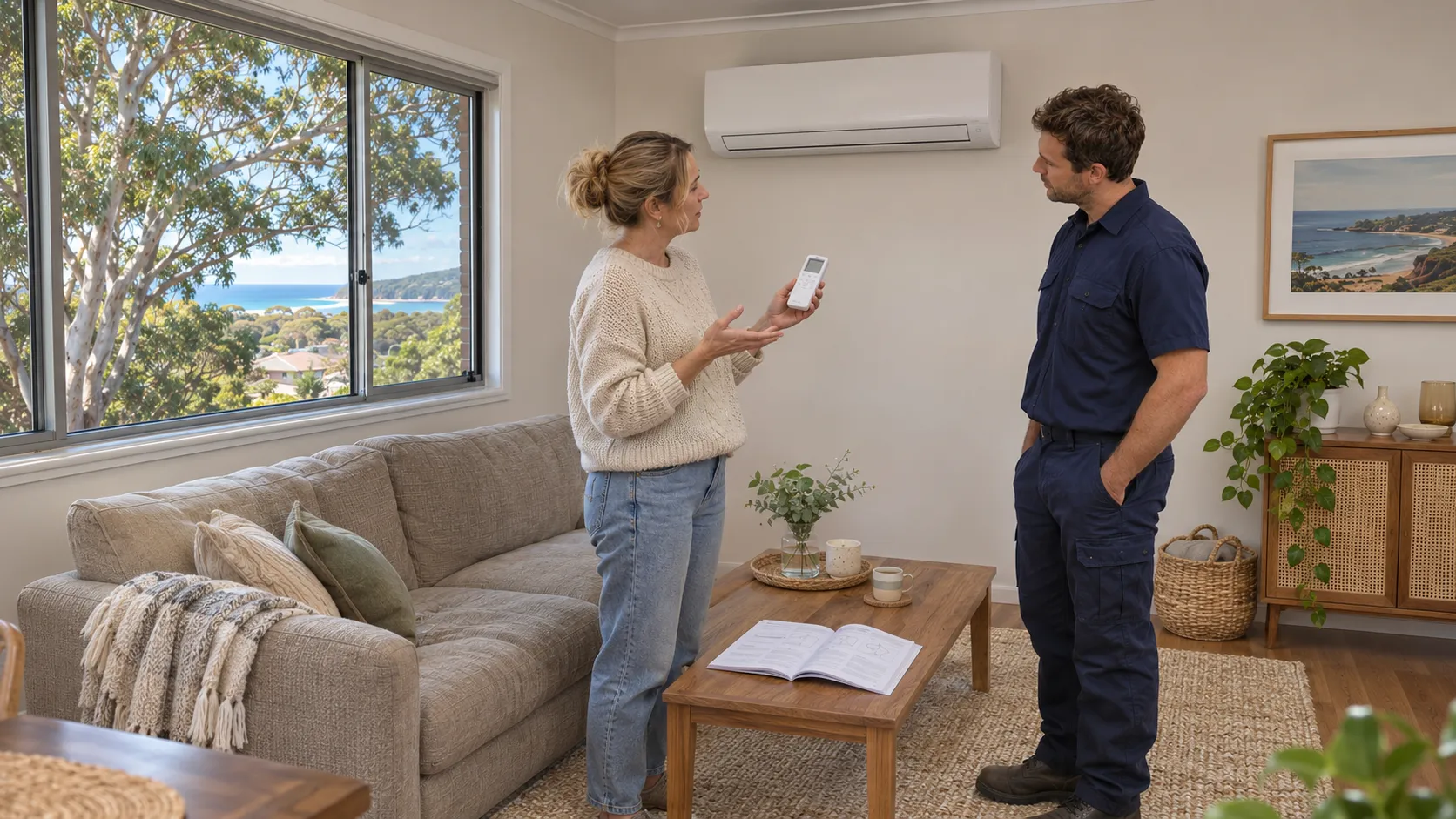
You do not need a technical diagnosis before booking help. A short, accurate description of what you pressed, what the remote displayed and what the indoor unit did is usually more useful than naming a suspected faulty component.
Keep the account practical. The aim is to help the technician understand the sequence of events and identify what needs investigating, rather than spending time repeatedly testing an unreliable system.
Describe Which Commands Work and Which Do Not
Instead of saying only that the air conditioner remote is not responding, explain whether the problem affects power, temperature, mode selection or another specific function.
Mention whether the remote screen changes and whether the indoor unit beeps, changes its display or moves its louvres in response, where applicable.
For example, saying, 'The remote changes to cooling, the unit beeps, but the fan does not start' describes a different situation from 'The remote display changes, but the unit gives no response'.
Neither statement diagnoses the cause, but each gives the technician a clearer starting point.
Explain whether the problem is constant or intermittent and roughly when you first noticed it. If the response depends on where you stand or follows a particular mode change, mention that too. There is no need to repeatedly recreate the sequence just to confirm it.
Also describe any ordinary checks already completed, such as replacing the batteries according to the manual or confirming the selected mode. Be clear about anything you are unsure of rather than presenting an assumption as a fact.
Mention Display Messages and Recent Remote Changes
If a code or message appears during normal use, write it down exactly or take a clear photograph from a safe position. A flashing light pattern must also be mentioned.
Do not remove covers or try to enter service menus to obtain more information. The technician can investigate diagnostic details using the appropriate procedures for your system.
Tell them if the remote was recently replaced, dropped or exposed to liquid. Mention whether it is the original handset and whether the symptoms began before or after the change. Have the operating manual and any readily available model details nearby if possible.
When comparing local service providers, know how they approach diagnosis and how any proposed repair or replacement will be explained. A recommendation should relate to the findings for your system rather than assume that an unresponsive remote means the entire air conditioner needs replacing.
Before booking repair work, you can check the contractor’s licence through Service NSW.
If there is a burning smell, smoke or another sign of electrical danger, stop using the system and seek urgent assistance. Do not continue remote checks or attempt power resets. For immediate danger, move away and contact emergency services rather than waiting for a routine service appointment.
Get Help With an Unresponsive Air Conditioner Remote
An air conditioner remote that stops responding does not always need replacing. The issue could involve weak batteries, an incorrect setting, an incompatible replacement handset or a fault within the unit's receiving and control components. Identifying whether the indoor unit acknowledges your commands is a useful first step towards understanding what might be happening.
All Coast Air Conditioning assists in investigating unreliable remote operation and other air conditioning concerns. A professional assessment can establish whether the handset, receiver or another part of the system needs attention, helping you avoid unnecessary replacements and get your air conditioner operating reliably again.
We Run Our Business Like a Family
When You Need Help
Get your home the Air Conditioning work it needs from our team at All Coast Air Conditioning. We’re always ready to help.


