
When summer heat arrives, an air conditioner can make a home feel cooler without necessarily addressing the sticky, heavy feeling caused by excess humidity. For homeowners considering air conditioning in Central Coast, knowing how a system manages temperature and moisture can make a noticeable difference to indoor comfort, energy use and the risk of dampness or mould.
All Coast Air Conditioning helps in understanding how air conditioning systems can remove moisture as part of the cooling process and why some homes remain humid even when the system is running. Factors such as system sizing, fan settings, airflow, insulation and maintenance can all influence how effectively an air conditioner controls indoor humidity.
The right setup can do more than lower the temperature. Knowing what affects dehumidification, how to identify persistent moisture problems and when additional measures may be needed can help create a cooler, more comfortable and better-balanced indoor environment throughout the warmer months.
How Does Air Conditioning Reduce Humidity?
Air conditioning can remove moisture as it cools indoor air. Warm, humid air passes over the system's cold evaporator coil, causing water vapour to condense into droplets. The moisture collects in a drain pan and is carried away through the condensate drain, leaving the air cooler and drier.
The amount of moisture removed depends on how the system operates and the conditions inside the home. Longer cooling cycles give the evaporator coil more opportunity to collect moisture, while restricted airflow or poor system performance can reduce dehumidification.
A correctly sized and maintained air conditioner with suitable airflow can help control temperature and humidity. However, cooling performance and moisture removal are not always identical, which is why a home can sometimes feel cool while still having elevated humidity.
YourHome’s guidance on cooling and humidity explains how air conditioning can reduce both indoor temperature and moisture levels.
Why Can a Home Still Feel Humid With the Air Conditioner On?
An air conditioner can cool a home without removing enough moisture to prevent a sticky or clammy feeling. This can occur when the system does not operate for long enough, when the home's moisture load is high or when humid outdoor air continues entering the building.
Several factors can contribute to persistent indoor humidity:
- Short cooling cycles: A system that reaches the desired temperature very quickly may not operate long enough for effective moisture removal.
- High indoor moisture loads: Hot showers, cooking, indoor clothes drying and inadequate bathroom ventilation can add moisture to the air.
- Outdoor moisture entering the home: Gaps around windows and doors, poor sealing and frequent opening of doors or windows during humid weather can allow additional moisture inside.
- System or airflow problems: Dirty filters, restricted returns, blocked vents or other faults can interfere with normal cooling and dehumidification.
Reducing unnecessary moisture sources and ensuring the air conditioner is operating correctly can improve indoor comfort. If humidity remains consistently high, professional assessment can help determine whether the system, building conditions or an additional moisture-control measure is responsible.
Which Air Conditioner Settings Help Control Indoor Humidity?
Air conditioner settings can affect how effectively a system removes moisture as it cools. Temperature, fan mode and operating schedules all influence how long the system runs and how much moisture is removed from indoor air.
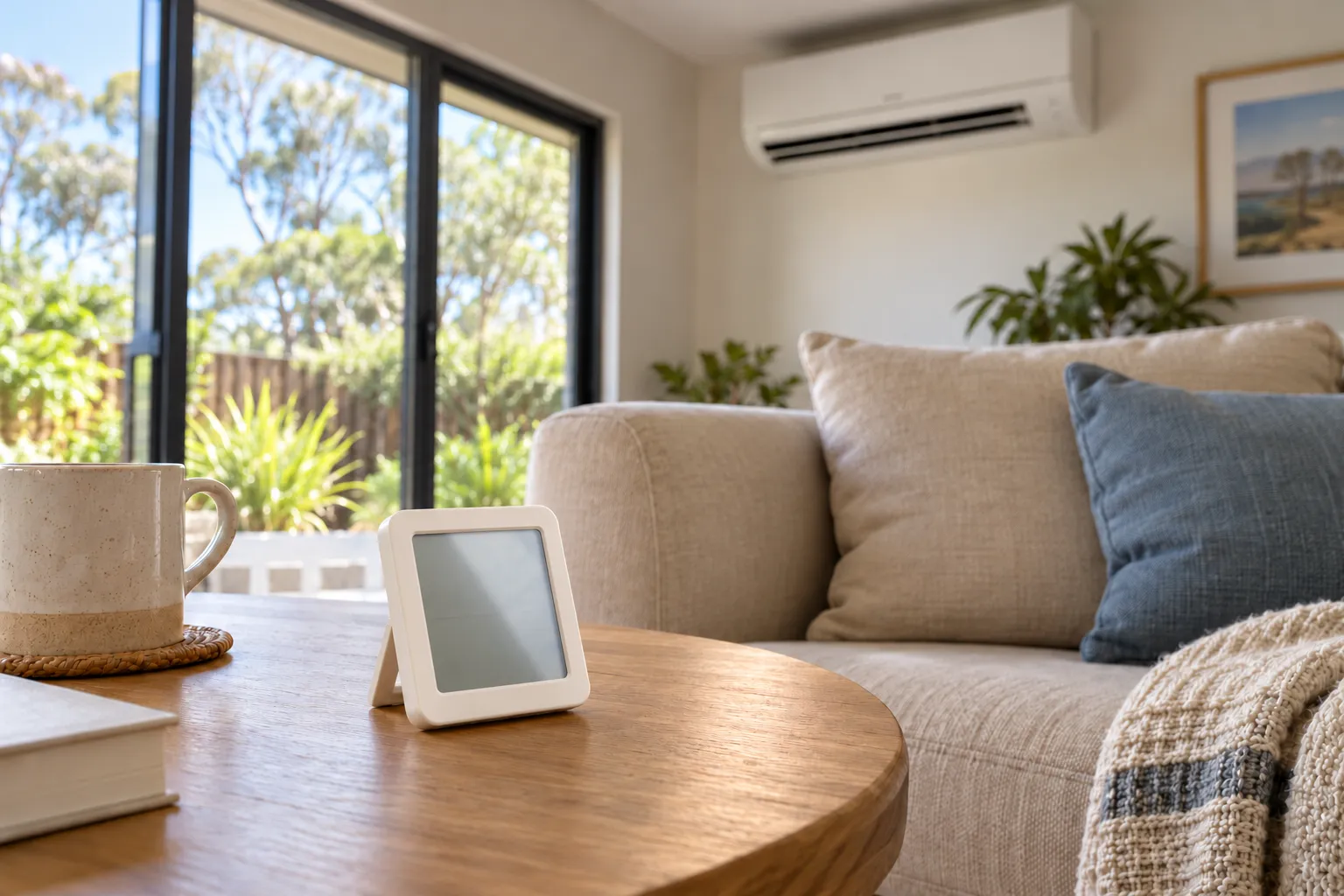
Simple adjustments can often improve comfort without setting the thermostat unnecessarily low. The main aim is to encourage steady cooling cycles and allow the system enough run time to dehumidify effectively.
Set a Moderate Temperature
A cooling setpoint around 23-25°C can provide a practical balance between comfort, energy use and humidity control. Setting the temperature much lower does not necessarily improve moisture removal and may cause the system to reach the target quickly and switch off.
During humid weather, lowering the setpoint slightly for short periods may provide additional moisture removal if the system is correctly sized and operating properly.
Use Auto Fan Mode
Auto fan mode is preferable when humidity control is a priority. The fan stops when the cooling cycle ends, allowing moisture collected on the evaporator coil to drain away.
With the fan set to On, air continues moving over the coil between cooling cycles. This can re-evaporate some of the collected moisture and return it to the room, potentially making the home feel more humid.
Use Humidity-Focused Features
Some modern systems offer settings and features that can support moisture control, including:
- Dry or dehumidify mode: Available on some systems to prioritise moisture removal.
- Inverter technology: Adjusts cooling output to support longer, steadier operating cycles.
- Programmable controls: Help maintain consistent temperature settings rather than allowing large temperature increases while the home is unoccupied.
These settings can support better humidity control, but they cannot compensate for incorrect system sizing, restricted airflow or excessive moisture entering the home. Those underlying issues should be addressed if indoor humidity remains high.
How Does Air Conditioner Sizing Affect Humidity Control?
Air conditioner sizing affects cooling performance and humidity control. A system that is too large may cool the home quickly without operating for long enough to remove sufficient moisture, while an undersized system may struggle to meet the home's cooling demands.
The main sizing considerations are:
- Oversized systems: May reach the thermostat setting quickly, resulting in shorter operating cycles and less opportunity for moisture removal.
- Undersized systems: May operate for extended periods while struggling to maintain the desired temperature during hot weather.
- Correctly sized systems: Can provide operating cycles that balance cooling, dehumidification and energy efficiency.
Proper sizing should take into account the home's floor area, layout, insulation, window size and orientation, outdoor conditions and internal moisture loads. These factors help determine the capacity required to maintain stable indoor conditions.
Local weather conditions and the property's construction can also influence the appropriate system capacity. Correct sizing is therefore important for achieving consistent comfort rather than simply selecting a system based on floor area alone.
Can Maintenance Problems Reduce Your Air Conditioner’s Ability to Remove Humidity?
Yes. Poor maintenance can reduce an air conditioner's ability to remove moisture, even when the system still appears to cool the home normally. Dirty filters and evaporator coils can restrict airflow and reduce heat transfer, making it harder for moisture to condense and drain from the air.
Blocked condensate drains can also affect humidity control. When water cannot drain away properly, the system may become less effective at removing moisture and may shut down to prevent overflow. Low refrigerant, incorrect fan operation and other faults can further reduce dehumidification performance and should be assessed by a qualified technician.
Regular maintenance helps keep airflow, coil performance and condensate drainage in good condition. Cleaning or replacing filters, checking the evaporator coil and clearing the condensate drain can help maintain effective cooling and moisture removal while identifying faults before they become more significant.
What Indoor Humidity Level Should Homeowners Aim For?
For most homes, an indoor relative humidity level of around 40-60% provides a comfortable balance between moisture control and indoor conditions. In coastal areas, aiming for around 45-55% can help reduce that sticky feeling while limiting conditions that support mould and mildew growth.
Humidity levels that remain consistently above 60% can make a home feel clammy even when the temperature is comfortable. Prolonged high humidity can also contribute to condensation, musty odours and moisture-related problems around bathrooms, windows and other cooler surfaces.
A simple digital hygrometer can help homeowners monitor relative humidity and determine whether the air conditioner is keeping moisture within a reasonable range. If readings regularly remain above 60% despite the system running, it may indicate that the air conditioner is not removing enough moisture or that additional moisture is entering the home. Checking system operation, ventilation, insulation and indoor moisture sources can help identify the cause before considering additional dehumidification.
How Does Humidity Affect Comfort and Indoor Air Quality?
Humidity affects how comfortable a home feels and the quality of its indoor environment. Keeping indoor relative humidity around 40-60% can help maintain a more comfortable balance, with 45-55% being a practical target for many homes.
Humidity and Indoor Comfort
High humidity can make a home feel warmer because moisture in the air slows the evaporation of sweat from the skin. As a result, rooms may feel sticky or uncomfortable even when the thermostat shows a relatively low temperature.
Controlling moisture alongside temperature can make indoor spaces feel more comfortable without relying on increasingly lower air conditioning settings. Excess humidity can also contribute to condensation on cooler surfaces, particularly during periods of humid weather.
Humidity and Indoor Air Quality
Persistently high humidity can create conditions that support mould and mildew growth around bathrooms, kitchens, windows and poorly ventilated areas. Damp materials can also develop musty odours that affect the freshness of indoor air.
NSW Health’s mould prevention guidance recommends using exhaust fans and repairing leaks to reduce dampness in the home.
Maintaining moderate humidity can help reduce these moisture-related problems, alongside proper ventilation, leak repairs and regular air conditioner maintenance. Balanced temperature and humidity control can support a more comfortable indoor environment.
Does Ducted Air Conditioning Control Humidity Better Than Split Systems?
Neither ducted nor split-system air conditioning automatically provides better humidity control. Both systems can remove moisture as they cool indoor air and their effectiveness relies on correct sizing, airflow, operating settings, installation and maintenance.
Ducted systems can provide more consistent humidity control across multiple rooms because one system distributes conditioned air throughout the home. Properly designed zoning can also help manage different cooling and moisture demands between living areas, bedrooms and other spaces.
Split systems, by comparison, provide targeted cooling and dehumidification in individual rooms. This can be useful where only certain areas need regular conditioning, although humidity control is limited to the spaces served by the units.
The better choice is based on the home's layout, cooling requirements and moisture loads rather than humidity control alone. A correctly sized and maintained system, whether ducted or split, can provide effective dehumidification when airflow and operating settings are appropriate.
How Do Insulation and Ventilation Affect Indoor Humidity?
Insulation and ventilation both affect indoor humidity, although they work in different ways. Good insulation helps maintain stable indoor temperatures, while effective ventilation removes excess moisture from everyday activities. Together, they can reduce the workload on an air conditioner and support more consistent indoor comfort.
How Insulation Affects Humidity
Insulation does not remove moisture directly, but it reduces heat transfer through walls, ceilings and roofs. This helps the air conditioner maintain a stable temperature without needing to operate excessively during hot weather.
Good insulation can also help reduce condensation on cooler indoor surfaces. Sealing gaps around windows, doors and service openings is equally important because humid outdoor air can enter through these areas even when the main parts of the home are well insulated.
How Ventilation Affects Humidity
Ventilation helps remove moisture produced by activities like showering, cooking and drying clothes. Bathroom and kitchen exhaust fans can remove humid air at its source before it spreads through the rest of the home.
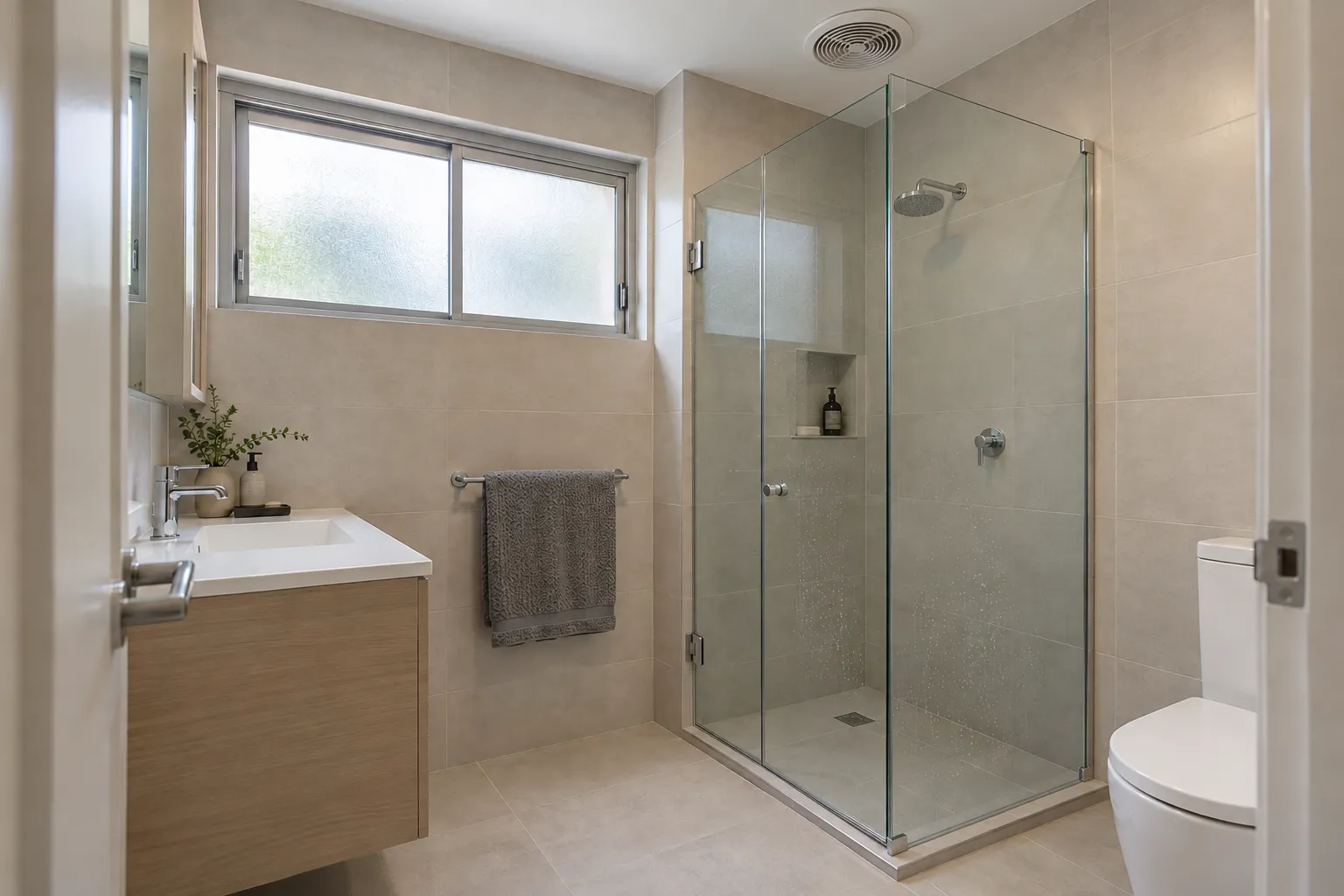
Ventilation needs to be managed according to outdoor conditions. Opening windows during hot, humid weather can introduce additional moisture, while keeping the home closed up without adequate exhaust ventilation can allow indoor moisture to build up. Combining appropriate ventilation with good insulation and sealing can help maintain more stable indoor humidity.
When Should Homeowners Consider a Dehumidifier?
A dehumidifier can be useful when indoor humidity remains consistently high despite the air conditioner operating correctly. Air conditioning can remove moisture as it cools indoor air, although the amount removed depends on system operation and conditions. It may not keep humidity within a comfortable range when moisture loads are high or the home remains humid during mild weather.
Signs Additional Dehumidification May Help
A dehumidifier may be worth considering when indoor relative humidity regularly stays above 60%, particularly when the home also feels damp or musty. Here are other signs:
- Condensation regularly appearing on windows or cool surfaces
- Musty odours or mould developing in poorly ventilated areas
- Rooms feeling sticky even when the temperature is comfortable
- Humidity remaining high when the air conditioner is not running for long periods
A digital hygrometer can help confirm whether humidity is consistently elevated rather than relying only on how the room feels.
Check the Air Conditioner First
A dehumidifier should not be used to compensate for an air conditioner that is poorly maintained, incorrectly sized or operating with restricted airflow. Dirty filters, blocked condensate drains, incorrect fan settings and other faults can all reduce moisture removal.
Addressing ventilation, leaks, unwanted air gaps and other moisture sources should also come first. If humidity remains high after these issues have been addressed, a dehumidifier can provide additional moisture control without requiring the air conditioner to lower the temperature further. Combining appropriate cooling with effective humidity management can provide more consistent indoor comfort.
Effective air conditioning can help control temperature and humidity, but results depend on proper sizing, airflow, settings and maintenance. Issues such as short cycling, poor ventilation, inadequate insulation and excess moisture can still leave a home feeling humid, so addressing these factors is important for lasting comfort.
For coastal homes, managing humidity alongside temperature can help reduce condensation, mould and musty odours. All Coast Air Conditioning can help homeowners assess their system and identify practical ways to improve cooling and moisture control, creating a more comfortable and efficient home throughout the year.
We Run Our Business Like a Family
When You Need Help
Get your home the Air Conditioning work it needs from our team at All Coast Air Conditioning. We’re always ready to help.


