
An air conditioner should operate quietly in the background, keeping a home comfortable without drawing attention. When it starts rattling, buzzing, clicking or grinding, however, the noise may indicate an underlying issue such as a loose component, restricted airflow or normal wear and tear.
For homeowners relying on air conditioning in Central Coast, recognising unusual sounds early can help prevent minor faults from developing into costly repairs. Different noises can provide useful clues about what may be happening inside the system and whether it needs simple maintenance or professional attention.
All Coast Air Conditioning helps understand these warning signs and determine when an air conditioner needs to be inspected. By identifying the causes behind unusual noises, homeowners can take appropriate action to keep their systems running safely, efficiently and reliably.
Normal Air Conditioner Sounds: What’s Nothing to Worry About?
Not every sound from an air conditioner indicates a fault. Fans, compressors and airflow naturally create some noise during operation and the exact sounds vary between different systems.
A gentle whooshing sound, low hum or brief click during startup or shutdown is normal when the sound is consistent with the system's usual operation. But, a noise that suddenly becomes louder, changes character or occurs alongside poor cooling or other symptoms may need attention.
Airflow, Humming and Clicking
- Airflow and fan noise: A soft whooshing or rushing sound is usually caused by air moving through the indoor unit, vents and ductwork. It may become slightly louder as the fan speed increases.
- Soft humming: A steady hum from the indoor or outdoor unit can be normal while fans or the compressor are operating. It should not suddenly become noticeably louder or harsher.
- Brief clicking: A click when the system starts or stops can come from relays, contactors or other controls switching. Occasional ticking can also result from plastic components expanding or contracting with temperature changes.
The key is to recognise what is normal for your system. A new, persistent or increasingly loud sound deserves closer attention, especially if it is accompanied by reduced cooling, unusual vibration, water leakage, burning smells or electrical problems.
Rattling or Vibrating Noises
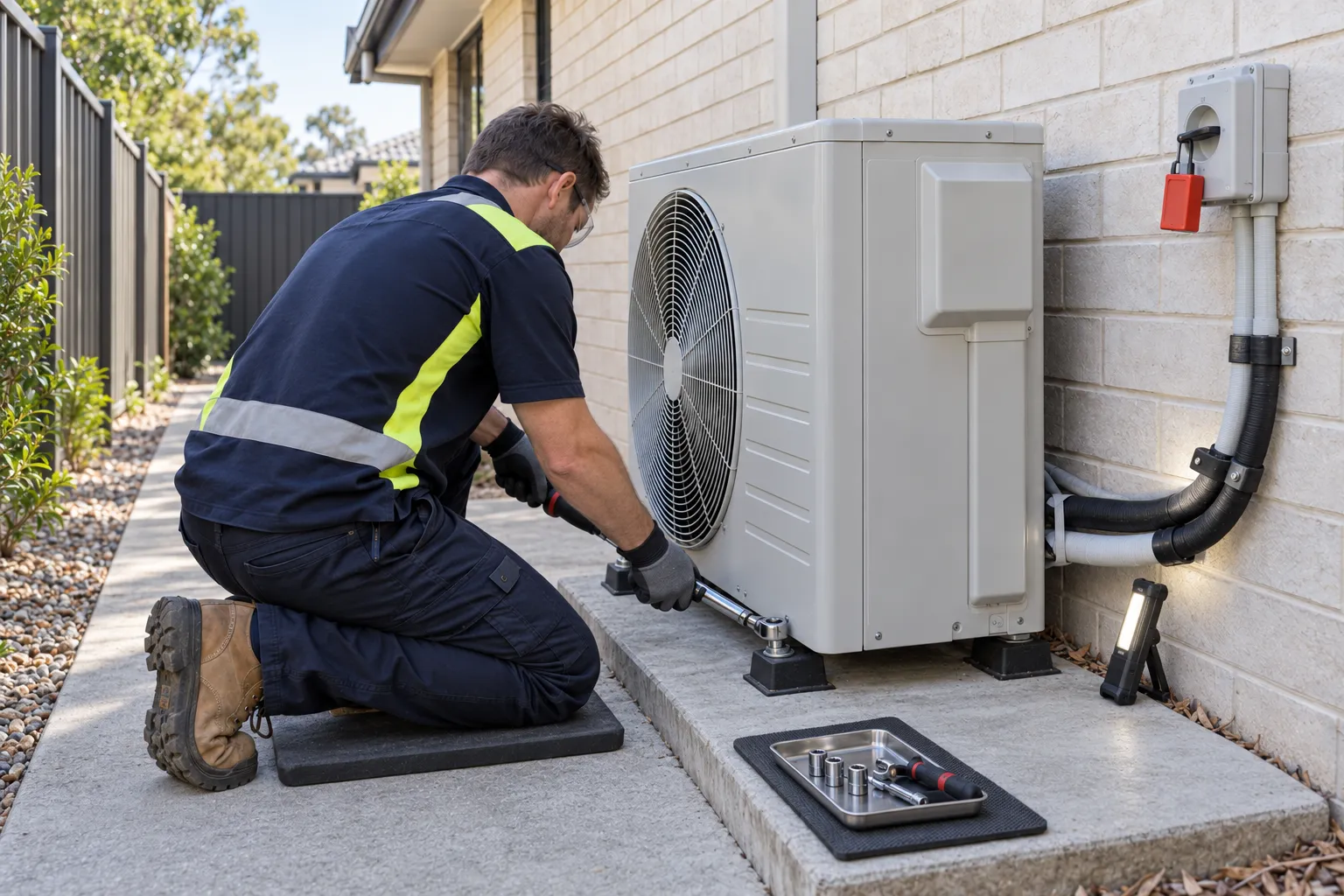
Rattling or vibrating noises usually mean something is loose, obstructed or out of balance. The cause may be as simple as debris around the outdoor unit, but persistent vibration can also involve a fan, motor, mounting point or pipework.
Common Causes
- Loose panels or hardware: Access panels, grilles, brackets or other external components can vibrate while the system operates.
- Outdoor debris: Leaves, twigs and small stones around the outdoor unit can create rattling or clattering sounds.
- Fan or motor problems: A damaged or unbalanced fan blade, worn bearing or motor issue can cause stronger vibration as the fan speed increases.
- Vibrating pipework: Refrigerant lines or other pipework can vibrate against nearby walls, ceilings or framing if they are loose or inadequately supported.
With the system switched off, homeowners can visually check for accessible debris or obviously loose external panels. If the vibration persists, becomes stronger or appears to come from an internal component, a licensed technician should inspect the system.
Buzzing or Humming Sounds
A soft hum is normal during operation, but a new, louder or erratic buzzing sound may indicate an electrical or mechanical issue. Possible causes include loose components, fan problems, electrical controls or compressor-related faults.
Because buzzing can involve electrical components, homeowners should not open the unit or attempt electrical repairs.
Underlying Factors
- Electrical components: Relays, contactors and transformers can produce a low hum during normal operation. A sudden or unusually loud buzz may indicate a fault.
- Fan or motor issues: Loose mounting, damaged fan blades or worn motor bearings can produce humming, buzzing or vibration.
- Starting problems: A deep hum from the outdoor unit without the fan or compressor starting properly can indicate a component or electrical problem that needs professional assessment.
- Outdoor debris: Loose leaves or other debris can contact or interfere with the outdoor fan and create unusual sounds.
If buzzing is accompanied by a burning or electrical smell, repeated circuit breaker trips, difficulty starting or loss of cooling, switch the system off and arrange professional assistance. Do not repeatedly reset a tripped breaker.
Clicking or Ticking Noises
A brief click when an air conditioner starts or stops is usually normal. Clicking or ticking that is loud, repetitive or continues throughout operation may indicate a loose component, fan problem or electrical fault.
Consider when the sound occurs and whether it changes with fan speed or the cooling cycle. This can help a technician identify the likely source.
Typical Origins
- Normal switching: Relays, contactors and other controls may click briefly as the system starts or stops.
- Loose or obstructed parts: Fan blades can make a ticking sound if they contact debris or another component. Loose panels can also produce repetitive clicking.
- Fan problems: Worn bearings, damaged blades or an unbalanced blower wheel can create a rhythmic ticking that changes with fan speed.
- Electrical faults: Rapid clicking combined with difficulty starting, repeated shutdowns or short cycling may indicate an electrical or control problem.
If the clicking continues during operation, becomes more frequent or occurs alongside poor cooling or breaker trips, arrange a professional inspection. Internal and electrical components should not be accessed by homeowners.
Hissing or Whistling Sounds
A sharp hissing or whistling sound is different from the gentle airflow noise an air conditioner normally produces. Persistent hissing or whistling can be associated with refrigerant, ductwork or airflow problems.
The location and timing of the sound can provide useful clues, but the noise alone cannot confirm the exact cause.
Known Triggers
- Possible refrigerant leak: A persistent hiss around the indoor unit, outdoor unit or refrigerant lines may be associated with a refrigerant leak. Reduced cooling, longer running times or ice on pipes or coils may occur at the same time.
- Duct or vent leaks: Whistling around supply or return grilles can occur when air escapes through gaps, loose connections or poorly sealed ductwork.
- Restricted airflow: A dirty filter, blocked vent or unsuitable filter can increase air pressure through smaller openings and create a whistle.
- System pressure or component issues: A strong or unusual hiss from the outdoor unit should be professionally assessed rather than diagnosed from the sound alone.
Understanding how neglected air conditioner filters and ducts affect airflow can help homeowners identify why a system is whistling, working harder or cooling less effectively.
Homeowners can check that vents are open and that the filter is clean and correctly fitted. If the noise continues, particularly with poor cooling, ice formation or unusual running times, contact a technician. In Australia, anyone performing work that risks releasing fluorocarbon refrigerant must hold an appropriate Refrigerant Handling Licence, which is why suspected leaks should be left to a qualified professional.
Banging, Clanking or Grinding Noises
Banging, clanking or grinding usually deserves prompt attention. These sounds may be caused by loose components, damaged fan blades, worn motor bearings or other mechanical problems and continued operation can increase component damage.
The Determinants
- Loose or damaged fan components: A loose, bent or unbalanced fan blade may strike the surrounding grille or housing while operating.
- Worn motor bearings: Grinding or harsh scraping can occur when bearings in a fan or blower motor wear.
- Fan or blower wheel contact: A shifted wheel, damaged shaft or mounting problem can cause moving parts to scrape against their housing.
- Compressor problems: A heavy metallic knocking sound from the outdoor unit may be associated with a compressor fault when combined with poor cooling or other operating problems.
A loud or persistent banging, clanking or grinding noise is a reason to switch the system off and arrange professional assistance. Homeowners can check for obvious external debris once the system is off, but motors, compressors and other internal components should be left to the professionals.
Gurgling or Bubbling Sounds
Gurgling or bubbling sounds can be associated with refrigerant movement or condensate drainage. A brief sound during startup or shutdown may occur on some systems, but persistent or loud bubbling should be investigated.
Usual Sources
- Refrigerant issues: Unusual gurgling around refrigerant lines or the indoor unit may occur when refrigerant is not flowing correctly. Other symptoms can include reduced cooling or ice formation.
- Blocked condensate drain: A partially blocked drain can trap water and air, creating bubbling or gurgling near the indoor unit.
- Drainage problems: Poor drainage or sections of pipe where water collects can contribute to intermittent gurgling.
- Normal system operation: A short gurgle immediately after startup or shutdown may simply result from refrigerant or condensate settling within the system.
Persistent gurgling should be inspected if it occurs with poor cooling, water leaks, ice or staining around the indoor unit. Homeowners can check that an accessible drain outlet is not visibly blocked, but internal drainage and refrigerant components should not be opened or repaired without professional assistance.
Finding an air conditioner leaking water can indicate a blocked condensate drain, frozen coil or another fault that should be investigated before property damage occurs.
Simple Checks to Try Before Calling a Technician
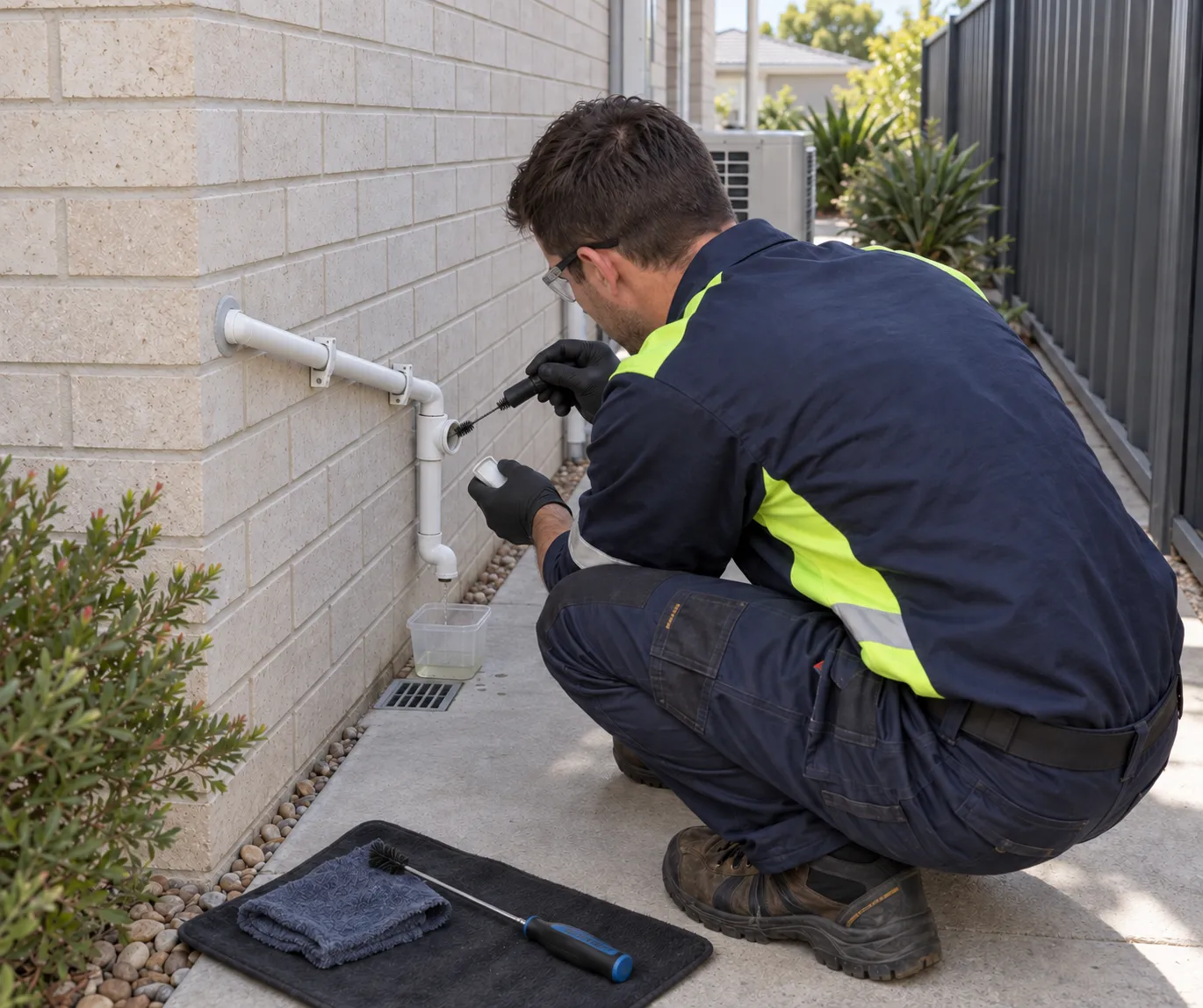
Some unusual air conditioner noises have simple causes, such as a dirty filter, restricted airflow, loose external panels or debris around the outdoor unit. A few basic checks can be performed safely, provided homeowners avoid electrical components, moving parts and refrigerant systems.
- Clean the air filter: A dirty filter can restrict airflow and contribute to louder airflow or whistling. Clean or replace it according to the manufacturer's instructions.
- Check vents and airflow: For ducted systems, make sure supply and return vents are open and not blocked by furniture or curtains.
- Clear outdoor debris: With the system switched off, remove accessible leaves, twigs and other loose debris from around the outdoor unit. Do not reach through the grille or touch the fan blades.
- Visually check external panels: Look for obviously loose grilles, covers or nearby objects that could be causing vibration. Do not remove protective covers.
- Pay attention to timing: Note whether the noise occurs during startup, while the fan or compressor is operating, or after shutdown. Also look for symptoms such as poor cooling, water leaks, ice, unusual smells or repeated breaker trips.
Australian Government guidance on air conditioner maintenance recommends keeping indoor units, vents, filters and louvres clean and arranging regular professional servicing to support efficient operation.
If the noise continues after these basic checks, becomes louder or occurs with other warning signs, the system should be professionally inspected.
When Should You Call an Air Conditioning Technician?
Not every unusual air conditioner noise indicates a serious fault. However, persistent, loud or worsening sounds should not be ignored when they occur alongside changes in system performance.
A licensed air conditioning technician should be contacted if:
- The noise is loud or getting worse: Grinding, scraping, banging, clanking or high-pitched squealing can indicate a mechanical problem that may worsen if the system continues operating.
- The noise continues after basic checks: Persistent rattling, vibration, clicking or humming without an obvious external cause may point to an internal or electrical fault.
- Cooling performance has changed: Unusual noise combined with warm air, reduced airflow or longer running times can indicate an underlying system problem.
- Electrical warning signs are present: Buzzing accompanied by burning smells, difficulty starting or repeated circuit breaker trips should be treated as a potential electrical fault.
- There is water or ice: Noise accompanied by water leaks or ice on pipes, coils or the indoor unit may indicate drainage, airflow or refrigerant problems.
- The source appears to be internal: Motors, compressors, electrical components and refrigerant systems should only be inspected or repaired by a qualified professional.
If the air conditioner produces a loud mechanical or electrical noise alongside a burning smell, repeated breaker trips or severe vibration, switch it off and arrange professional assistance. Prompt diagnosis can help prevent further damage and more costly repairs.
Unusual air conditioner noises should not be ignored, especially when they become louder or more frequent or occur alongside poor cooling, water leaks or unusual smells. While some sounds are a normal part of operation, persistent rattling, buzzing, grinding, banging, hissing or gurgling can indicate a fault that needs attention.
All Coast Air Conditioning can help identify the likely cause of unusual air conditioner noises and recommend the appropriate solution. Prompt attention can help prevent minor issues from developing into costly breakdowns while keeping the system operating safely, efficiently and reliably.
We Run Our Business Like a Family
When You Need Help
Get your home the Air Conditioning work it needs from our team at All Coast Air Conditioning. We’re always ready to help.


