
If a ducted system begins running longer, delivering weaker airflow or producing uneven temperatures between rooms, it is often a sign of declining efficiency and rising energy use. In many homes relying on ducted air conditioning in Central Coast, underlying issues such as hidden duct leaks, clogged filters, poor zoning, incorrect system sizing, or neglected maintenance quietly increase operating costs while reducing comfort. Faults within thermostats, fans and refrigeration components can also force the system to work harder than necessary, placing additional strain on critical parts and shortening equipment lifespan.
All Coast Air Conditioning outlines the most common causes of inefficiency in ducted systems and the specific repairs or adjustments that restore proper performance. Key warning signs are explained alongside practical solutions. A clearer understanding of these factors makes it easier to identify performance issues early and ensure the system operates efficiently, reliably and cost-effectively.

Signs Your Ducted Air Conditioning Is Losing Efficiency
An efficient ducted air conditioning system should cool or heat each room consistently, respond predictably to thermostat changes and keep energy bills relatively stable across similar seasons. When efficiency starts to drop, the signs are often subtle at first, then gradually become more obvious and expensive if ignored.
Identifying these early warning signs helps prevent minor issues from turning into major breakdowns. The following symptoms indicate that the system is working harder than it should and that professional inspection or repair is likely required.
Uneven Temperatures and Weak Airflow
One of the clearest signs of reduced efficiency is when some rooms feel noticeably warmer or cooler than others, even though the system is running. In a healthy system, temperatures across the home should be reasonably consistent.
Weak or fluctuating airflow from certain vents is another red flag. If one room’s supply grille barely moves air while others feel strong, this can point to:
- Leaky or collapsed ductwork
- Blocked or dirty filters
- Damaged or partially closed zone dampers
- Obstructions in the ceiling or underfloor ducts
Ignoring uneven temperatures often forces longer run times, accelerating wear on the indoor and outdoor units.
Rising Energy Bills Without Increased Use
Power bills that climb from one season to the next without any change in thermostat settings or usage patterns usually indicate that the system is drawing more electricity to achieve the same result. This is often linked to:
- Refrigerant loss is causing the unit to run longer cycles
- Dirty coils reduce heat transfer
- Failing fan motors or blocked return air paths
- Poorly sealed or deteriorated ducts spilling conditioned air into the roof space
Comparing bills to the same period last year can highlight changes. A steady year-on-year increase often suggests efficiency problems rather than normal price rises.
Longer Run Times and Short Cycling
If the unit runs for much longer than it used to before reaching the set temperature, there is likely an efficiency issue. The system may be struggling because of reduced airflow, incorrect refrigerant charge or worn components.
Short cycling is the opposite pattern and is also inefficient. The unit turns on and off frequently with very short bursts of operation. This can be caused by:
- Oversized equipment
- Faulty thermostats or sensors
- Restricted airflow is causing the system to overheat and trip
- Control board or zoning faults
Both long continuous cycles and rapid on-off cycling increase energy consumption and put extra stress on compressors and fans.
Unusual Noises, Odours or Humidity Problems
New noises such as whistling from vents, rattling in the roof space or humming and grinding from the outdoor unit often indicate mechanical or duct issues that affect performance.
Musty or dusty smells when the system starts can point to dirty filters, dust build-up inside ducts or moisture problems that reduce airflow and comfort. A noticeable increase in indoor humidity with clammy air or slow-drying laundry, even while cooling is running, is another sign that the system is no longer removing moisture efficiently, which often links back to coil or airflow problems.
What Causes Efficiency Problems in Ducted Systems
Ducted air conditioning only delivers efficient comfort when every part of the system works in balance. When one component underperforms, the entire system must work harder to maintain temperature, which drives up energy use and shortens equipment life. Most efficiency problems start small and become expensive over time if they are not identified early.
Understanding the most common causes of poor performance helps pinpoint what needs attention. In many homes, the issue is not the outdoor unit but what is happening in the roof space, ceilings and return air path.
Leaking or Poorly Designed Ductwork
Air leaks are one of the biggest efficiency killers in ducted systems. Gaps at duct joins, perished insulation or crushed sections let cooled or heated air spill into the roof void instead of the rooms. Typical issues include:
- Old or damaged flexible duct with tears or loose connections
- Duct runs that are too long or have excessive bends
- Undersized ducts that create high static pressure
In practice, this means some rooms never reach the set temperature while the system runs longer cycles trying to compensate. The fan works harder, increasing electricity use and accelerating wear on motors. Properly sealed, correctly sized and well-routed ductwork restores airflow and reduces run time.
Restricted Airflow and Blocked Return Air
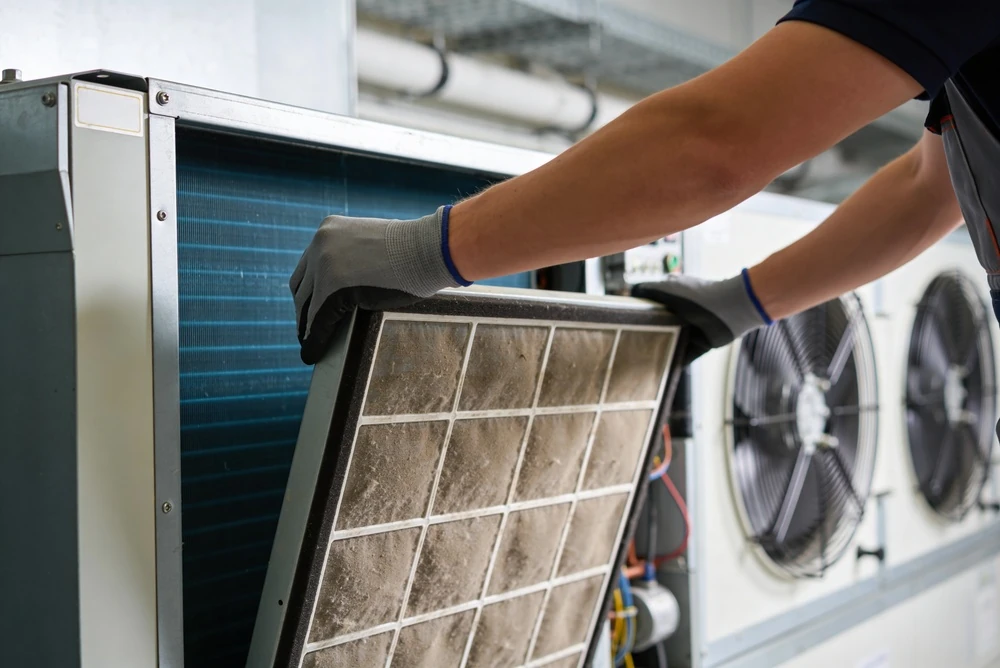
A ducted system relies on balanced airflow. If the return air grille or filters are blocked, the system struggles to breathe. That restriction reduces efficiency and can cause icing on coils in cooling mode. Common causes of restricted airflow are:
- Clogged filters that have not been cleaned or replaced
- Furniture, rugs or cabinetry blocking supply vents or the return grille
- Return air is located in a dead zone where air cannot circulate freely
When airflow is restricted, the indoor coil cannot transfer heat effectively. The result is weak air from the vents, uneven temperatures and higher energy use. Relocating or resizing return air grilles, clearing obstructions and using appropriate filter media restores correct airflow and system performance.
Incorrect Refrigerant Charge and Poor System Setup
Even with perfect ducts, a system with an incorrect refrigerant charge will run inefficiently. Too little refrigerant leads to poor cooling capacity, longer run times and potential compressor damage. Too much refrigerant can flood the compressor, reduce efficiency and increase operating costs.
Setup problems also undermine performance, such as:
- Incorrect thermostat or zoning control settings
- Indoor fan speeds not matched to duct design
- Outdoor unit installed in a confined or hot location with poor airflow
These issues often show up as high power bills, short cycling, temperature swings, or noisy operation. Testing refrigerant pressures, checking superheat and subcooling and verifying control settings and fan speeds are essential steps to restore optimal efficiency.
How Modern Diagnostics and Repairs Improve Performance
Modern diagnostic tools take the guesswork out of ducted air conditioning repairs and make it possible to quickly find the exact cause of poor performance. Instead of simply topping up gas or guessing at airflow issues, detailed testing identifies where efficiency is being lost, then targets repairs precisely where they are needed.
For Gold Coast and Central Coast style homes with a mix of open-plan areas and closed bedrooms, accurate diagnostics can be the difference between an air conditioner that struggles every summer and a system that runs quietly, efficiently and reliably.
Advanced System Testing and Electronic Diagnostics
Technicians now use specialised instruments to measure how hard the system is working and where it is wasting energy.
Refrigerant gauges and digital manifolds show if the refrigerant charge is correct or if there is an undercharge or overcharge that is overworking the compressor and sending power bills higher. Instead of simply adding gas, the readings guide leak testing, then a proper evacuation and recharge to manufacturer specifications.
Electrical testing with multimetres and clamp metres checks voltage and current draw on the compressor fan motors and control boards. High current draw often points to worn motors, failing capacitors or dirty coils. Replacing a few failing electrical components can restore full capacity and reduce running costs significantly.
Airflow Measurement and Duct Performance Checks
Airflow problems are one of the biggest causes of inefficient ducted systems. Modern airflow diagnostics identify these issues accurately.
Technicians use manometers and pressure probes to measure static pressure in the ducts. High static pressure usually indicates undersized or crushed ductwork, closed or stuck dampers or dirty filters. Correcting these issues often restores lost airflow and comfort without replacing the entire system.
Anemometers measure air volume at supply grilles. If some rooms receive far less air than others, the cause may be collapsed flex ducts, poor duct design or leaks in the roof space. Repairs may include sealing joints, replacing damaged duct sections, resizing branches or adjusting zoning so each area receives appropriate airflow.
Thermal imaging or temperature probes at different points in the system identify heat gain in poorly insulated ducts and temperature loss from leaks. Re-insulating or re-routeing ducts, especially in hot roof spaces, can improve performance on extreme temperature days.
How Coastal Conditions Affect Ducted Air Conditioning
Coastal environments are tough on ducted air conditioning systems. Salt in the air, higher humidity and wind-driven contaminants accelerate wear, reduce efficiency and shorten component life. Many systems that seem to be “just getting old” are actually suffering from coastal damage that can be reduced or reversed with targeted repairs and maintenance.
Understanding how the local climate affects each part of a ducted system helps identify why it is running harder than it should and which specific repairs will restore performance and reduce energy use.
Salt Air and Corrosion of Outdoor Components
Salt-laden air is one of the most damaging factors for ducted air conditioning near the coast. Microscopic salt particles settle on outdoor units and coil surfaces, then attract moisture. The result is rapid corrosion of metal components and a steady loss of efficiency.
Outdoor condenser coils affected by salt corrosion lose fin material and develop pitting. This reduces the surface area that can release heat, so the system runs longer to achieve the same cooling. Corroded coil fins also bend and clog more easily, which further chokes airflow. In extreme cases, refrigerant leaks can occur at corroded joints and fittings.
Repairs that improve efficiency in salty environments include:
- Coil cleaning and application of protective coil coatings suited to coastal locations
- Replacement of severely corroded coils or fan housings
- Replacement of rusted mounting brackets and electrical terminals that compromise airflow or safety
Locating new or replacement outdoor units in more sheltered positions and using corrosion-resistant hardware helps slow future damage.
Humidity, Mould Growth and Ductwork Efficiency
Coastal humidity affects both comfort and system efficiency. When humidity is consistently high, ductwork and indoor units are more prone to condensation. Moist duct interiors and insulation become ideal environments for mould and bacterial growth.
Mould and biofilm buildup inside ducts restrict airflow and force the fan to work harder. Contaminated coils transfer heat less effectively because of the slimy film on the surface. Occupants may notice musty smells, uneven temperatures or a sticky feeling indoors even when the thermostat is set correctly.
In humid homes, the addition of zoning controls or dehumidification modes can help the system manage moisture more effectively, reducing strain on the compressor and fan.
Wind, Sand and Outdoor Unit Blockage
Coastal winds carry sand, leaf litter and fine debris that quickly clog outdoor units. When airflow through the condenser is partially blocked, head pressure rises and the compressor draws more power to move refrigerant. This often shows up as higher electricity bills and louder operation.
Sand and grit can also be drawn into fan motors and bearings, increasing friction and leading to noisy, inefficient fans. Over time, this grit shortens motor life and can lead to intermittent failures in peak summer conditions.
Physical barriers, such as properly designed screens or enclosures that do not obstruct airflow, can reduce future blockage while preserving performance.
When Repair or Replacement Makes More Sense
Deciding whether to keep repairing a struggling ducted system or invest in a new one comes down to cost, age and performance. The goal is to stop pouring money into an inefficient unit that will never run economically and instead choose the option that will deliver lower running costs and more reliable comfort.
A systematic look at the unit’s age, fault history, efficiency and repair price will usually make the right answer clear. One targeted repair restores performance. In others, replacement is the only practical path to stop high power bills and constant breakdowns.
Key Signals That It Is Worth Repairing
Units under about 10 years old with a solid maintenance history are generally worth repairing if parts are available. Common fixable problems include blocked filters, leaking ductwork, failed capacitors, fan motors, sensors, zone controllers and minor refrigerant leaks. When the system has been performing well and one component fails, a repair usually restores efficiency to near original levels.
A practical rule is to compare the repair quote with the rough cost of a new system. If the repair is under about one-third of the price of replacement and the unit is not near the end of its expected life, it typically makes sense to proceed with the repair. This is especially true if power bills and comfort levels were acceptable before the fault appeared.
If the system is correctly sized for the home, still under manufacturer warranty or has only occasional minor issues, targeted repairs combined with a proper clean, airflow balancing and control recalibration can often deliver a noticeable drop in energy use without the expense of a full changeover.
When Replacement Is the Smarter Investment
Replacement becomes the better option once the system is old, inefficient or suffering repeated major faults.
Ducted units older than about 12 to 15 years generally use more power than modern inverter systems. If these older units develop expensive faults such as compressor failure, major refrigerant leaks in inaccessible pipework or repeated PCB failures, replacement usually delivers better long-term value. Parts for older models may be obsolete, which can lead to long waits or makeshift fixes that do not restore full efficiency.
Rising electricity bills even after basic repairs and servicing are a strong sign that the system is losing capacity and running longer to achieve set temperatures. If multiple rooms are consistently uncomfortable, airflow is poor even after duct and grille work, or the unit is visibly corroded or damaged, a new high-efficiency system with correctly designed ductwork and zoning will normally cut energy use and improve comfort far more than further repairs.
How To Decide In Borderline Cases
When the choice is not obvious, comparing long-term running costs is useful. A quote that shows the estimated annual energy savings of a new high-efficiency unit versus the existing one helps clarify payback time. If projected power savings can recover the extra cost of replacement within roughly 5 to 7 years, a new system usually makes financial sense.
It is also important to consider household plans. If a renovation or extension is coming, or if occupancy patterns have changed, replacement allows resizing of capacity, redesign of ductwork and smarter zoning that repairs alone cannot provide. In those situations, further major repairs to an outdated layout rarely represent good value.
Inefficiency in ducted air conditioning systems is typically the result of identifiable technical issues rather than unavoidable decline. Leaking or poorly designed ductwork, restricted airflow, incorrect refrigerant charge, failing mechanical components and outdated controls all contribute to increased energy consumption and inconsistent comfort. Left unresolved, these problems lead to longer run times, higher operating costs and accelerated wear across the system. Addressing inefficiency as a technical issue ensures longer equipment life, improved indoor conditions and a more reliable and cost-effective climate control system.
We Run Our Business Like a Family
When You Need Help
Get your home the Air Conditioning work it needs from our team at All Coast Air Conditioning. We’re always ready to help.


