
Installing ducted air conditioning is an investment, but the final cost often depends on far more than the system itself. The layout of the home, roof space, access conditions, electrical capacity and outdoor-unit location can all affect the complexity of the project and the amount of work required. Understanding these considerations helps homeowners avoid unexpected expenses and make informed decisions when comparing options for ducted air conditioning in Central Coast properties.
All Coast Air Conditioning explains the key factors that commonly affect ducted air conditioning installation costs. A detailed site inspection is an important part of the process because it allows potential challenges to be identified before work begins. With a properly planned design, homeowners can select a system that suits the property, provides reliable performance and aligns with the available budget.
1. Limited Roof or Ceiling Space
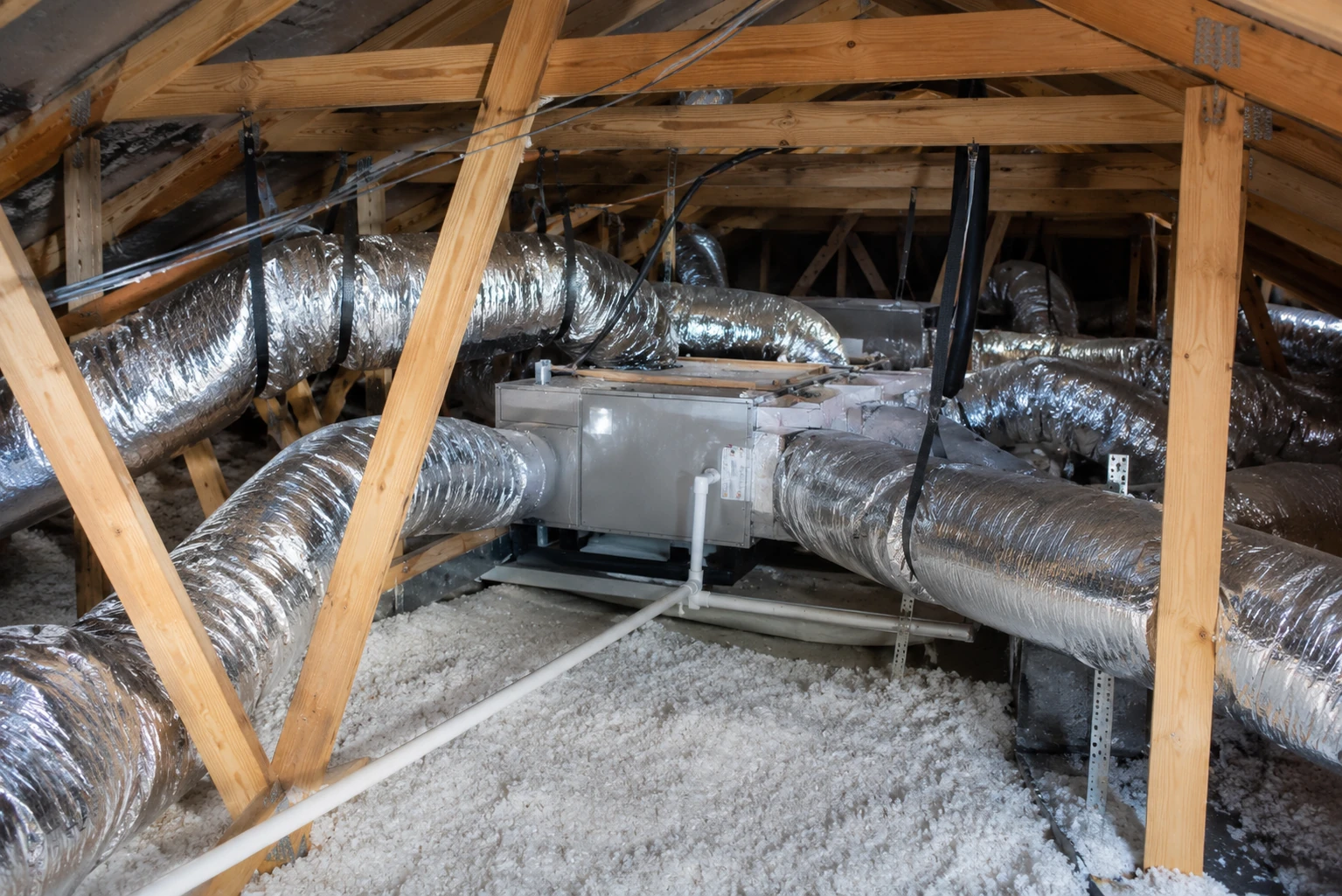
Limited roof or ceiling space is one reason ducted air conditioning quotes can be higher than expected. When there is not enough room to run ductwork or position the indoor unit comfortably, the design becomes more complex. Labour may take longer and alternative components or construction work may be required.
Existing roof construction, ceiling height and the presence of other services all affect how easily a ducted system can be installed. A thorough site inspection is essential for identifying these constraints early so that the layout, equipment selection and budget can be planned accurately.
How Roof Construction Affects Ducting
Roof type and structure have a major impact on the space available for ducts and the indoor unit. Traditional pitched roofs with a suitable roof cavity often provide enough room for flexible ducting and an appropriately sized indoor fan coil unit. Problems can arise when:
- the roof pitch is very low;
- trusses sit close to the ceiling lining; or
- multiple hips, valleys or beams restrict access.
In these circumstances, duct routes may need to be shortened, redirected or redesigned to suit the available space. Duct sizing should not be reduced simply to fit a tight space, as compressed, sharply bent or undersized ducts can restrict airflow, reduce performance and increase noise. The Australian Government’s guidance on heating and cooling system design also notes that ducts should be correctly sized and that zoning should allow unused areas to be shut off where appropriate.
To accommodate restricted spaces, installers may need to:
- use compact or low-profile indoor units;
- adjust the location and number of outlets;
- select equipment that can operate effectively within the proposed duct design; or
- redesign parts of the layout to avoid unsuitable areas.
These design choices can increase equipment and labour costs.
Challenges in Flat Roofs and Tight Ceilings
Homes with flat roofs, skillion roofs or raked ceilings often have limited or no usable roof cavity. This can rule out a standard roof-mounted indoor unit and straightforward duct runs.
To install ducted air conditioning in these homes, the design may need to include:
- bulkheads that create concealed spaces for ducts;
- dropped or false ceilings in hallways and living areas;
- ducts routed through wall cavities or purpose-built chases; or
- an alternative location for the indoor unit.
Bulkheads and false ceilings can involve additional framing, plastering and painting work. These trades add to the total project cost beyond the air conditioning installation itself. The visual impact should also be considered during the planning stage.
Working Around Existing Services
Even where there is a roof cavity, existing services can reduce the usable space. Electrical wiring, downlights, plumbing, ventilation ducts, insulation and structural braces can block preferred duct paths and unit locations.
Installers must route ducts carefully to avoid compressing or kinking them, as this can restrict airflow. Additional access panels may also need to be cut and repaired where the existing roof entry does not provide sufficient access.
Where space is particularly tight, it may be more practical to reconsider the duct layout, use a compact indoor unit, adjust outlet locations or choose an alternative indoor-unit position rather than attempting to force a standard design into a cramped roof space. Zoning may also form part of the design where different areas of the home have different cooling and heating needs.
2. Difficult Access for Installation
Difficult access is another reason ducted air conditioning quotes can vary between properties. If installers cannot easily reach the roof cavity, subfloor or outdoor-unit location, the job may take longer and require additional labour or specialist equipment.
Access challenges do not always prevent an installation, but they need to be considered when preparing an accurate quote. Identifying these conditions early allows the installer to plan practical ways to complete the work safely and efficiently.
Tight Roof Spaces and Limited Ceiling Access
Many ducted systems in Australian homes are installed within the roof cavity. When this space is cramped or difficult to reach, installation becomes slower and more complex.
Factors that can increase the difficulty include:
- a very low roof pitch that limits movement;
- few or poorly positioned manholes;
- trusses or beams that obstruct access;
- solar cabling or electrical services; and
- existing ductwork, insulation or ventilation systems.
In tight roof cavities, installers need to move carefully to avoid damaging wiring, ceiling plaster or insulation. Extra time may also be required to cut or enlarge access hatches and route ductwork around structural elements.
Roof cavities can also become extremely hot during warmer months. Work may need to be scheduled carefully so the installation can be completed safely.
Multi-Storey Homes and Restricted External Access
Two-storey homes and properties on steep or narrow blocks can create additional access challenges for indoor and outdoor components. Moving equipment into position may require more personnel and specialist lifting equipment.
Where outdoor units are installed on upper balconies, roofs or other elevated areas, installers may need scaffolding, lifting equipment or a small crane. These requirements can add separate hire fees along with additional time for setup and safety checks.
Narrow side paths, high retaining walls, fragile landscaping and limited driveway access can also make it harder to move outdoor units, indoor units and ductwork around the property.
Inside the home, ductwork and wiring may need to pass between levels. This can involve opening sections of ceilings or walls and arranging plaster repairs afterwards. Each additional trade involved can increase the overall project cost even when the selected air conditioning system remains the same.
Safety Constraints and Working Conditions
Access that is technically possible but unsafe may require extra controls that affect the price. Examples include:
- fragile or ageing roofing that cannot be walked on safely;
- restricted ladder access;
- elevated work areas;
- limited anchor points for fall-protection systems; and
- roof cavities that become unsafe to work in during extreme heat.
The installation may need to be staged over a longer period or completed using temporary safety equipment, additional personnel or specialist access systems. These requirements help ensure the work can be carried out safely and should be reflected in the quotation.
3. The Layout and Number of Storeys in the Home
The shape of a home and the number of levels can significantly affect a ducted air conditioning installation. Room positions, hallway lengths, roof space, voids and stairwells all influence the amount of ducting required, the zoning arrangement and the labour involved.
The design must also account for the required system capacity. Considering what size ducted air conditioner your home needs helps ensure the equipment, ductwork and zoning arrangement are suited to the property rather than selected using floor area alone.
Before a quote is finalised, the installer should assess how air can be distributed effectively throughout the property. The goal is not simply to fit ducts into the available space. The system also needs to provide consistent comfort and practical control.
Single-Storey and Multi-Storey Homes
Single-storey homes are often more straightforward to fit with ducted air conditioning. There is commonly easier access to the roof cavity, shorter duct runs and more flexibility when positioning the indoor fan coil unit. This can mean less labour and fewer access-related complications.
Double-storey and split-level homes often require more detailed planning. Bedrooms and living areas may benefit from separate zones, while some properties require additional duct runs, purpose-built bulkheads or separate indoor units for different levels.
The most suitable approach depends on the available space and the heating and cooling loads in each area. A two-storey layout does not automatically require two separate systems, but an additional indoor unit or a different system configuration may provide better control in some homes.
Ceiling Type and Internal Features
Ceiling construction also affects the design. Conventional plasterboard ceilings with a suitable roof cavity typically allow easier duct runs and outlet placement. Homes with raked ceilings, cathedral ceilings, high feature ceilings or extensive voids reduce or remove usable roof space.
The design may require:
- bulkheads to conceal ducts along hallways or perimeter walls;
- carefully positioned ceiling diffusers;
- wall grilles or linear slot diffusers;
- relocation of lights or other fittings; or
- additional framing and finishing work.
Every change from a straightforward duct layout can add labour, materials and design time.
Floor Plan Flow and Zoning Complexity
An open-plan layout with central living areas can sometimes allow treated air to be distributed through fewer, well-positioned outlets. Short and direct duct runs can help improve airflow and keep installation costs under control.
By contrast, a home with many enclosed rooms, long hallways or wings extending in different directions may require additional outlets, longer duct runs and more detailed zoning.
For example, widely separated bedroom areas, a detached home office or rooms with very different sun exposure may need separate zone controls. In some cases, an additional system may be recommended where long duct runs would make it difficult to deliver effective airflow.
The zoning arrangement also needs to suit the way the household uses each area. Avoiding common ducted zoning mistakes can help reduce uneven temperatures, unnecessary energy use and airflow issues after installation.
Irregular floor plans also increase the design work required to reduce hot and cold spots. Additional zoning components, dampers and commissioning work can contribute to the final installation cost.
4. Duct Routes, Outlet Placement and the Return-Air Grille
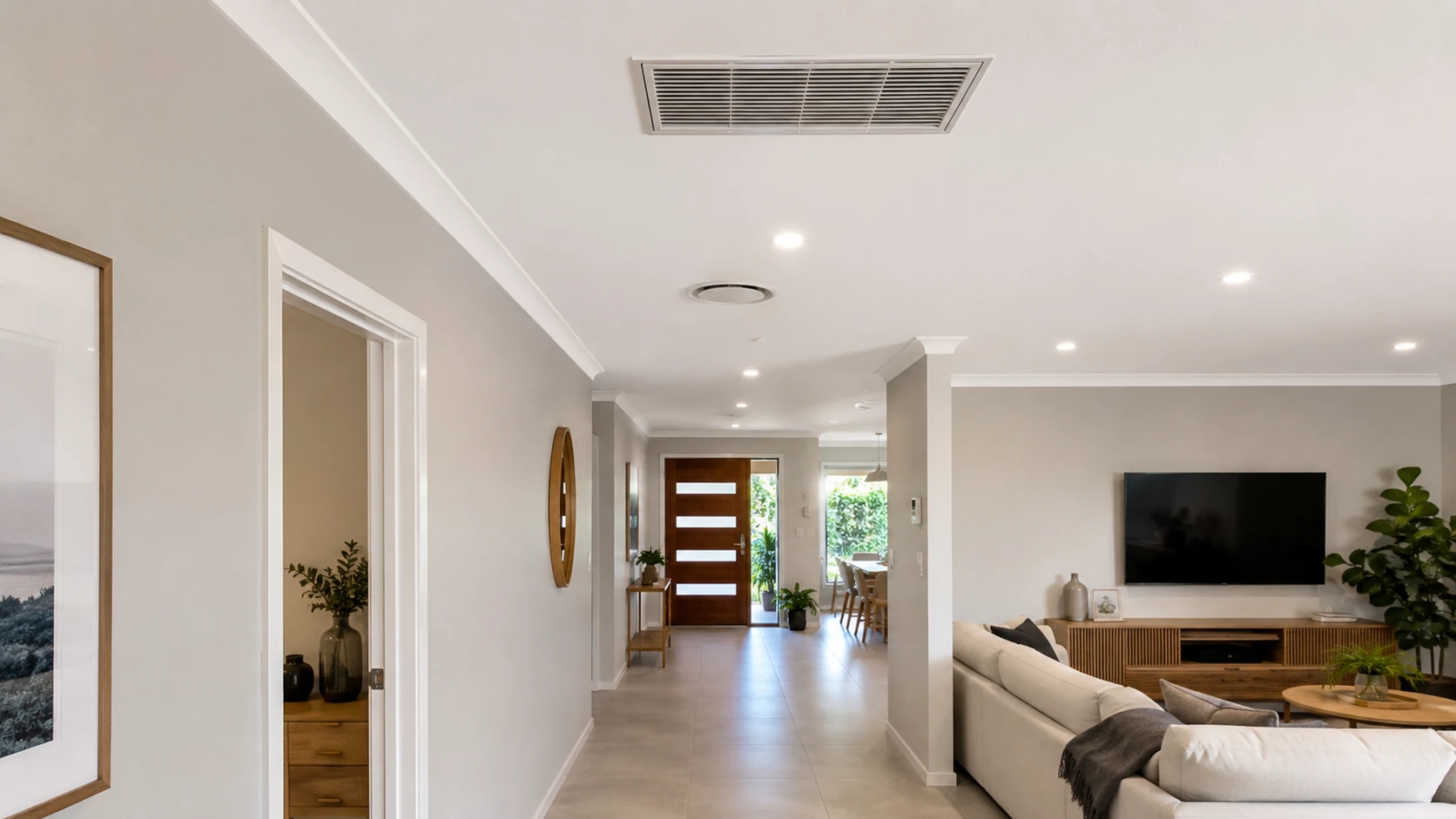
Duct routing and grille placement affect both installation cost and long-term performance. Poorly planned layouts can require extra materials, additional labour and unnecessary structural changes. They may also contribute to uneven temperatures, restricted airflow and excessive noise.
A suitable design aims to keep ducts as short and direct as practical, place outlets where conditioned air can circulate effectively and position the return-air grille where air can flow back to the indoor unit without obstruction.
How Duct Routes Affect Cost
The ideal duct route is short, direct and accessible. Every departure from this ideal can add complexity.
Longer duct runs require more ducting, insulation, hangers and installation time. They also increase pressure loss, which must be considered when selecting the indoor unit, fan performance and duct sizes. Poorly designed long runs can reduce airflow and make it harder to maintain consistent temperatures throughout the home.
Multi-level homes can also become more expensive where ducts need to pass between floors or through bulkheads. Additional framing, ceiling repairs and wall repairs may be required.
In apartments, townhouses and other buildings with fire-rated elements, penetrations may also need appropriate fire-stopping treatment.
Outlet Placement in Each Room
Outlet placement affects comfort first and cost second. Poor positioning can result in draughts, uneven temperatures or the need for additional outlets.
Supply outlets are commonly positioned:
- near windows or external walls where heat gain is higher;
- away from beds, lounges and workstations where direct airflow may be uncomfortable; and
- in locations that allow air to circulate throughout the room.
Large or irregular rooms may need more than one outlet. Each additional outlet requires a branch duct, diffuser or grille and further balancing during commissioning.
Rooms with low ceilings, decorative features or limited ceiling access may need wall grilles or linear slot diffusers. These options can cost more than standard ceiling diffusers and may require additional finishing work.
Positioning the Return-Air Grille
The return-air grille must allow air to flow back to the indoor unit without unnecessary restriction. A hallway ceiling is often a practical location, although the most suitable position depends on the home layout, the available return-air path and the need to minimise noise.
Factors that influence the cost include:
- the distance between the grille and the indoor unit;
- the size and route of the return-air duct;
- beams, joists and other structural elements;
- access for future filter cleaning or replacement; and
- noise-control requirements.
Where noise is a concern, a larger return-air duct, lined ducting or an acoustic grille may be recommended. The grille must also be large enough to support the required airflow.
5. Switchboard Capacity and Electrical Requirements
Ducted air conditioning places an additional load on the home’s electrical system. Before installation, the existing switchboard, wiring and available supply capacity should be assessed to confirm whether they can support the proposed equipment safely.
Electrical work can represent a notable part of the total installation cost, particularly in older homes or properties with several high-demand appliances.
How Ducted Systems Affect the Switchboard
A ducted air conditioning installation will commonly require a dedicated circuit. The circuit arrangement, cable size and protection requirements depend on the selected equipment, the manufacturer’s instructions and the existing electrical installation.
Older homes may have rewirable fuses, limited circuit space or protection that is not suitable for the proposed installation. A licensed electrician should assess whether a new circuit can be added safely or whether switchboard work is required.
Depending on the existing installation and the scope of the work, this may involve:
- new circuit protection;
- safety-switch protection;
- additional switchboard space; or
- a broader switchboard upgrade.
When a Switchboard or Supply Upgrade May Be Needed
If the calculated electrical load of the new ducted system, together with existing appliances, exceeds the available capacity, further work may be required.
A switchboard upgrade and an incoming supply upgrade are not the same thing. A switchboard upgrade changes the equipment within the property. A supply upgrade increases the available electricity supply to the property and may require coordination with the electricity distributor and an appropriately qualified contractor.
Factors that may indicate the need for a closer electrical assessment include:
- an older switchboard with limited capacity;
- an existing single-phase supply that is already heavily loaded;
- frequent tripping when several high-demand appliances run at the same time;
- older meter panels or asbestos backing boards; and
- properties with electric cooktops, pool pumps, electric hot water systems or other significant loads.
These issues should be identified before installation begins so any necessary work can be included in the project plan and budget.
Wiring Routes and Compliance Factors
Even where the switchboard has sufficient capacity, the practical requirements of running new cabling can affect the installation cost.
Cable routes from the switchboard to the indoor and outdoor units may pass through tight subfloors, double-brick walls, roof cavities or fully lined ceilings. Longer routes may require larger cable sizes to account for voltage drop and load requirements.
Electrical work must comply with applicable requirements, including the relevant provisions of AS/NZS 3000 and the equipment manufacturer’s instructions. Important considerations include:
- cable sizing;
- circuit protection;
- safety-switch protection where required;
- earthing and bonding; and
- correct labelling.
A pre-installation electrical assessment allows realistic pricing and helps avoid rectification work after the system has been installed.
6. Outdoor Unit Placement and Drainage
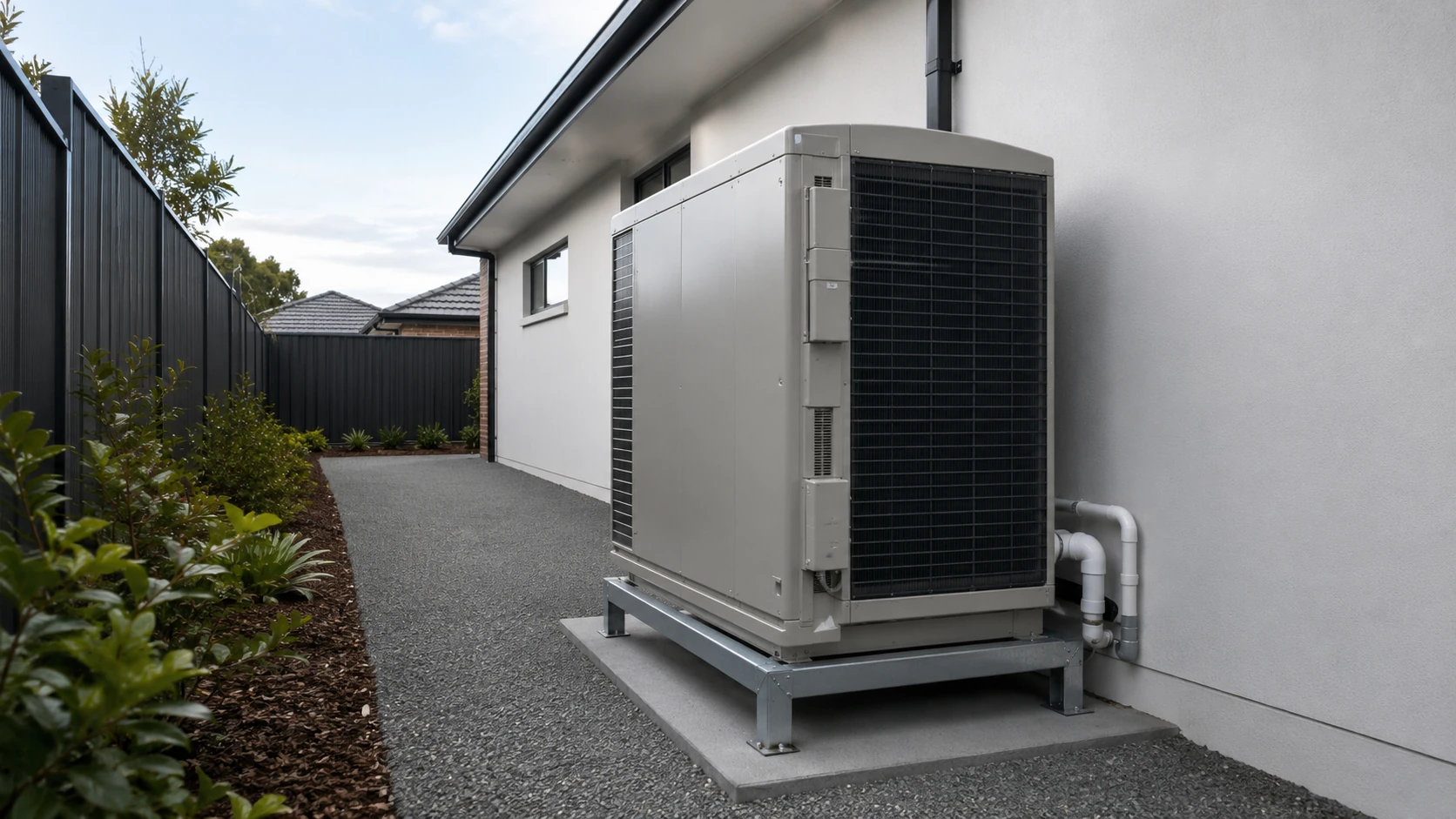
The location of the outdoor unit affects installation difficulty, performance and noise. A suitable position must allow adequate airflow, meet the manufacturer’s clearance requirements and provide a stable base.
Drainage also needs to be planned carefully. During cooling, moisture removed from the indoor air collects at the indoor unit and must be directed to an appropriate discharge point. Reverse-cycle outdoor units can also release water during heating and defrost operation.
Site Access, Clearances and Structural Requirements
The easier it is to move the outdoor unit into its final position, the lower the labour cost is likely to be. Tight side passages, steep driveways, fragile landscaping and balconies that require lifting equipment can all add time and complexity.
Once installed, the outdoor unit must have sufficient clearance to allow airflow and future servicing. Extra work may be required where:
- fences or walls sit too close to the proposed location;
- eaves or decks restrict airflow;
- the existing slab is too small, uneven or unsuitable;
- a new concrete pad or pavers are needed; or
- a raised frame or suitable wall bracket is recommended.
In coastal locations, a raised frame or wall bracket may help keep the outdoor unit clear of standing water and make cleaning easier. Equipment selection, placement and regular maintenance also matter because salt exposure can accelerate corrosion.
Noise, Neighbours and Placement Constraints
Outdoor units generate fan and compressor noise that can affect nearby properties, particularly at night. To reduce the risk of complaints and help meet applicable NSW noise requirements, the outdoor unit should be positioned away from neighbouring bedroom and living-room windows where practical.
The design should also consider the home’s own windows, outdoor entertaining areas and bedrooms.
Acoustic screens may help in some situations, provided they do not restrict the airflow required by the manufacturer. If the preferred location is further away from the indoor unit, longer refrigerant pipework, drainage lines and electrical cabling may be needed.
Strata rules, property boundaries, narrow blocks and the location of neighbouring homes can further restrict the available options.
Indoor Condensate Drainage
During cooling, moisture collected at the indoor unit must be drained safely. In many homes, gravity drainage is the simplest solution. However, the proposed route may be more complex where the indoor unit is far from an appropriate discharge point or where the available fall is limited.
Additional costs can arise where:
- a longer drainage run is needed;
- a condensate pump is required;
- access for the drain route is difficult; or
- existing walls or ceilings need to be opened and repaired.
The discharge location must be selected carefully so water does not create pooling, staining or moisture issues around the property.
Outdoor Drainage and Coastal Exposure
The outdoor unit should sit on a stable, level base in a location where rainwater and discharged water will not pool beneath the unit or against the building.
Poor drainage can contribute to:
- persistent pooling around the unit;
- deterioration of the supporting surface;
- corrosion around the outdoor unit; and
- moisture issues near walls or subfloor areas.
External drainage work may be needed where the proposed outdoor-unit location does not provide a suitable path for water to flow away from the building.
Why a Site Inspection Matters Before Installation
A pre-installation site inspection is one of the most important steps when planning ducted air conditioning. It identifies limitations in the building structure, available roof space, electrical capacity and access conditions before a quote is finalised.
Skipping a thorough inspection can lead to underestimated costs, unexpected variations and compromises in performance. A detailed assessment helps ensure the quote reflects the actual property rather than a standard installation scenario.
Assessing Roof Space and Structural Access
The roof cavity is where many indoor units and ducts are installed. A site inspection confirms whether there is enough usable space to run ductwork safely and effectively.
The installer will typically look for:
- low roof pitches;
- closely spaced trusses;
- crowded cavities;
- insulation and existing services;
- access hatch location and size; and
- areas that may not be suitable for ducts.
Where space is limited, the design may need compact equipment, revised duct routes, alternative outlet locations or additional construction work.
Evaluating Electrical Capacity
The existing electrical installation should also be reviewed before the system is selected and the quote is finalised.
Checks may include:
- the age and type of switchboard;
- available circuit space;
- the main supply rating;
- existing electrical loads; and
- the route for new cabling.
Where the existing installation is not suitable, the quote should identify whether a new circuit, switchboard work or a more extensive supply assessment is required.
Identifying Property Features That Affect Cost
Every home has construction details that influence the complexity of the installation. A site inspection helps identify issues such as:
- limited side access;
- sloping ground;
- high retaining walls;
- fragile landscaping;
- unusual framing;
- previous renovations;
- non-standard construction; and
- restricted outdoor-unit locations.
Older properties and renovated homes can contain hidden challenges, including altered framing or previous work that is not immediately visible. Identifying these issues early supports realistic planning and reduces the risk of unexpected work after installation begins.
A thorough on-site inspection translates the idea of a ducted air conditioning system into a practical plan tailored to the property. This helps keep installation costs transparent and supports the performance expected from a significant home investment.
Planning a Ducted Air Conditioning Installation
The cost of installing a ducted air conditioning system is influenced by a wide range of property-specific factors. While some homes allow for a straightforward installation, others require additional design work, structural modifications, electrical upgrades or specialist access equipment.
A detailed site inspection remains the most reliable way to identify these variables and develop an installation plan that balances comfort, efficiency and long-term value. All Coast Air Conditioning can assess the property, discuss suitable options and prepare a ducted air conditioning design that reflects the practical requirements of the home.
We Run Our Business Like a Family
When You Need Help
Get your home the Air Conditioning work it needs from our team at All Coast Air Conditioning. We’re always ready to help.


