
Staying cool through a Central Coast summer can put serious pressure on both comfort and power bills. Many households assume high running costs are unavoidable once the air conditioner is on but small informed changes can make a surprisingly large difference. All Coast Air Conditioning on the Central Coast works with local homes and businesses every day and sees first-hand how the right settings smarter operation and simple maintenance can cut energy use without sacrificing comfort.
In this article All Coast Air Conditioning explores six key areas that can quickly improve efficiency. Readers will see how choosing sensible temperature settings and using the most efficient operating modes helps the system work with the climate rather than against it. The discussion then looks at how better insulation and reduced heat gain keep cool air inside where it belongs. It highlights how clean filters and well maintained systems avoid wasted energy and unnecessary strain. The article also examines zoning room control and smart scheduling to cool only the spaces that need it when they need it. Finally it explains when an energy-efficient upgrade makes financial sense for Central Coast properties so homeowners and business owners can recognise the point where replacing an older unit becomes the more economical long-term option.

1. Choosing the Right Temperature Settings
Setting the right temperature is one of the simplest and most effective ways to reduce air conditioning running costs. On the Central Coast, where summers are warm and humid, many systems work harder than they need to simply because the thermostat is set too low. A small adjustment of just a couple of degrees can make a noticeable difference to both comfort and power bills.
Aiming for comfortable rather than icy cold indoor conditions makes a real impact. The smaller the gap between indoor and outdoor temperatures, the less your air conditioner needs to run. This directly reduces energy usage and minimises wear on the system.
Ideal Temperature Ranges for the Central Coast
For most Central Coast homes, a cooling setting between 24°C and 26°C strikes a good balance between comfort and efficiency. Many households set their units to 21°C or 22°C, which significantly increases running costs without providing much extra comfort once the home has cooled.
As a practical guide:
- On hot summer days, start at 26°C and adjust down only if needed.
- In milder weather, try 25°C or 26°C and use ceiling fans to improve airflow.
Raising the set temperature by just 1°C can cut cooling energy use by around 5 to 10 percent. Over a full summer, this can add up to substantial savings, particularly for larger homes or properties running multiple units.
For winter heating settings, a range between 19°C and 21°C is generally recommended. Every degree higher can noticeably increase energy use, as the system needs to run longer to maintain the higher temperature.
Using Programmable and Smart Controls
Modern air conditioners often include timer functions and in many cases Wi‑Fi or smart controls. Used properly these can reduce costs without sacrificing comfort.
Timers and schedules allow the system to start slightly before people arrive home then scale back once everyone is asleep or out of the house. For example the unit might
- Cool to 25°C from 4 pm to 10 pm
- Step up to 26°C overnight
- Turn off or move to an energy saving mode during work or school hours
Smart controllers and compatible thermostats can adjust temperature based on time of day occupancy or even local weather. This helps avoid common wasteful habits such as leaving the air conditioner running on a low temperature when the house is empty.
Avoiding Common Thermostat Mistakes
Higher power bills are often caused by simple thermostat errors. One of the biggest mistakes is setting the temperature very low in the hope that the home will cool faster. Most systems cool at a fixed rate, so this approach only forces the unit to run longer, wastes energy and can lead to overcooling.
Another common issue is constantly adjusting the controls. Frequent, large changes cause the system to cycle more often, which reduces efficiency and places additional strain on components. It is far better to set a sensible temperature, use ceiling fans to help occupants feel cooler and allow the system time to stabilise.
Keeping doors and windows closed in conditioned areas, and using zoning where available, will also help your chosen temperature settings perform as efficiently as possible.
2. Using the Most Efficient Air Conditioning Mode
Choosing the right mode on a split system or ducted unit can make a noticeable difference to running costs on the Central Coast. Many households simply leave the remote on whatever setting it was last using, without realising that some modes consume far more power than others.
Each mode should be used with a clear purpose. By understanding what Cool, Heat, Dry, Fan and Auto actually do, it becomes much easier to match the setting to the weather conditions and avoid unnecessary energy use.
Cooling and Heating Modes: Set for Comfort, Not Cold or Hot
Cool and Heat modes are usually the biggest contributors to power bills because the compressor works hardest in these settings. To keep costs under control:
- In summer on the Central Coast, set Cool mode to around 24–25°C rather than 18–20°C. Every degree lower can noticeably increase energy use while often providing little additional comfort.
- In winter, set Heat mode to around 20–21°C instead of 24–26°C. Maintaining a modest, stable indoor temperature is far more cost-effective than trying to heat the space excessively.
Avoid using “Powerful” or “Turbo” modes for extended periods. These settings are useful for a quick temperature drop when you first arrive home, but they force the unit to operate at maximum capacity. After 10–15 minutes, it is more efficient to return to standard Cool or Heat mode at a sensible temperature.
Where possible, keep doors and windows closed when using Cool or Heat mode. This allows the system to cycle on and off properly instead of running continuously, which reduces both wear on components and electricity consumption.
Dry Mode: Ideal for Humid Central Coast Days
On warm but not extremely hot days Central Coast homes often feel uncomfortable because of humidity rather than temperature. In these conditions Dry mode can be more efficient than Cool.
Dry mode slows the fan and cycles the compressor to remove moisture without aggressively dropping the temperature. This can:
- Make a 25–27°C room feel much more comfortable
- Use less energy than running Cool mode at a low set point
Dry mode suits sticky overcast days or evenings when the outside air is not very hot but the house feels clammy. It is not ideal for very hot days as it may not cool the space enough.
Fan and Auto Modes: When to Use and When to Avoid
Fan mode operates only the indoor fan and not the outdoor compressor. It does not cool or heat the air, but it can improve air movement and comfort at very little cost compared to full cooling or heating. It works well overnight in mild weather when you simply want a breeze, or with windows slightly open to flush out warm air when the outside temperature is lower than inside.
Auto temperature mode allows the unit to decide whether to Heat or Cool. On the Central Coast, this can cause the system to switch between modes during mild weather, which may waste energy. It is generally better to use Cool mode only in summer and Heat mode only in winter. Auto temperature mode should be avoided unless the manufacturer specifically recommends it for your type of system.
Most systems also include an Auto fan setting. Auto fan control is typically efficient because it reduces fan speed once the room approaches the set temperature. This helps save a small amount of power and reduces noticeable drafts.
3. Improving Insulation and Reducing Heat Gain
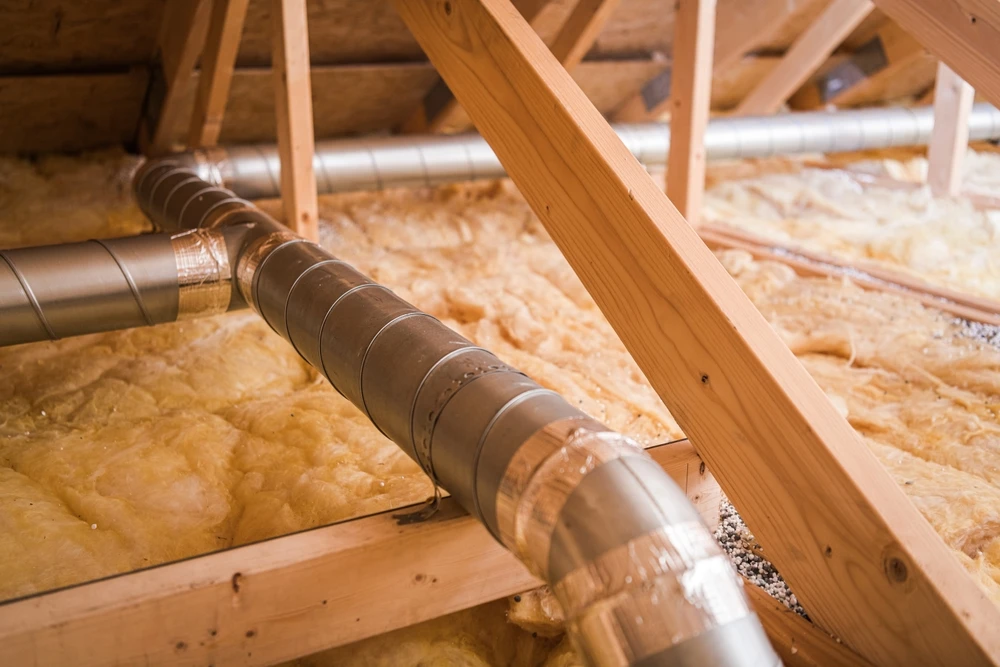
Good insulation and reduced heat gain mean the air conditioner has to do far less work to keep a home comfortable. On the Central Coast, where summer sun and humidity can be intense, improving the building envelope is one of the most effective long-term ways to cut running costs.
By preventing hot air and radiant heat from entering, and by keeping cooled air inside, it is often possible to reduce both the required system size and overall runtime. This translates directly into lower power bills and improved efficiency over time.
Upgrade Roof, Ceiling and Wall Insulation
Heat enters most Central Coast homes through the roof first, so ceiling insulation should be the top priority. Many older homes have thin batts or none at all, allowing roof space temperatures of 50°C or more to transfer into living areas.
Ceiling batts should be at least equivalent to R4.0 for this climate. Where access allows, topping up thin or compressed insulation with new batts is usually a quick and relatively low-cost improvement. Any gaps around downlights, manholes or eaves should be sealed, as even small exposed areas can significantly reduce overall insulation performance.
Wall insulation is more difficult to retrofit but is worth considering during renovations. If cladding is being replaced or internal walls are open, it makes sense to install insulation batts at the same time. Even partial wall insulation on the western side of a home can noticeably reduce afternoon heat build-up.
Reduce Heat Gain from Windows and Sun
Windows can be the biggest source of heat gain especially on north and west facing walls. Glass lets in direct sunlight which quickly warms indoor surfaces and forces the air conditioner to run longer.
Practical options for Central Coast homes include:
- External shading such as awnings pergolas fixed eave extensions or shade sails particularly on western windows
- Quality internal blinds or curtains with close fitting tracks and a blockout lining
- Reflective or tinted window film to cut solar gain where external shading is not practical
- Double glazing or high performance glass when replacing old windows
External shading usually performs best because it stops the sun before it hits the glass. For renters or apartments where outdoor changes are limited well fitted blockout blinds and window film can still make a noticeable difference.
Seal Air Leaks and Insulate Other Hot Spots
Air leaks allow cooled air to escape and draw hot, humid air inside, which wastes energy even when insulation is adequate. Common problem areas include gaps around doors and windows, unsealed exhaust fans, and cracks in floorboards or skirting boards.
Simple improvements such as weather sealing around door frames, draught stoppers on external doors and proper seals on exhaust fans help keep conditioned air where it belongs. These low-cost upgrades can make a noticeable difference when paired with regular air conditioning servicing.
Other heat gain areas include uninsulated metal roofs and garages attached to living spaces. A light-coloured roof or reflective roof coating, combined with insulation above the garage ceiling, can significantly reduce radiant heat entering adjoining rooms and ease the load on the air conditioner.
4. Keeping Filters and Systems Clean
Dirty filters and internal components force an air conditioner to work much harder than necessary, which quickly increases electricity consumption. In Central Coast homes, where salt air, dust and pollen are common, keeping the system clean is one of the simplest and most effective ways to reduce running costs and maintain comfort.
By staying on top of filter cleaning and basic system hygiene, homeowners can often lower energy use by 5 to 15 percent and reduce the risk of breakdowns that result in expensive callouts. Cleanliness should form part of a regular seasonal maintenance routine rather than being addressed only when performance starts to decline.
How Dirty Filters Increase Power Bills
Air conditioning relies on smooth airflow. When filters are clogged with dust, pet hair or coastal moisture buildup, the indoor fan must work harder to pull air through. This strain increases power draw and can cause the unit to run longer to reach the set temperature.
Restricted airflow also affects the indoor coil. If not enough air passes over it the coil can become too cold, sometimes icing up. An iced coil significantly reduces cooling capacity so the system runs for longer periods and costs more to operate. Over time this extra workload shortens the life of motors and other components.
For allergy and asthma sufferers filter neglect has a second cost. Pollutants that bypass or overload the filter can circulate back into the home which often leads to lower comfort even at a cooler temperature so occupants turn the unit down further and use more energy.
How Often to Clean or Replace Filters
On the Central Coast, a split system or ducted system that is used regularly in summer should have its filters checked at least every 4 to 6 weeks. In homes with pets, smokers or locations close to busy roads, monthly checks are usually more appropriate.
Most wall-mounted split systems have reusable mesh filters that can be:
- Removed easily from the front panel
- Vacuumed using a soft brush attachment
- Washed with lukewarm water and mild detergent
- Fully dried out of direct sunlight before refitting
Ducted systems may use pleated disposable filters located in a return air grille. These typically need replacing every 3 to 6 months, depending on usage and dust levels. If the filter appears grey or clogged, or if airflow at the return grille feels noticeably weaker, it is time to replace it.
Choosing the correct filter type and setting an appropriate maintenance schedule will depend on the specific system and the conditions within the home.
Other Components That Need Cleaning
Beyond filters, several other components can affect efficiency if they become dirty. The indoor coil can accumulate fine dust and biofilm that act like insulation and reduce heat transfer, forcing the unit to run longer. The outdoor unit can also suffer from blocked fins caused by leaves, grass clippings or coastal grime. When airflow is restricted, heat rejection becomes less efficient and power consumption increases.
Homeowners can gently clear debris around the outdoor unit, maintain at least 30 to 50 cm of open space around the sides and lightly hose the coil fins from the outside in with the power switched off. Internal coil and drain cleaning should always be carried out by a licensed technician.
During a professional service, coils, trays and fans are cleaned, the condensate drain is checked for blockages and overall system performance is tested. Proper servicing helps ensure the system operates at peak efficiency and keeps running costs as low as possible.
5. Using Zoning, Room Control and Smart Scheduling
Managing where and when the air conditioner operates is one of the most effective ways to reduce power bills on the Central Coast. Instead of cooling the entire home continuously, zoning, room controls and smart scheduling allow the system to run only in the areas that are being used and only at the times they are occupied.
It helps to think about how the home is actually used throughout the day. Aligning air conditioning operation with real living patterns can significantly reduce running costs while maintaining consistent comfort.
What Zoning Is and How It Saves Money
Zoning divides a home into separate areas, such as living spaces, bedrooms or a home office. Each zone can be turned on or off independently using motorised dampers in the ductwork, controlled by a central interface.
This approach saves money because the system is not delivering cooled air into unused rooms. For example, a Central Coast family might cool only the living and kitchen areas in the evening, then switch to bedrooms overnight. As a result, the outdoor unit and indoor fan operate under a lighter load, reducing energy consumption and extending the life of the system.
The number and layout of zones should be tailored to the home. Typical setups include:
- A day zone covering living, kitchen and dining areas
- A night zone for bedrooms and hallway
- A separate zone for a frequently used study or granny flat
Zoning design should reflect the home’s layout, whether it is a single-level brick home or a two-storey coastal build, to ensure efficiency and balanced airflow.
Room Controllers and Airflow Balance
Room or zone controllers give more precise control than a single central thermostat. Some systems allow temperature adjustment per zone while others offer adjustable airflow levels like low medium or high.
Proper airflow balance is important. Closing too many zones at once can create high pressure in the ductwork which increases strain and reduces efficiency. A professional installer will design the system so that a minimum number of outlets remain open and may use a bypass or constant zone to protect the equipment.
For Central Coast homes with hot west facing rooms or large glass areas individual control in those rooms can prevent overcooling the rest of the house just to keep one space comfortable.
Smart Scheduling and Automation
Smart controllers and Wi-Fi enabled systems make scheduling straightforward and help prevent the air conditioner from running longer than necessary. Homeowners can:
- Set different temperature schedules for weekdays and weekends
- Pre-cool living areas before the peak afternoon heat, then allow the system to scale back later
- Automatically switch from cooling to fan-only mode in the evening when the sea breeze picks up
Using a mobile app, the system can be turned off if it was left running after leaving for work, or switched on shortly before arriving home instead of operating all day. On the Central Coast, where many homes are empty during school and work hours, this can make a noticeable difference to quarterly power bills.
Smart controls can often be integrated with compatible existing systems or included as part of a new installation to improve both comfort and efficiency.
6. When an Energy-Efficient Upgrade Makes Sense
At some point, it becomes more cost-effective to replace an ageing air conditioner than to continue paying high electricity bills and repeated repair costs. The key is recognising when that tipping point has arrived.
The right time to upgrade depends on several factors, including the age and condition of the current unit, its efficiency rating, how frequently it is used and prevailing energy prices. There are also clear warning signs that indicate a system is no longer delivering value and may be approaching the end of its practical service life.
Key Signs Your Current System Is Costing Too Much
For many Central Coast homes the following signs often indicate that an upgrade should be seriously considered:
If the unit is 10 to 15 years old or more it will almost always use more power than a modern inverter system with a higher star rating. Technology has improved significantly so a new unit can often deliver the same comfort using far less electricity.
Frequent breakdowns and repair bills are another red flag. As a guide if repair costs in a year start to approach 25 to 30 percent of the price of a new system it usually makes more financial sense to upgrade.
Rising energy bills without any change in how the air conditioner is used often mean the system is working harder to achieve the same result. This can be due to worn components refrigerant leaks or a failing compressor. Uneven temperatures hot and cold spots or very noisy operation also indicate a unit that is struggling.
When the Bill Savings Justify a New System
An upgrade makes the most sense when the expected power savings can repay the cost of a new unit within a reasonable timeframe. A common example is replacing an older fixed-speed system with a modern high-efficiency inverter model.
In many Central Coast homes, this can reduce cooling and heating energy use by 20 to 40 percent, depending on how the system is operated and how well the home is insulated. For a household spending around $1,200 per year on heating and cooling, a 30 percent saving equates to roughly $360 annually. Over five years, that amounts to about $1,800, which can offset a significant portion of the cost of a quality new split system.
Businesses operating large ducted systems may see even greater savings, as their units typically run for longer hours. In these situations, even modest efficiency improvements can deliver substantial financial benefits over time.
Reviewing past power bills and system performance data can help estimate simple payback periods and support a well-informed upgrade decision.
Other Reasons An Upgrade Can Be Worth It
Comfort and health benefits are also important considerations. Newer systems typically deliver more accurate temperature control, quieter operation, improved air filtration and better humidity management, which is particularly valuable in the Central Coast’s coastal climate.
Smart controls can further reduce running costs by enabling scheduling, zoning and remote access, ensuring the system operates only when and where it is required. For properties considering solar power, a high-efficiency air conditioner can also make better use of daytime solar generation.
In many cases, once a system’s age, condition and operating costs are properly assessed, an energy-efficient upgrade becomes not just a comfort improvement but a sound long-term financial decision.
Reducing air conditioning running costs isn’t about sacrificing comfort. It’s about making smarter choices with the system you already have and knowing when it’s time to upgrade. By setting realistic temperatures, using energy-efficient modes correctly and keeping your home or building better insulated, you immediately reduce the workload on your air conditioner. When you combine that with clean filters, regular maintenance and well-designed zoning and scheduling, your system becomes a far more cost-effective and reliable part of your home or business.
Over time, there comes a point when an older, power-hungry unit simply cannot compete with the savings and performance of newer, energy-efficient models. Recognising that tipping point and acting on it can lock in long-term reductions in your power bills while improving day-to-day comfort.
Taken together, these strategies give you practical control over how much you spend on cooling, ensuring your air conditioning works with your budget rather than against it.
We Run Our Business Like a Family
When You Need Help
Get your home the Air Conditioning work it needs from our team at All Coast Air Conditioning. We’re always ready to help.


