
A quiet cooling system can make a noticeable difference to comfort, particularly in bedrooms, home offices and living areas where unwanted background noise is more distracting. When comparing options for air conditioning in Central Coast homes, cooling performance and energy efficiency are important, but noise levels should also be considered.
The sound produced by an air conditioner depends on more than the selected model. System type, capacity, fan speed, compressor technology, airflow design and installation quality can all affect how noticeable a unit becomes during everyday use.
All Coast Air Conditioning explains what to look for when choosing a system that provides reliable comfort without unnecessary disruption.
Understanding Air Conditioner Noise Ratings
Air conditioner noise is usually measured in decibels, written as dB or dB(A). The decibel scale is logarithmic rather than linear, which means a small numerical change can result in a noticeable difference in perceived sound.
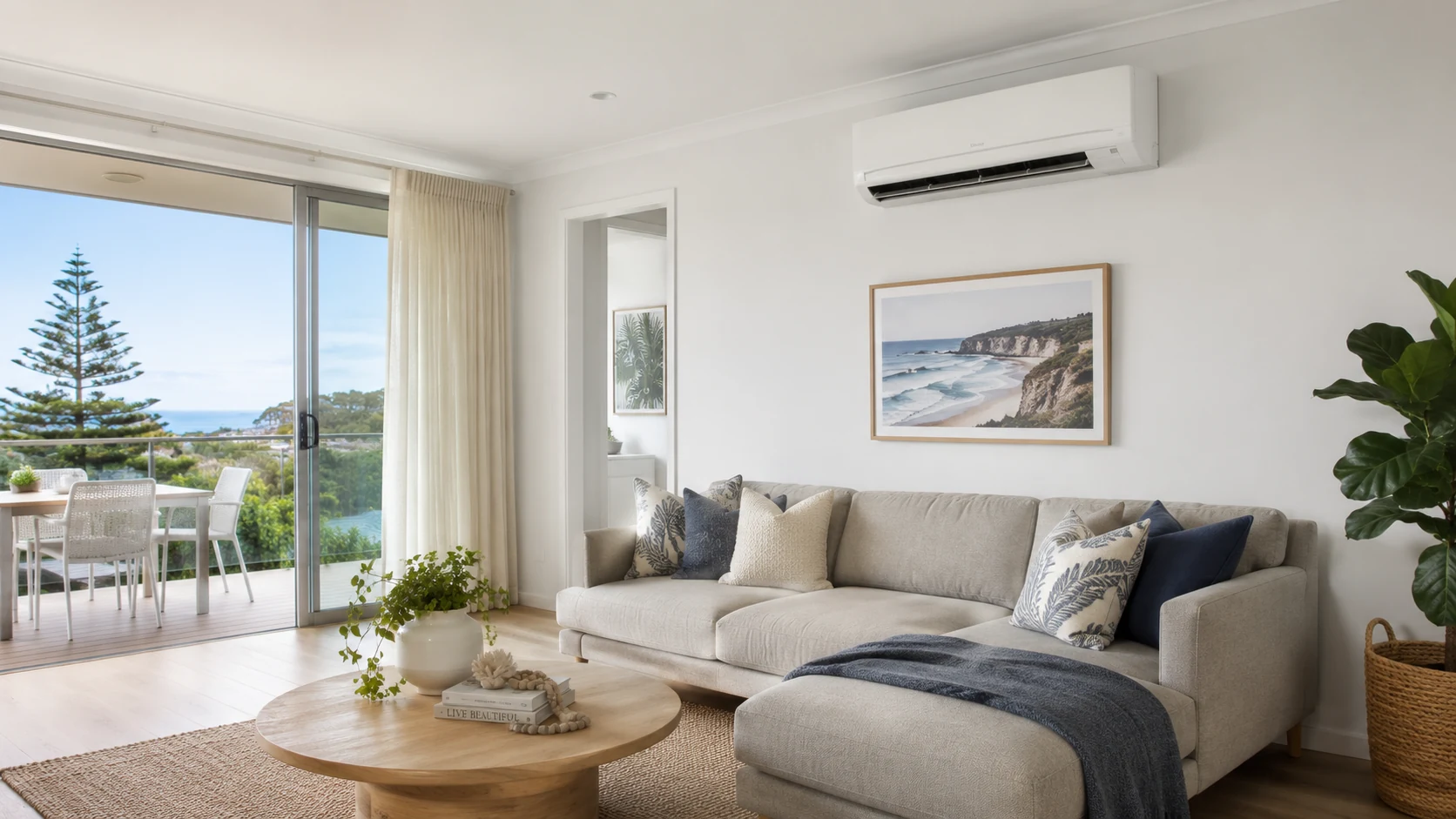
Many modern wall-mounted split systems list indoor noise levels starting at around 19 to 25 dB on their lowest fan setting. These lower settings may suit bedrooms and other spaces where quiet operation is a priority.
As a general guide:
- Around 19 to 25 dB may suit bedrooms and quiet areas
- Around 26 to 35 dB is likely to be more noticeable but may still be comfortable in living spaces
- Noise above 40 dB may become distracting during quiet periods
These figures should not be treated as universal rules. The sound experienced inside a home will depend on the fan speed, room layout, surrounding background noise and the way the unit is installed.
The lowest advertised figure also does not tell the whole story. A unit may operate quietly in sleep mode but become more noticeable at medium or high fan speeds. When comparing models, consider the full operating range rather than focusing only on the minimum number.
The Australian Government’s heating and cooling guidance explains that the Zoned Energy Rating Label includes separate indoor and outdoor noise ratings for split-system air conditioners. Checking both figures can help homeowners compare models more accurately and consider how the system may affect comfort inside the home and around neighbouring properties.
Sound Pressure and Sound Power Levels
Product specifications may refer to sound pressure levels, sound power levels or both. These figures do not describe the same thing.
Sound pressure levels indicate the noise measured at a specified distance and under stated test conditions. These figures help indicate how noticeable a unit may be inside a room or near an outdoor area.
Sound power levels describe the total acoustic energy produced by the equipment. This measurement is also useful when comparing outdoor condensers.
Measurement methods and test conditions can vary between manufacturers and models. Before comparing two units, check whether the figures refer to sound pressure or sound power and whether the testing conditions are equivalent.
Comparing Indoor and Outdoor Unit Noise
Split air conditioning systems have indoor and outdoor components, and both need to be considered when choosing a quiet option.
Homeowners often focus on the indoor unit because it is located inside the room. However, the outdoor condenser can also affect comfort, particularly when it is installed near bedroom windows, patios, narrow side access areas or neighbouring properties.
Indoor Unit Noise
Indoor noise generally comes from:
- The fan motor
- Air moving through the grille
- Changes in fan speed
- Vibration transferred through the wall
- Loose filters, panels or louvres
A unit may feel quiet in a living room during the day but become more noticeable in a bedroom at night when background noise is lower.
Placement also affects how the noise is experienced. Even a relatively quiet indoor head may become distracting if it is positioned directly above a bed, desk or lounge.
Outdoor Unit Noise
Outdoor condensers are generally louder than indoor units because they contain the compressor and fan. The sound reaching the home or a neighbouring property will depend on the unit, its location and the surrounding surfaces.
Outdoor noise can become more noticeable where:
- The condenser is close to a bedroom window
- Homes are positioned close together
- The unit faces a neighbouring outdoor area
- The condenser is installed in a narrow side passage
- Hard walls reflect sound
- A lightweight bracket or timber deck amplifies vibration
A carefully selected unit can still create problems if it is installed in an enclosed corner where sound reflects off nearby walls.
Which Types of Air Conditioners Are Usually the Quietest?
Some air conditioning systems are naturally quieter indoors because the compressor and other noisy components are located outside the home.
The best choice will depend on the size of the property, the rooms that need cooling, the available installation locations and the household budget.
Ducted Air Conditioning
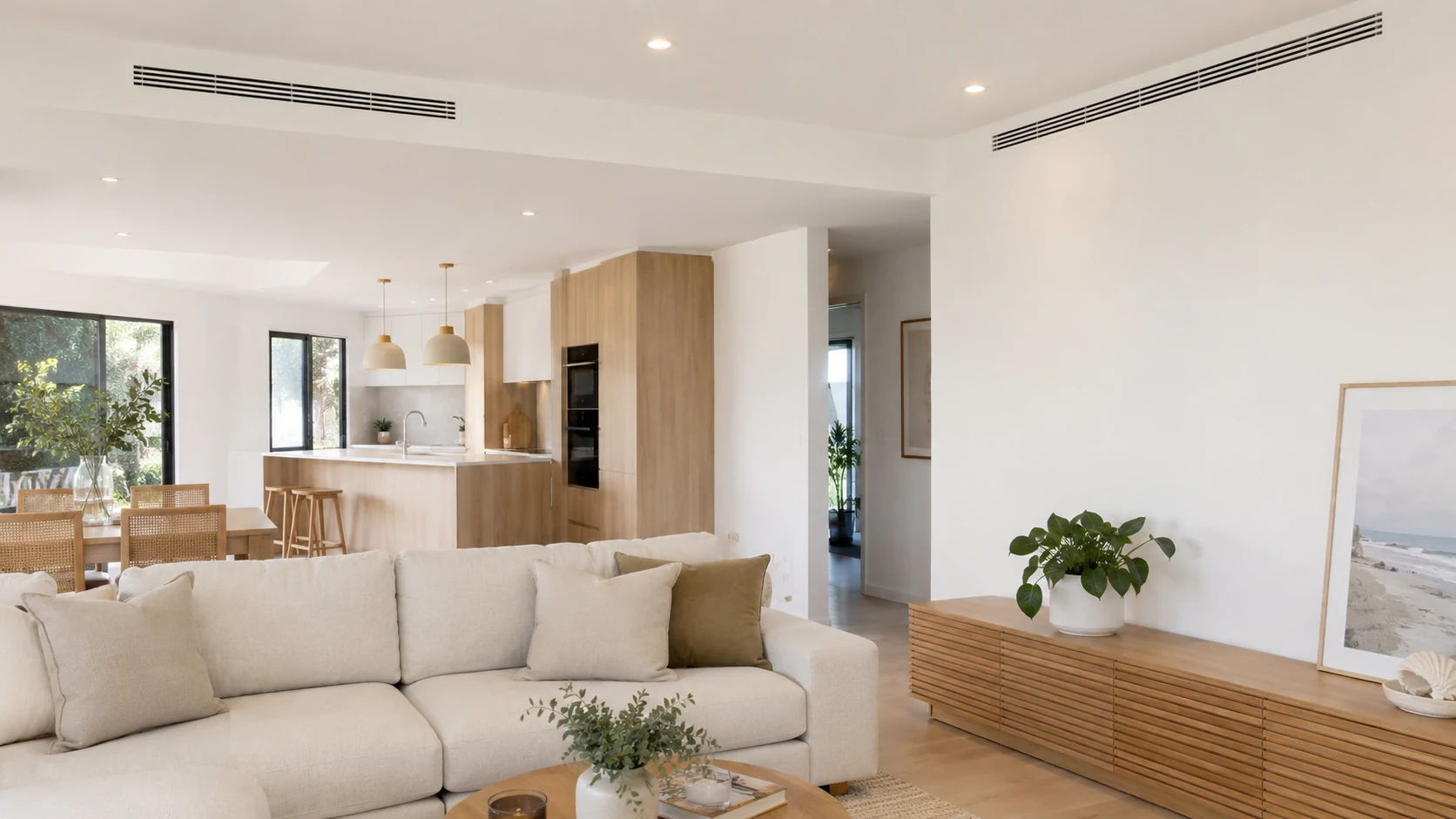
Ducted systems are often one of the quietest options inside the home. The indoor fan unit is generally concealed in the roof space or under the floor, while cooled air is distributed through ducts and grilles.
Because there is no wall-mounted unit in the room, noise can be less noticeable. However, a ducted system is not automatically quiet. Design and installation still matter.
Common causes of ducted air conditioning noise include:
- Undersized ducts
- Tight bends that restrict airflow
- Grilles that are too small
- Poorly positioned return air vents
- Excessive fan speed
- Vibration travelling through ductwork or the ceiling structure
When ducts and grilles are correctly sized, air can move through the system more smoothly and quietly.
The indoor fan coil should also be positioned carefully. Locating it directly above a bedroom or quiet living area may make fan and vibration noise more noticeable.
Wall-Mounted Split Systems
Wall-mounted split systems are also a practical option for quiet operation because the compressor is installed outside. The indoor unit contains a fan that can operate at relatively low sound levels, particularly when quiet or night mode is selected.
Modern inverter split systems often run quietly at lower fan speeds. However, sound levels will increase when the system is working harder during very hot weather or when a room needs to cool quickly.
Correct placement is important. Installing the indoor unit on a solid wall and avoiding positions directly above beds, desks or seating areas can make the sound less noticeable.
Multi-Split Systems
Multi-split systems connect several indoor units to one outdoor condenser. This can reduce the number of outdoor units required around the property and provide more flexibility when choosing an installation location.
Indoor sound levels are generally similar to those of individual wall-mounted or concealed units. Outdoor noise will depend on the selected model, the number of rooms operating at the same time and the overall load on the system.
A multi-split system may be useful where outdoor space is limited, but the condenser still needs to be selected and positioned carefully.
Noise is only one factor to consider. Homeowners who are still deciding between different system types may also benefit from comparing ducted and split-system air conditioning before selecting an option.
Why Correct System Size Matters
The capacity of an air conditioner affects more than heating and cooling performance. A system that is too large or too small for the space may also create unnecessary noise.
Correct sizing helps the unit maintain a consistent temperature without repeatedly starting, stopping or operating at maximum output. Taking the time to understand the factors involved in choosing the right air conditioner size can also help homeowners avoid unnecessary noise, uneven cooling and excessive energy use.
Oversized Systems
An oversized system may cool a room quickly and switch off before operating conditions stabilise. This can create noticeable changes in sound as the system starts and stops.
In ducted systems, noise can also occur where the equipment capacity, airflow, ducts and grilles are not properly matched. Higher airflow moving through restrictive ductwork may contribute to:
- Rushing air sounds
- Whistling around supply vents
- Noisy return air grilles
- Vibration through ducts and ceiling spaces
Larger equipment also takes up more space, which may limit suitable outdoor installation locations.
Undersized Systems
An undersized system may struggle to maintain the desired temperature during hot weather. Instead of switching on and off too frequently, it may operate for extended periods at a higher output.
This can make fan and compressor noise more persistent while the room remains warmer or more humid than expected.
A system that continually operates close to its maximum capacity may also experience greater wear over time.
Correctly Sized Systems
A properly sized air conditioner can maintain a more consistent temperature while operating at low or moderate output for longer periods.
This helps reduce abrupt changes in sound and allows the system to operate more smoothly.
A professional assessment should consider:
- Room dimensions
- Ceiling height
- Window size and orientation
- Sun exposure
- Insulation
- Building materials
- Number of occupants
- Room use
- Open-plan areas
- Shading and ventilation
Selecting a system based only on floor area may overlook important details that affect comfort and performance.
Features That Can Help Reduce Noise
Some air conditioners include design features that help reduce sound and vibration during operation.
Inverter Technology
Inverter air conditioners adjust compressor output to match the cooling demand. Instead of repeatedly switching between full power and off, the system can operate more steadily at a lower output when less cooling is needed.
This can reduce abrupt changes in sound and help maintain a more stable indoor temperature.
Quiet and Night Modes
Many systems include quiet, sleep or night modes. These settings may reduce indoor fan speed or limit outdoor unit operation during certain periods.
They can be useful for bedrooms, but quiet mode should not compensate for poor sizing. A system still needs enough capacity to cool the room effectively at a lower setting.
Fan Design
The design of the indoor and outdoor fans can influence noise levels.
Features that may help reduce noise include:
- Multiple fan-speed settings
- Variable-speed fans
- Larger fan blades that can move air at a lower speed
- Blade shapes designed to reduce turbulence
- Adjustable louvres that direct airflow away from occupants
Airflow direction matters because a strong stream of air directed towards a bed or lounge can make both the sound and the cooling feel more intrusive.
Compressor Insulation and Cabinet Design
Some outdoor units include insulation around the compressor and cabinet features designed to reduce vibration and mechanical noise.
A reinforced cabinet can also help limit rattling during operation.
Vibration Control
Vibration can travel through walls, brackets, pipes, decks and other structural elements.
Suitable isolation methods may include:
- Anti-vibration feet
- Rubber or neoprene pads
- Isolation mounts
- Correctly sized stands
- Secure pipework support
- Stable mounting surfaces
The right solution will depend on the unit, the installation location and the structure of the property.
How Installation and Placement Affect Noise
Even a quiet air conditioner can become disruptive if it is installed in the wrong location.
Noise should be considered when planning the installation, not after the system has already been mounted.
Outdoor Unit Placement
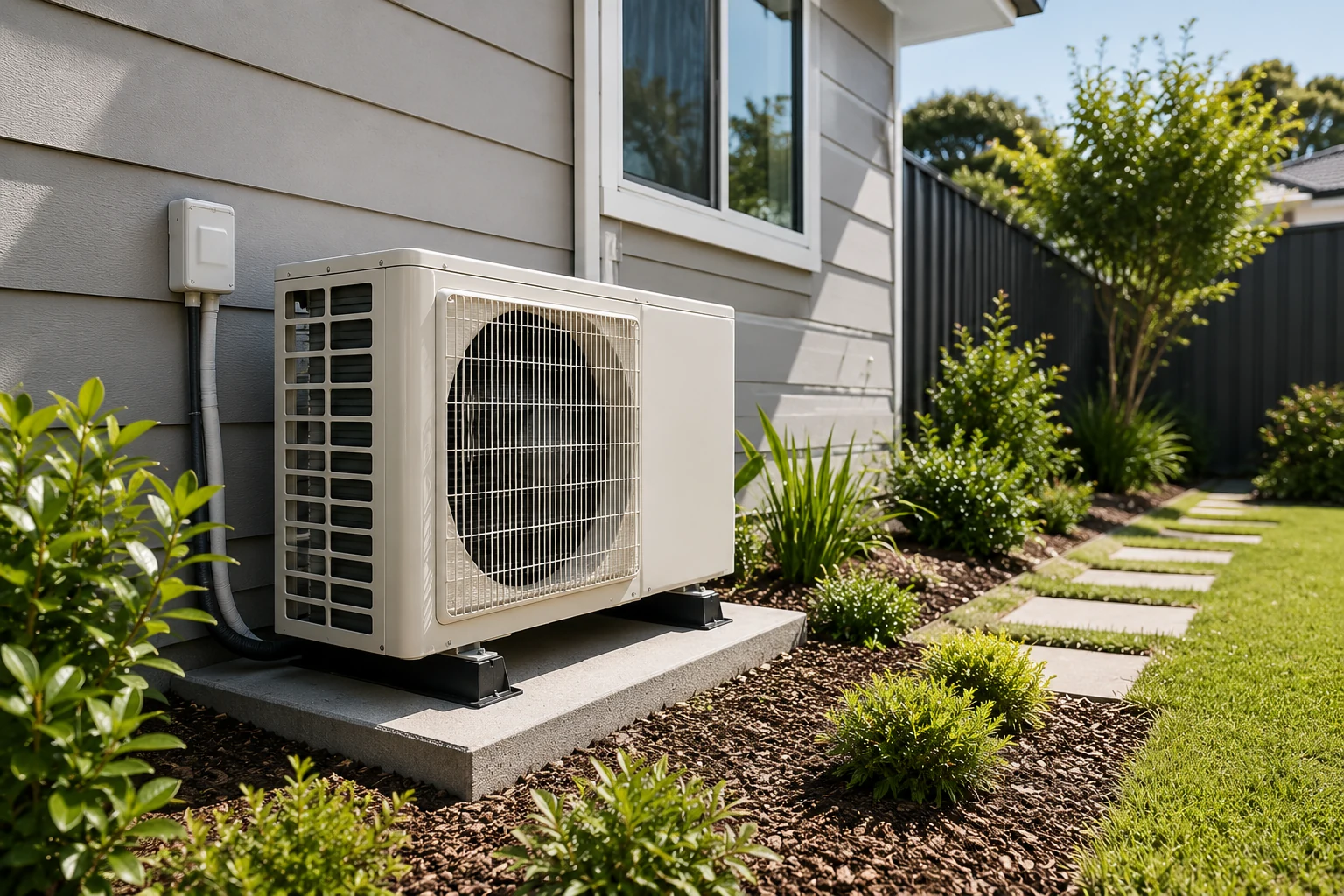
The outdoor condenser should be positioned away from bedroom windows, living areas and neighbouring properties where possible.
It also needs enough clearance for airflow and maintenance access. Boxing the unit into a tight corner may restrict airflow and amplify noise through reflection.
The direction of the fan and airflow should also be checked. A unit facing a fence, window, patio or neighbouring outdoor area may create unnecessary disturbance.
Where suitable, placing the condenser on a side of the home with higher existing background noise may make its operation less noticeable.
Mounting Surfaces
A stable, level base with suitable anti-vibration feet or isolation mounts can help reduce vibration.
Particular care may be needed where an outdoor unit is mounted on:
- A wall bracket
- A timber deck
- A lightweight structure
- An uneven slab
- A metal frame
- A surface connected directly to a bedroom wall
A concrete base can provide a stable surface, but the unit should still be installed with suitable vibration isolation.
Indoor Unit Placement
Wall-mounted indoor units should not be fixed to weak or resonant partition walls where another suitable option is available.
A poorly supported indoor unit may create humming, buzzing or rattling sounds. Loose panels, filters or louvres can also become noticeable over time.
Avoid positioning the unit directly above a bedhead, workstation or lounge where even a low sound level may become distracting.
Ductwork and Grille Design
Poor airflow design is a common cause of unnecessary noise in ducted systems.
Undersized ducts, tight bends and restrictive grilles increase air velocity and may create rushing or whistling sounds.
Return air grilles should also be large enough to allow air to move freely without placing unnecessary strain on the fan.
Correct duct sizing, suitable insulation and carefully positioned vents can help improve both noise levels and system performance.
Consider Neighbouring Properties
Outdoor unit noise does not only affect the occupants of the home. It can also affect nearby properties.
In NSW, restrictions may apply when air conditioner noise can be heard in a habitable room of another residence during certain hours. Local noise requirements and complaint processes may also apply.
This is particularly important for:
- Smaller suburban blocks
- Townhouses
- Duplexes
- Apartments
- Homes with narrow side access
- Properties where outdoor units are close to fences or neighbouring windows
Careful planning before installation can help reduce the risk of complaints and make it easier to select an appropriate condenser location.
What to Check Before Choosing a System
Before selecting a quiet air conditioner, check:
- The indoor sound level at quiet, low and medium fan speeds
- Whether the listed figure is a sound pressure or sound power level
- The outdoor unit noise rating
- The measurement conditions used by the manufacturer
- Whether the unit includes inverter technology
- Whether quiet, sleep or night modes are available
- The capacity required for the room or home
- The proposed indoor and outdoor installation locations
- The distance between the outdoor condenser and nearby windows
- Whether neighbouring properties may be affected
- Whether ductwork, grilles and return air vents are appropriately sized
- Whether vibration isolation mounts or anti-vibration feet are needed
- Whether the structure could amplify vibration
Choosing a Quiet Air Conditioner for Your Home
The quietest air conditioner is not always the model with the lowest advertised decibel figure.
System type, capacity, airflow design, compressor technology and installation quality all influence how noticeable the unit will be during everyday use.
A properly selected and carefully installed system can help reduce indoor fan noise, outdoor compressor sound and vibration throughout the property.
All Coast Air Conditioning can assess the layout of your Central Coast home and recommend an air conditioning system that balances cooling performance, energy efficiency and quieter operation.
We Run Our Business Like a Family
When You Need Help
Get your home the Air Conditioning work it needs from our team at All Coast Air Conditioning. We’re always ready to help.


