
A freshly painted ceiling can make an old air conditioning grille stand out for the wrong reasons. If yours has yellowed, looks dated, or clashes with the finish you want, replacing it may seem like a straightforward cosmetic improvement. In many cases, it is possible, but the right replacement needs to do more than cover the existing opening. All Coast Air Conditioning helps Central Coast homeowners consider how grille design, compatibility and airflow affect a replacement’s suitability.
Choosing ducted AC ceiling grilles involves balancing appearance with how air moves through each room. Understand why outlet design matters, how supply outlets differ from return-air grilles and what a professional should check before selecting a replacement. Painting or covering an existing grille may also create problems that are not obvious from floor level.
Ceiling Grilles Do More Than Finish the Opening
The visible fitting on your ceiling is part of the air distribution system, not simply a decorative trim. Its shape, openings and internal design help determine how conditioned air enters the room and mixes with the surrounding air.
A room can receive enough air without feeling evenly comfortable. If the airflow travels in the wrong direction or reaches occupied areas too quickly, you may notice draughts near one seat while another part of the room remains warmer.
Outlet Shape Influences How Air Enters the Room
Supply outlets are designed to deliver air in particular patterns. Some spread it in several directions across the ceiling, while others direct it along a narrower path. The angle of their blades and the arrangement of their openings influence how air moves into the room.
Two fittings that look similar from below can behave differently. Their depth, blade positioning and effective open area all affect how air leaves the outlet. The distance an airstream travels before slowing down is called its throw.
For example, an outlet near the middle of a room has different distribution requirements from one positioned close to a wall. A pattern that spreads air evenly in one location may direct too much towards a nearby surface in another. Ceiling height, room proportions and furniture placement also influence whether the resulting airflow feels comfortable.
For background on how the visible outlets fit into the wider system, the explanation of how ducted air conditioning works provides useful context. Grille selection is one part of that system, but it directly affects the airflow occupants experience.
Supply Outlets and Return-Air Grilles Have Different Jobs
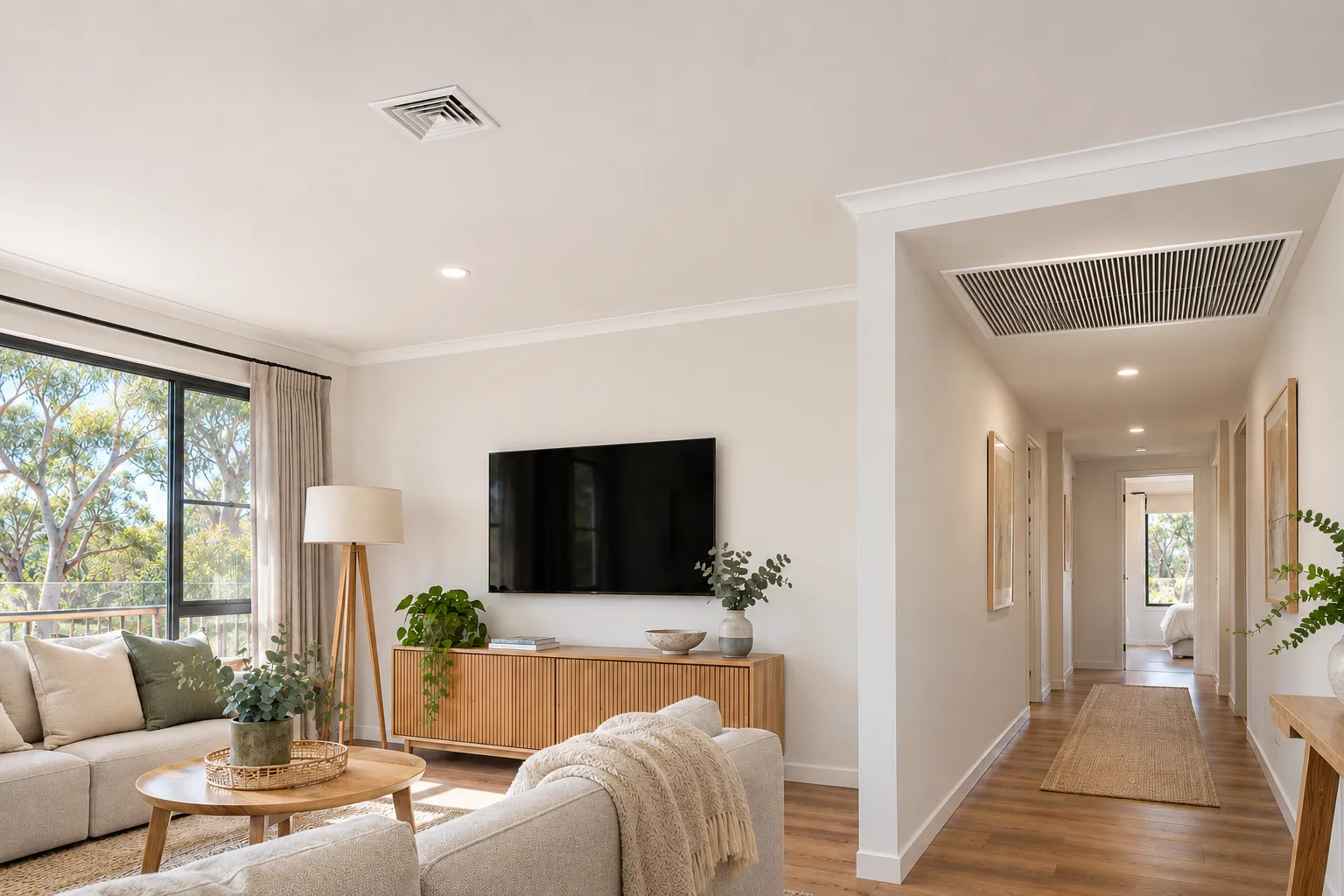
Supply outlets deliver conditioned air into your rooms. Return-air grilles draw room air back towards the indoor unit so it can pass through the system again. Although both may be installed in the ceiling, they serve different functions and aren't interchangeable.
A return-air grille is commonly larger than an individual supply outlet. Depending on the installation, it may also provide access to a filter that needs regular cleaning or replacement. Its design must allow sufficient air to return to the system without unnecessary restriction.
The available opening area is important when a filter is incorporated into the assembly. A decorative replacement that reduces airflow or prevents the filter from fitting correctly can affect system operation and make routine maintenance more difficult.
Before discussing replacement options, establish whether you are changing a room supply outlet or the main return-air grille. If the return grille provides filter access, the new fitting must preserve that function rather than conceal it behind a fixed decorative panel.
Can I Choose a Different Grille Just For Its Appearance?
You can make appearance part of the decision, but it should not be the only selection criterion. A different colour, finish or profile may be achievable without compromising comfort, provided the replacement suits the existing connection and required airflow.
The important question is not simply whether a grille fits the ceiling opening. It is whether the replacement can perform the same job in that specific location. This distinction helps you compare options based on suitability rather than choosing from product photographs alone.
A Matching Opening Does Not Guarantee Equivalent Performance
The grille’s external dimensions describe how much ceiling it covers. They do not necessarily indicate the size of the air connection behind it or how much unobstructed space is available for airflow.
Material and construction matter as well. A replacement needs to suit its intended application, with mounting arrangements and a design that remains accessible for maintenance. A visual match alone does not establish whether the fitting can be securely supported or operate as required.
When comparing options, ask for the proposed fitting to be identified clearly rather than described only as a modern or slimline design. You should understand what is changing, why the replacement is considered suitable and if any existing components behind the visible face will also need attention.
A Different Outlet Pattern Can Change Where Air Travels
Switching from a multidirectional outlet to a more directional design can change the room's air distribution, even if the connection size remains the same. The replacement might concentrate airflow towards a sofa, direct it towards a wall or leave part of the room less comfortable.
The effect may be more noticeable when furniture sits directly beneath or besides the outlet. A design that looks discreet on the ceiling is not necessarily discreet in use if it creates a persistent stream of cool air across your usual seating position.
If your current room comfort is good, tell the technician that preserving it is a priority. If you already experience uneven temperatures or draughts, explain where and when they occur before selecting a replacement. An existing comfort problem should be assessed rather than assumed to disappear with a different-looking grille.
Photographs and finish samples can narrow down your preferences. However, product airflow information and an assessment of the outlet position are needed to establish if those preferences are practical for your room.
What Needs Checking Before I Replace an Outlet?
A professional assessment should consider the visible fitting and the components connected to it. The aim is to establish whether a replacement can be installed securely and deliver the required airflow without introducing unnecessary restrictions or an unsuitable distribution pattern.
An expert can assess the existing installation and recommend options. Any regulated electrical or refrigerant-related work must be undertaken by appropriately licensed technicians, with relevant work meeting NSW air conditioning and refrigeration licensing requirements. You do not need to remove an outlet or enter the roof space yourself to prepare for the assessment.
The Connection Behind the Visible Grille
Depending on the installation, the visible face may connect to an outlet assembly, adaptor or ceiling box. Its connection dimensions can differ from the measurements taken across the visible grille. Mounting arrangements also vary, so a replacement cannot be confirmed solely by measuring its external dimensions.
The technician should establish how the existing fitting is connected and supported, then check the proposed replacement against those details. If an adaptor or additional component is required, this should be explained before you approve the work. A similar-looking size does not always mean a direct substitution is possible.
The condition of the existing outlet assembly matters too. A loose connection, damaged fitting or deteriorating component may need attention independently of the cosmetic change. Installing a new visible face would not resolve an underlying problem.
The Airflow the Outlet Needs to Deliver
Each supply outlet needs to deliver an appropriate amount of air for the room and the system's design. The technician may consider available system information, outlet dimensions and airflow measurements when assessing the replacement. The grille’s appearance cannot establish whether it can handle the required air volume.
A suitable selection balances airflow, distribution and noise. A grille might be physically compatible but unsuitable for the amount of air it needs to deliver. Choosing the largest visible opening is not automatically a reliable way to improve comfort either.
Airflow restrictions should also be considered as part of the broader discussion about energy-efficient ducted operation. A decorative change should not introduce avoidable resistance, although replacing a grille alone should not be presented as a guaranteed way to reduce electricity consumption.
Australian Government guidance on maintaining your air conditioning system recommends keeping vents, filters and louvres clean and arranging regular servicing.
Before accepting a quote, ask whether it includes checking the existing connection, confirming the replacement's airflow suitability and assessing operation after installation. If you are replacing several outlets, the assessment should consider their combined effect rather than treating each new fitting as an isolated cosmetic purchase.
Painting and Covering Can Affect Performance
Painting an old grille or adding a decorative cover can seem like an easier alternative to replacement. Both options require care because they can alter the openings, surfaces or access arrangements that allow the fitting to work as intended.
Before committing to either approach, ask a professional to check the grille material and the manufacturer's recommendations. Not every fitting is suitable for refinishing, and a decorative product is not automatically appropriate for use over an air conditioning outlet.
Paint Can Restrict Openings or Moving Components
Paint build-up can narrow the spaces between blades or bridge smaller openings. Where a fitting has adjustable components, paint may interfere with their movement or make later adjustments difficult. These effects are easy to overlook when the main aim is matching the ceiling colour.
Painting an installed grille can also affect edges, fasteners and removable sections that must remain accessible. A return-air grille may become difficult to open if paint seals parts of the assembly together when it provides access to a filter.
The material itself needs consideration. Different plastics, metals and existing coatings do not all respond to refinishing in the same way. An unsuitable coating may adhere poorly or deteriorate, leaving a finish that looks worse than the original discolouration.
If colour matching is your priority, check if a compatible replacement is available in a suitable finish before repainting the existing fitting. Compare the options based on appearance, airflow suitability and future access rather than just the amount of work involved.
Decorative Covers Can Obstruct the Intended Air Path
A panel placed over a supply outlet can redirect air before it has a chance to spread into the room. Even if the panel has openings, they may not provide enough free area or align with the outlet's intended distribution pattern.
This can lead to concentrated air streams, additional noise or less effective room comfort. A cover positioned close to the grille may interfere differently from one installed further away, so a photograph of the finished appearance is not enough to establish suitability.
Covering a return-air grille raises a different concern because the system still needs a sufficiently open path for air to return. Decorative screening can restrict this airflow and may also obstruct access to a filter located behind the grille.
If you are considering a cover, provide the technician with its dimensions, material details and intended position. A product designed as general ceiling decoration should not be assumed suitable simply because it has perforations or slots.
How Do I Know the Replacement Still Distributes Air Properly?
A replacement should be assessed while the system is operating, not judged only by how neatly it sits against the ceiling. The checks required depend on what has changed, including whether the work involved a similar replacement or a different outlet design.
Your experience in the room also provides useful information. Knowing how the space felt before the change gives the technician a reference point for identifying differences in noise, draughts and temperature distribution.
Professional Airflow Assessment After a Change
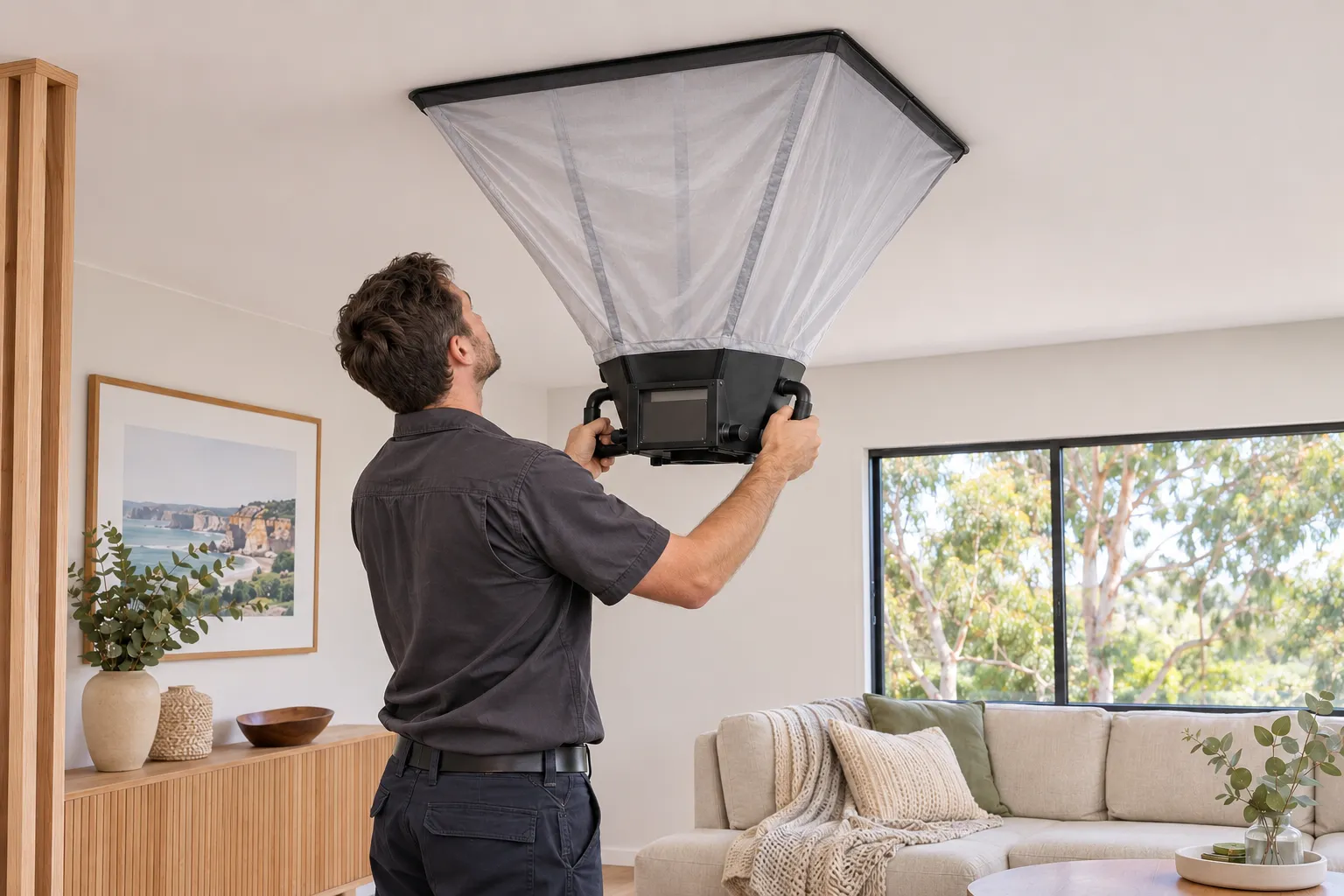
An appropriately qualified technician may assess airflow at the outlet and check how the replacement distributes air into the room. They can also listen for unexpected noise and inspect the fitting and connection for issues that could affect operation.
Where the new design behaves differently, professional adjustment may be necessary. This could involve changing adjustable components or addressing the outlet connection, depending on the installation. Any adjustment should suit the system's requirements rather than simply aiming for the strongest possible breeze.
Ask what testing is included in the proposed air conditioning outlet replacement. A quote that covers only exchanging the visible face may not provide the same level of assessment as one that includes compatibility checks and operational testing. Comparing the scope of work helps you understand differences between supplier recommendations.
Room Comfort Matters as Well as the Finished Appearance
Your experience in the room remains important after the technical checks. Pay attention to whether air now blows directly across your usual seating position, whether one area feels less comfortable or whether a new whistling or rushing sound appears during normal operation.
Describe any changes specifically. Saying that a draught occurs at the dining table during cooling is more useful than simply saying the room feels uncomfortable. Note whether the issue is constant or appears only under particular operating conditions, then pass that information to the technician.
If your system provides heating and cooling, the two modes may feel different because warm and cool air behave differently within a room. You may not experience both during the initial assessment, so ask what to watch for when you next use the other mode.
Choosing the Right Ducted AC Ceiling Grilles for Your Home
Replacing an outdated ceiling grille can improve the appearance of your rooms, but the new fitting must remain suitable for the air conditioning system behind it. Connection dimensions, outlet design, airflow requirements and maintenance access all deserve consideration before you settle on a particular style.
For advice on ducted air conditioning in Central Coast, All Coast Air Conditioning can help you discuss your existing outlets and the finish you want. Provide photographs taken safely from floor level and explain whether your main concern is appearance, comfort or both. A professional assessment identifies replacement options that complement your ceiling while allowing your ducted system to continue distributing air as intended.
We Run Our Business Like a Family
When You Need Help
Get your home the Air Conditioning work it needs from our team at All Coast Air Conditioning. We’re always ready to help.


