
When smart AC controls and connected home features are mentioned, it is easy to wonder whether they offer real value or simply add another layer of technology to manage. All Coast Air Conditioning often speaks with homeowners who want better comfort, easier temperature control and lower running costs, but are unsure whether smart features genuinely improve the way their system performs. For households using air conditioning on the Central Coast, the real question is whether connected controls make day-to-day living more comfortable and efficient or simply add unnecessary complexity.
This article looks at what smart AC controls are, how they work with ducted and split system air conditioning, and where they can make a noticeable difference. It also explains the practical benefits, possible drawbacks, retrofit options and the factors that matter most when deciding whether a connected system suits your home, lifestyle and budget.

What Smart Air Conditioning Means
Smart air conditioning refers to a cooling system, or a control system added to it, that allows digital control beyond a standard wall thermostat or handheld remote. In most cases, this means the system can connect to your home network and be managed through an app, a smart controller or, in some setups, voice commands.
Rather than operating only from manual input, smart controls can help the system respond to schedules, room use and household routines. This gives homeowners more flexibility over when the air conditioner runs, how different spaces are cooled and how much energy is used across the day.
The Main Features of Smart AC Systems
Most smart AC systems are built around a few core features that make control easier and more flexible.
Wi-Fi connectivity allows the system or controller to connect to the home network so settings can be managed through a smartphone, tablet or similar device. This makes it possible to adjust the temperature while away from home or check whether the system has been left running.
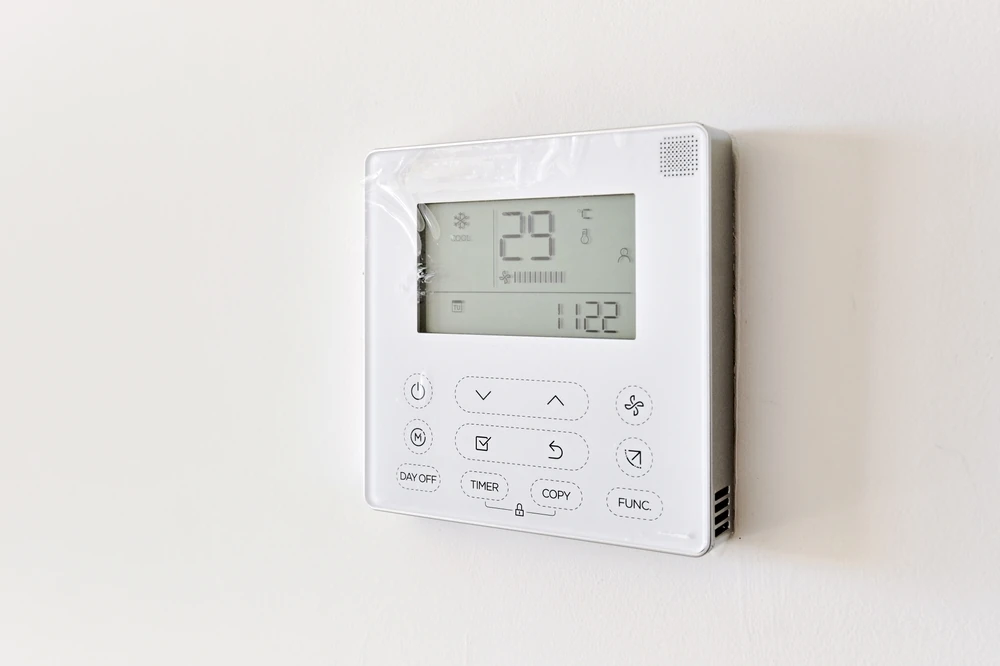
Smart thermostats or smart controllers act as the control centre. In ducted systems, this may replace a standard wall controller. In some split systems, it may be an add-on device that works with the unit through infrared signals or a compatible interface. These controls often allow scheduling, remote access and more detailed control over operating modes.
Sensors can help the system respond more intelligently. Depending on the setup, these may monitor temperature, humidity or occupancy. In some homes, this allows the system to ease back in unused areas or respond more accurately to changing indoor conditions.
How Smart Controls Work With Existing Air Conditioning
One of the most common points of confusion is whether smart controls only apply to new systems. In reality, some homes already have built-in smart capability, while others can be upgraded without replacing the air conditioner itself.
Many newer ducted and split systems include integrated Wi-Fi and a manufacturer app. In these cases, the smart features are already designed to work with the unit, which usually makes setup and operation more straightforward.
Older or non-connected systems may still be able to use smart controls, but the method depends on the type of air conditioner. Ducted systems often use a compatible smart thermostat or dedicated interface. Split systems may use an infrared smart controller that copies the signals of the original remote. These are not the same thing, and the right option depends on the equipment already installed.
This distinction matters because not every system can accept the same upgrade. A homeowner with a ducted system may need a compatible wall controller or interface module, while someone with a split system may be able to add smart control through a separate device without touching the main unit.
The Everyday Benefits of Smart AC Control
The main appeal of smart AC control is not novelty. It is the ability to manage comfort more precisely and avoid unnecessary cooling.
In practical terms, smart controls can help households:
- set different temperatures for different times of day
- cool the home before arrival rather than running the system for hours
- reduce cooling in unused zones or rooms
- turn the system off remotely if it has been left on by mistake
This can make indoor comfort feel more consistent, especially in homes where routines change from day to day. It can also make the system easier to live with, because there is less need to keep adjusting settings manually.
Some systems also provide usage data, which can help identify inefficient settings or unusual run times. That does not replace proper servicing, but it can help homeowners notice when the system is working harder than expected.
Voice and App Control vs a Traditional Thermostat
Connected controls change the way air conditioning is managed, but they are not automatically better for every household. Their value depends on how the home is used and whether the added flexibility actually solves a real problem.
A traditional thermostat is usually simple and predictable. It works well in homes where routines are steady and one or two temperature adjustments a day are enough. For smaller homes or households that prefer minimal technology, a standard programmable controller may be all that is needed.
App and voice control are more useful where schedules vary, multiple people use the system or the thermostat is not in a convenient location. Being able to check and change settings from a phone can be helpful when returning home early, travelling, or trying to avoid unnecessary usage when no one is there.
Voice control can also be convenient, but it is often more of a secondary feature than the main reason to upgrade. In most homes, the app and scheduling functions deliver more day-to-day value than voice commands alone.
How Connected Controls Can Help With Energy Use
Smart AC controls can help reduce running costs, but the savings come from better control rather than from the technology itself. A connected system does not automatically make an inefficient household efficient. It works best when it helps reduce waste that would otherwise happen through poor timing, overcooling or unnecessary use.
The biggest savings usually come from:
- setting schedules that match when the home is occupied
- reducing cooling when people are out
- avoiding the habit of leaving the system running longer than needed
- managing zones more carefully in larger homes
In households where cooling habits are already disciplined and the thermostat is used well, the savings may be modest. In homes where the system is often left running too long, set too low or used across empty rooms, smart controls can make a more noticeable difference.
This is why connected controls are often most worthwhile in larger homes, busy households and homes with ducted zoning, where there is more opportunity to fine-tune how and where cooling is delivered.
Automation, Scheduling and Occupancy Control
Automation is often where smart systems become genuinely useful rather than just convenient.
A good controller can let homeowners create different weekday and weekend settings, adjust cooling around work hours and sleep times, and make temporary changes without rewriting the whole schedule. This is more flexible than many older programmable thermostats, which can feel limited or awkward to use.
Some systems also use occupancy detection or geofencing to respond when people leave or return. When this works well, it can stop the air conditioner from running unnecessarily while still keeping the home comfortable when needed.
That said, automation only helps when it is set up properly. If schedules are unrealistic or too complicated, they are often overridden or ignored. The best smart controls tend to be the ones that make simple, useful adjustments rather than trying to do everything.
Reliability in Coastal Homes
For homes on the Central Coast, reliability matters just as much as convenience. Coastal air, humidity and storms can all affect connected equipment, especially if low-quality components are used or the installation is poor.
Salt in the air can contribute to corrosion over time, particularly in electronics and exposed terminals. This does not mean smart controls are unsuitable in coastal homes, but it does mean hardware quality and placement matter. Well-designed components, sensible installation positions and regular servicing all help reduce the risk of early failure.
Wi-Fi reliability also plays a major role. A smart control system can feel frustrating if the signal is weak near the controller or if the home network regularly drops out. In many cases, the control hardware is not the problem at all. The issue is the network connection supporting it.
For homeowners considering smart AC controls near the coast, the practical priorities are straightforward:
- choose quality hardware with good compatibility
- make sure the Wi-Fi signal is strong where the controller operates
- keep indoor controls away from moisture-prone locations where possible
- have the system checked during regular servicing for early signs of corrosion or communication issues
Retrofitting Smart Controls to an Existing System
A full air conditioner replacement is not always needed to gain smart features. Many homes can retrofit some level of connected control, but the best option depends on the system already installed.
For ducted systems, retrofitting may involve replacing the existing wall controller with a compatible smart thermostat or adding a brand-specific interface. For split systems, a smart AC controller may be able to work through infrared communication with the unit. These retrofit paths are different, and their performance can vary depending on the system design.
Before upgrading, it is important to confirm:
- the exact make and model of the air conditioner
- whether the system already has built-in smart capability
- whether the proposed controller is fully compatible
- whether the home Wi-Fi is stable enough to support reliable control
In some homes, retrofit smart control is a simple and worthwhile upgrade. In others, especially where the air conditioner is ageing or uses proprietary controls, the money may be better spent on future system replacement rather than adding technology to equipment nearing the end of its life.
When a Smart Upgrade Makes Sense
Smart AC controls tend to be most useful in homes where comfort needs change across the day or where the air conditioner serves a larger floorplan.
They are often a strong fit for:
- larger homes with ducted zoning
- households with changing daily schedules
- families with multiple occupants and different comfort preferences
- people who travel often or want remote access while away
- homeowners who want closer control over energy use
In these situations, connected controls can make cooling feel more responsive and less wasteful. They can also make the system easier to manage, especially where the home would otherwise rely on manual adjustments throughout the day.
When a Simpler Setup May Be Better
Not every home benefits enough from connected control to justify the extra cost or setup. In some cases, a basic programmable controller or standard thermostat is still the better choice.
A simpler setup may make more sense where:
- the home is small and easy to cool
- the thermostat is already easy to access
- daily routines are very consistent
- the existing system has limited compatibility
- the household prefers straightforward controls without apps or automation
In these homes, smart control may still work, but the practical gains can be fairly small. If the current system already maintains comfort without much adjustment, adding connected features may not change the experience enough to be worthwhile.
Choosing Features That Match Your Lifestyle
The best smart AC system is rarely the one with the longest list of features. It is the one that suits how the household actually lives.
For some homes, scheduling and zoning will be the most useful tools. For others, remote access is the main advantage. Some households may appreciate voice control, while others will almost never use it after the first week.
Before choosing a system, it helps to think about:
- whether the home has a regular or unpredictable routine
- whether different rooms need different cooling patterns
- whether more than one person needs easy access to the controls
- whether app control will genuinely be used
- whether the household wants detailed involvement or simple automation
Choosing only the features that solve a clear problem usually leads to a better outcome than paying for every available option.
Are Smart AC Controls Worth It?
Smart AC controls can be worth it, but only when they suit the home, the air conditioning system and the people using them. Their main strengths are better scheduling, easier remote access, improved control over zoning and less wasted cooling. In the right setting, those benefits can translate into better comfort and more efficient day-to-day operation.
They are not the right choice for every household. Some homes will see only modest benefit, especially where cooling needs are simple or the current setup already works well. Others may find that the flexibility and added control make the upgrade worthwhile, particularly in larger homes or where routines change often.
The real value lies in choosing a setup that matches the way the home is used rather than assuming that more technology automatically means better results. When smart controls are compatible, well installed and used with a clear purpose, they can be a practical upgrade rather than just another gadget.
We Run Our Business Like a Family
When You Need Help
Get your home the Air Conditioning work it needs from our team at All Coast Air Conditioning. We’re always ready to help.


